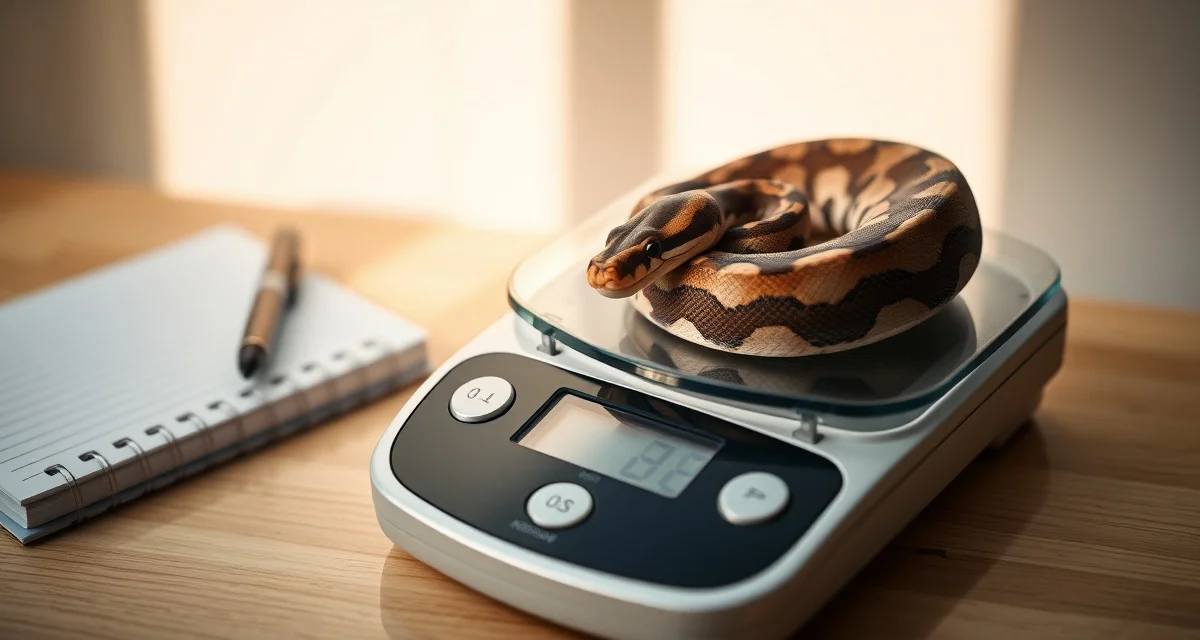
Animal Weight Tracking for Reptile Collections
By HatchLedger Editorial Team · Published 2025-03-11 · Updated Mar 13, 2026
Weight is the most objective health indicator you have for a captive reptile. A snake can look fine when it's actually in decline. But consistent weight data tells the truth. An animal that was 1,400g in January and is 1,200g in April has lost nearly 15% of its body weight, and that demands explanation.
Weight tracking only works if it's consistent. A single weight entry is a data point. A year of monthly weights is a health record.
Weighing Frequency by Life Stage
Adults (Breeding Collection)
Weigh breeding adults monthly throughout the year. This frequency captures seasonal fluctuations without being excessive. For females, you'll see weight trends tied to the breeding cycle: gradual increase pre-breeding, potential weight loss during gravid period, significant loss post-clutch, and recovery through the off-season.
For males, monthly weights help you monitor the effect of the breeding season on body condition. Heavily worked breeding males, especially smaller animals used frequently, can lose significant weight. Knowing a male's September weight and his March weight tells you how the season affected him and whether he needs a full recovery period before the next season.
Hatchlings and Juveniles
Weigh weekly for the first 3-4 months, then every 2 weeks until the animal reaches 500g, then monthly. Hatchling growth rates vary significantly by individual, feeding success, and temperature. Ball python hatchlings typically weigh 55-90g at birth. A hatchling that's not gaining weight in the first 60 days needs an assessment of its feeding, housing, and health.
Young growing snakes that are eating well will gain 20-40g per week on average, though this varies by prey size and frequency. Juveniles growing faster than expected are not a problem. Ones growing significantly slower need more food, warmer temperatures, or a health check.
Pre-Breeding Assessment
Weigh every breeding candidate before the season starts, typically in September or October. Ball python females should be at minimum 1,200g, with most experienced breeders preferring 1,500g or more. A female below 1,200g at the start of October is not ready to breed and you need that data before you make pairing decisions, not after you've been running her with a male for two months.
What Normal Weight Patterns Look Like
Ball Python Females
A typical breeding female might follow this pattern:
- Pre-breeding (October): 1,700g
- Peak breeding season (November-January): 1,650-1,700g (may lose some weight during reduced feeding)
- Post-ovulation through lay (February-April): 1,800-1,950g (gravid weight increase)
- Post-clutch (May-June): 1,350-1,500g (significant loss through egg production)
- Recovery (July-September): returning toward 1,700g with consistent feeding
This is a normal cycle. A female whose post-clutch weight is below 1,300g, or who fails to recover through the off-season, may be a candidate for a year off from breeding.
Hatchling Ball Pythons
A healthy hatchling eating every 7-10 days on appropriately sized prey should roughly double its birth weight within the first 2-3 months. A 70g hatchling that's still 70g at 8 weeks post-hatch despite feeding attempts has a problem.
Recording and Interpreting Weight Data
The value of weight data comes from trends, not individual measurements. A single weight tells you what an animal weighs today. Ten weights over ten months tell you how the animal is performing.
When you're managing 50+ animals, scanning for weight loss across the collection manually is time-consuming. HatchLedger tracks weight trends per animal and can surface animals that are outside their normal range, so you don't have to review every entry individually to find the ones that need attention.
Scale Recommendations
For most reptile collections, a digital kitchen scale accurate to 1g is sufficient. Weigh animals in a small container or pillowcase (weigh the container first and subtract). For large breeding females, a postal scale rated to 5kg is more practical. Calibrate your scale periodically with a known weight, especially if it lives in the reptile room where temperature swings can affect electronics.
Keep the scale in a consistent location and use the same method each time. Consistent methodology makes the data comparable across measurements.
Related content: Ball Python Female Weight Tracking | Hatchling Weight Tracking | Animal Health Records
Related Articles
FAQ
What is Animal Weight Tracking for Reptile Collections?
Animal weight tracking for reptile collections is the practice of recording each animal's body weight on a consistent schedule to monitor health and body condition over time. Rather than relying on visual assessment alone, weight data reveals trends that aren't visible to the eye — such as gradual decline, breeding season impact, or recovery after clutching. On HatchLedger, this data is logged per animal and builds into a longitudinal health record.
How much does Animal Weight Tracking for Reptile Collections cost?
HatchLedger offers animal weight tracking as part of its reptile collection management platform. Pricing depends on the plan you choose, with options suited to hobbyists and professional breeders alike. Basic logging features are available on entry-level plans, while advanced trend analysis and breeding cycle overlays are included in higher tiers. Visit HatchLedger.com for current pricing and to compare plan features.
How does Animal Weight Tracking for Reptile Collections work?
You weigh each animal on a consistent schedule — monthly for adults, weekly for hatchlings — and log the result against that animal's record in HatchLedger. Over time, the platform builds a weight history you can review as a chart or table. You can spot percentage changes, compare pre- and post-clutch weights, and track male body condition across breeding seasons, all from a single animal profile.
What are the benefits of Animal Weight Tracking for Reptile Collections?
Consistent weight tracking gives you an objective health baseline that visual checks can't provide. You'll catch early signs of decline before they become emergencies, understand how breeding season affects individual animals, and make informed decisions about feeding, rest periods, and pairing. For breeding collections, it also creates documentation that supports the sale of well-cared-for animals and demonstrates responsible husbandry practices.
Who needs Animal Weight Tracking for Reptile Collections?
Anyone keeping reptiles in a managed collection benefits from weight tracking, but it's especially valuable for reptile breeders working with multiple animals across different life stages. Breeders with breeding females, heavily used males, and cohorts of hatchlings gain the most — each group has distinct weight patterns that matter for health and productivity. Solo keepers with a single animal also benefit from having a real health record rather than guesswork.
How long does Animal Weight Tracking for Reptile Collections take?
Each individual weighing takes under a minute. Logging the result in HatchLedger takes seconds. The time investment is in consistency — committing to a monthly schedule for adults and a weekly schedule for hatchlings and juveniles. The compounding value comes from sustained data collection over months and years. A year of monthly weights is what transforms individual data points into a meaningful health record.
What should I look for when choosing Animal Weight Tracking for Reptile Collections?
Look for a system that ties weights to individual animal records rather than generic logs, supports multiple weighing schedules by life stage, and displays trend data visually so you can spot changes at a glance. Integration with health events and breeding records is a significant advantage — weight loss means more when you can see it alongside feeding history or clutch dates. HatchLedger is built specifically for this workflow.
Is Animal Weight Tracking for Reptile Collections worth it?
Yes. A snake that looks healthy can be losing body condition steadily, and without weight data you won't know until the decline is severe. For breeding collections, the stakes are higher — a female's post-clutch weight, a male's end-of-season condition, a hatchling's first-feeding trajectory all carry real consequences. Weight tracking is the lowest-effort, highest-signal health monitoring tool available to reptile keepers, and HatchLedger makes it frictionless.
Sources
- Association of Reptilian and Amphibian Veterinarians (ARAV)
- Ball Python Breeders Association guidelines
- Reptiles Magazine husbandry standards