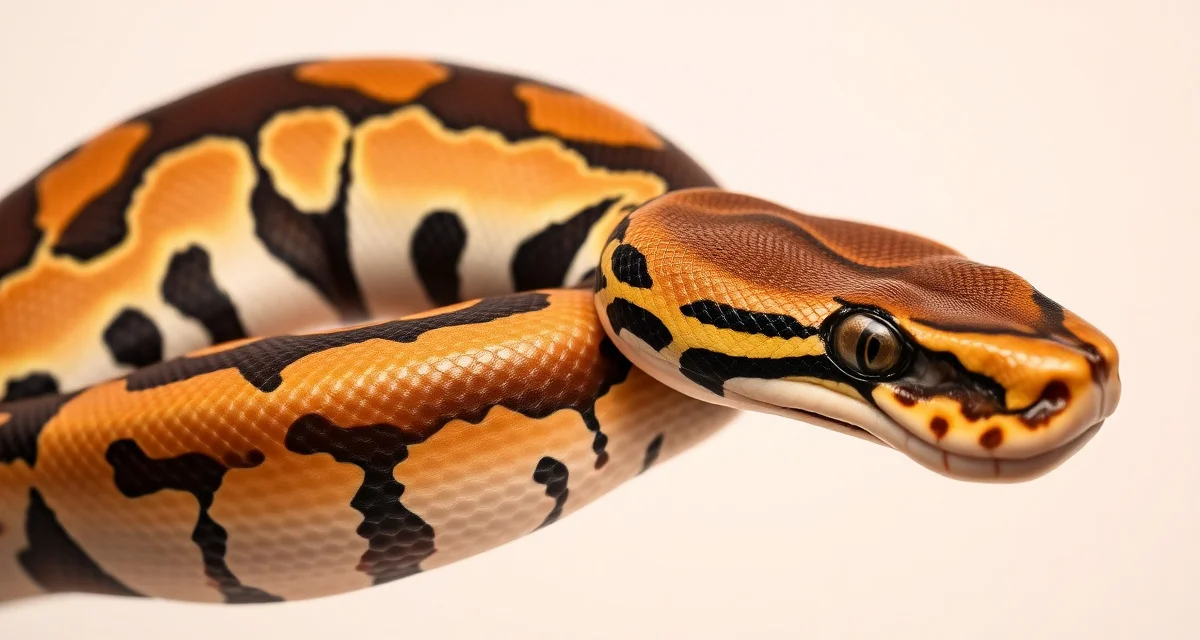
Codominant Ball Python Morphs: Understanding the Genetics
By HatchLedger Editorial Team · Published 2025-05-13 · Updated Mar 13, 2026
Codominant morphs are the engine of ball python breeding. They stack, they combine predictably, and they produce super forms when two copies of the same gene are present. Understanding how they work genetically is the foundation of any serious breeding program.
What Codominant Means
In ball python genetics, a codominant trait means:
- One copy of the gene produces a visible change in appearance (the "heterozygous" or single-gene form)
- Two copies of the same gene produce a distinct, usually more dramatic appearance (the "homozygous" or "super" form)
Every offspring of a codominant morph bred to a normal has a 50% chance of inheriting the gene. Breed a Pastel to a Normal, and you get approximately 50% Pastels and 50% Normals. Breed a Pastel to a Pastel, and you get approximately 25% Super Pastels, 50% Pastels, and 25% Normals.
This predictability is what makes codominant morphs so central to combo projects.
Major Codominant Morphs
Pastel
Pastel is one of the oldest and most common ball python morphs. Visual characteristics include brightened yellows and greens, reduced black banding, and often a "busy" pattern with more broken-up blotches. Pastel reduces black pigment and enhances yellow.
Super Pastel (two copies) shows even more extreme yellow brightening and further pattern reduction. Super Pastels are healthy animals with no known neurological or health complications.
Pastel stacks with nearly everything and brightens almost every combo it's in. It's a common "enhancer" gene used to improve the visual impact of other morphs. Pastel Clown, Pastel Piebald, Pastel Lesser, and hundreds of other combinations use Pastel as a brightening agent.
Enchi
Enchi is a pattern-affecting codominant that reduces the pattern between the saddles, creating a cleaner, more linear appearance. The base color tends toward amber and gold. Enchi is subtler than Pastel in a plain form but combines powerfully, especially with other pattern-reducing morphs.
Super Enchi shows dramatic pattern reduction with an almost alien, deep gold appearance. Enchi is one of the most popular "hidden" genes in breeding projects because it adds clean pattern without being immediately obvious in single-copy form.
Fire
Fire is a color-affecting codominant that reduces black pigment. Single-copy Fire animals look similar to Pastels with a distinctive brown-to-rust mid-belly pattern running down the spine. Fire is most significant in its super form.
Super Fire is an all-white or pale yellow ball python with black eyes. It is one of several routes to producing a white snake. Super Fire is healthy and has no known issues. Fire combined with other genes in the "Fire complex" (which includes Black Pastel, Cinnamon, Vanilla, Sulfur, and others) produces the Blue-Eyed Lucy (BEL), an all-white snake with blue eyes.
Lesser (and Butter)
Lesser and Butter are allelic mutations, they occupy the same genetic locus, meaning an animal can be Lesser, Butter, or Lesser/Butter (one copy of each). Lesser appears similar to Pastel with some brown pattern elements. Butter is a mellower version.
The significant trait of Lesser and Butter is their place in the Fire complex. Lesser/Lesser produces a Super Lesser, which is white with dark eyes. Lesser/Fire, Butter/Fire, and similar combinations all produce Blue-Eyed Lucies.
Phantom, Mystic, Mojave, and several other morphs are also in this complex and produce BEL combinations when paired together. Keeping accurate records of which morph is which, and what combinations will produce BELs, is essential when managing a collection that includes multiple Fire complex genes.
Black Pastel and Cinnamon
Black Pastel darkens the animal, intensifying blacks and creating a "muddy" pattern appearance. Cinnamon is similar in visual effect. Both are in the Fire complex.
The significant concern with these two morphs is their super forms. Super Black Pastel and Super Cinnamon regularly produce hatchlings with severe physical abnormalities including spinal kinking and incomplete skin closure. These animals are not viable. Breeders producing these combinations should be prepared for this outcome and should have a humane euthanasia plan.
This is documented widely in the community. Responsible use of Black Pastel and Cinnamon includes disclosing this to buyers and not marketing these pairings without acknowledging the super form outcomes.
Recording Codominant Genetics
Codominant morphs are relatively straightforward to track because you can see them. Unlike recessives, you don't need test breeding to know if an animal carries a codominant gene. If an animal is Pastel, you know it.
The complexity arises in combinations, in identifying super forms versus single-copy forms in some morphs, and in tracking which animals are heterozygous for multiple codominants. HatchLedger's genetics records let you document each codominant gene separately and predict offspring outcomes from recorded parent genetics.
Related content: Ball Python Genetics Guide | Ball Python Combo Morph Guide | Ball Python Genetics Records
Related Articles
FAQ
What is Codominant Ball Python Morphs: Understanding the Genetics?
Codominant ball python morphs are genetic traits where a single copy of the gene produces a visible change in the snake's appearance, and two copies produce a distinct 'super' form. This article on HatchLedger explains the underlying genetics, how codominant traits like Pastel stack and combine, and why these morphs are the foundation of predictable combo breeding projects in ball pythons.
How much does Codominant Ball Python Morphs: Understanding the Genetics cost?
Learning about codominant ball python genetics costs nothing — this is a free educational resource on HatchLedger. However, the morphs themselves vary widely in price. Common codominants like Pastel can cost as little as $50–$150, while rarer or complex combos can run into the hundreds or thousands of dollars depending on the genes involved.
How does Codominant Ball Python Morphs: Understanding the Genetics work?
Codominant morphs work by altering pigmentation or pattern when one copy of the gene is present. When two copies are inherited — one from each parent — a 'super' form appears, which is typically more visually dramatic. Because the gene follows predictable Mendelian ratios, breeders can calculate exact odds: a Pastel-to-Normal pairing yields roughly 50% Pastels and 50% Normals.
What are the benefits of Codominant Ball Python Morphs: Understanding the Genetics?
Understanding codominant genetics gives breeders a reliable framework for planning pairings and predicting outcomes. Unlike recessive traits, codominants show immediately in single-copy animals, meaning no hidden carriers. They stack cleanly with other morphs to create combos, and the super forms they produce are visually striking and often highly marketable in the ball python hobby.
Who needs Codominant Ball Python Morphs: Understanding the Genetics?
This guide is ideal for beginner to intermediate ball python breeders who want to move beyond random pairings and build intentional projects. It's also useful for buyers learning to evaluate morph combinations, hobbyists trying to understand why two snakes produce unexpected offspring, and anyone curious about how visual traits are inherited and expressed in reptiles.
How long does Codominant Ball Python Morphs: Understanding the Genetics take?
Grasping the basics of codominant genetics typically takes a few hours of focused reading and a few breeding seasons of hands-on practice to fully internalize. The Punnett square logic is straightforward once you understand the single-copy versus two-copy distinction. Most breeders feel confident applying these principles after completing one or two planned pairings and observing the results firsthand.
What should I look for when choosing Codominant Ball Python Morphs: Understanding the Genetics?
When selecting codominant morphs for a breeding project, look for clean, well-expressed examples of the trait — strong yellow in Pastels, crisp pattern reduction, and no unwanted wobble or health issues. Buy from reputable breeders who provide accurate genetic history. Prioritize animals that complement your existing collection and help you work toward a specific combo goal rather than purchasing randomly.
Is Codominant Ball Python Morphs: Understanding the Genetics worth it?
Yes — understanding codominant genetics is one of the highest-value investments a ball python breeder can make. These traits are predictable, stackable, and produce visually impressive results without the complexity of waiting multiple generations for recessive genes to express. Whether you're a hobbyist or a serious breeder, a solid grasp of codominant mechanics will save time, reduce guesswork, and improve the quality of your projects.
Sources
- World of Ball Pythons (WoBP) genetics database
- BPBAS (Ball Python Breeders Association)
- Reptile Channel genetics reference