Managing Batch Hatching Across Multiple Clutches
By HatchLedger Editorial Team · Published 2025-02-16 · Updated Mar 13, 2026
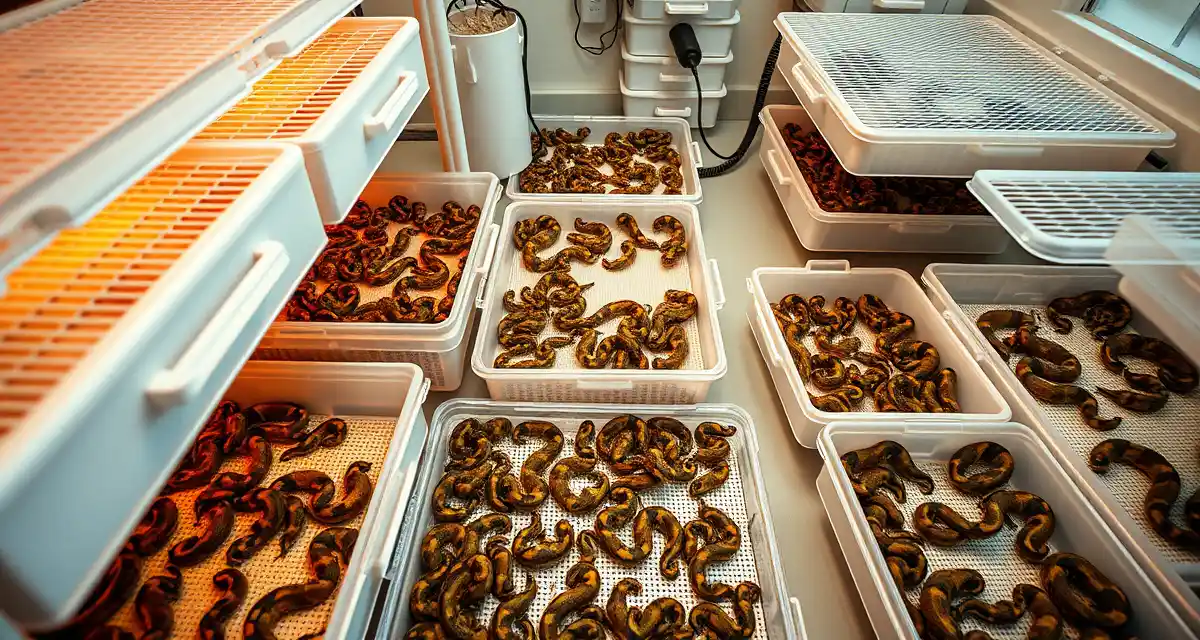
When three clutches hatch in the same week, you'll find out quickly whether your systems are good enough. Ball python batch hatching management is one of those areas where the difference between a well-organized breeder and a struggling one becomes visible fast. Processing 30-40 hatchlings across multiple clutches in the same week, while maintaining morph IDs, sexing, weights, and enclosure setup, all of that demands a system.
TL;DR
- Ball python breeding operations require systematic record-keeping from pre-season preparation through end-of-season sales.
- Females at 1,200-1,500g or more are the target weight before introducing them to a breeding male.
- Ovulation detection is the key event that anchors pre-lay shed and lay date calculations.
- Clutch profitability guide depends on understanding actual cost basis per animal, not just gross sale revenue.
- Well-documented animals with complete feeding histories and clear genetic records consistently sell faster and at higher prices.
Breeders using integrated software report 30% less time on administrative tasks. In a batch hatching week, that 30% is the difference between finishing the day confident and finishing it anxious about what you might have mixed up.
Why Batch Hatching Gets Complicated
When multiple clutches were laid within a few weeks of each other, they hatch within a few weeks of each other. That's not a problem if you've planned for it. But without planning, it creates real issues:
- Containers from different clutches getting mixed up in a busy incubator
- Hatchlings being processed without clear clutch identification
- Morph IDs being assigned from memory rather than reference
- Animals from different pairings getting mixed before they're labeled
Any of these errors has financial consequences, particularly if a high-value morph gets misidentified or attributed to the wrong pairing.
How to Manage Batch Hatching Across Multiple Clutches
Step 1: Build a Hatch Calendar Before the Season Starts
You can predict your hatch windows before eggs are even laid. Once you have your ovulation dates logged, you can estimate:
- Ovulation date + 30 days = pre-lay shed (approximate)
- Pre-lay shed + 16-18 days = lay date
- Lay date + 54-60 days = hatch window
Build a calendar with every clutch's expected hatch window plotted. When you see three clutches clustered in a two-week window, you'll know to plan processing capacity for that period.
Step 2: Label Incubation Containers Unambiguously
Every incubation container needs a permanent, waterproof label with:
- Female ID
- Male ID
- Lay date
- Expected hatch window
- Clutch number within the season
Don't write this on masking tape in a humid environment. Use a waterproof label or permanent marker directly on the container with a clear labeling convention.
When containers are stacked or rearranged during the season, these labels are the only thing preventing mix-ups.
Step 3: Check Incubator More Frequently During Peak Hatch Windows
Once a clutch is within two weeks of its expected hatch window, check daily. Look for:
- First pips (the initial slit in the egg shell made by the hatchling's egg tooth)
- Multiple eggs pipping
- Hatchlings emerging
When you see pips, note the date and which container. Don't open the eggs, let hatchlings emerge on their own. But start preparing your processing setup.
Step 4: Process One Clutch Completely Before Starting the Next
This is the core rule of batch hatching management. If two clutches are hatching simultaneously, process clutch A completely before you touch clutch B. "Completely" means:
- All animals removed from the hatching container
- All animals sexed, weighed, morph identified
- All animals in individual labeled enclosures or labeled containers
- All data logged
Only then open the next container. This prevents the most common batch hatching error: animals from different clutches getting mixed before they're identified.
Step 5: Set Up Your Processing Workspace Before Hatch Day
Have your processing area ready before hatchlings start emerging. You need:
- Individual enclosures or deli cups, labeled with clutch ID
- A scale
- Sexing tools (probing or popping setup)
- Reference photos or animals for morph comparison
- Your record-keeping tool open and ready
If you scramble to set up when hatchlings are already out, things get chaotic. Prepare ahead.
Step 6: Record Everything During Processing, Not After
Log morph ID, sex, weight, and hatchling number as you go, not in a batch at the end. When you're processing 8-10 animals from a single clutch, memory is not reliable. The animal you're currently weighing is the one you record right now.
Use the ball python breeding hub for reference on processing protocols and first feed timing.
Step 7: Review Batch Performance Against Expectations
After a batch hatching week, compare your actual clutch compositions to your expected compositions. Were the morph ratios what you predicted? Were egg viability rates normal? Did any clutches underperform?
This review, done while the season is fresh, informs your decisions about which pairings to repeat and which to adjust.
The reptile breeder software comparison explains why integrated tools handle this kind of multi-clutch tracking better than spreadsheets.
Common Batch Hatching Mistakes
Processing multiple clutches simultaneously. This is the source of most mix-up errors. Finish one before starting the next.
Poor container labeling. If labels fall off or become unreadable during incubation, you've lost traceability for that clutch.
Not preparing the processing workspace ahead of time. Improvised processing setups in a busy batch hatching period lead to skipped steps and recording errors.
Not checking containers frequently enough during peak hatch windows. Hatchlings that spend too long in the hatching container alongside other eggs can develop problems. Check daily during hatch windows.
What is the best approach to ball python batch hatching management?
Build a hatch calendar at the start of the season so you know when clusters of hatchings will occur. Label every container unambiguously with waterproof labels. Process one clutch completely before starting the next. Log everything during processing, not after. And prepare your processing workspace before hatch day, not on it.
How do professional breeders handle ball python batch hatching management?
Professional breeders run batch hatching seasons with clear systems and physical infrastructure. Their containers are labeled before they go in the incubator and stay labeled throughout. They process clutches in order, log everything in real time, and review batch results against expectations as a regular end-of-season practice. The organization isn't aspirational, it's operational.
What software helps manage ball python batch hatching management?
HatchLedger connects your incubation records to individual animal data and clutch P&L, so when you're processing multiple clutches in a busy hatching week, the data infrastructure is already in place. No scrambling to remember which container came from which pairing, it's all in the system.
FAQ
What is Managing Batch Hatching Across Multiple Clutches?
Managing batch hatching across multiple clutches is the practice of systematically processing large numbers of ball python hatchlings—often 30–40 animals—that emerge within the same week from clutches laid close together. It involves maintaining accurate morph IDs, tracking weights, sexing animals, setting up enclosures, and preserving complete records so no hatchling gets mislabeled or lost in the chaos of a high-volume hatch week.
How much does Managing Batch Hatching Across Multiple Clutches cost?
The core practice itself has no fixed price, but the cost of doing it poorly is real: mislabeled morphs, lost records, and mixed-up animals can result in underselling genetics or losing buyer trust. Dedicated breeding management software like HatchLedger typically runs less than the value of a single hatchling per month, making it one of the highest-return investments a serious breeder can make during peak season.
How does Managing Batch Hatching Across Multiple Clutches work?
Batch hatching management works by anchoring every clutch to key events—ovulation, pre-lay shed, and lay date—so hatch windows can be anticipated. When eggs pip, each hatchling is immediately weighed, sexed, and assigned a morph ID tied to its parent pair. Enclosures are prepped in advance, and records are logged in real time so that processing 30–40 animals across multiple clutches doesn't collapse into guesswork by day's end.
What are the benefits of Managing Batch Hatching Across Multiple Clutches?
The primary benefit is confidence: knowing that every hatchling leaving your rack has verified genetics, a documented feeding history, and accurate weight records. Well-documented animals consistently sell faster and at higher prices. Breeders using integrated record-keeping systems report spending 30% less time on administrative tasks during hatch weeks—time that's better spent on animal welfare and buyer communication rather than reconstructing records after the fact.
Who needs Managing Batch Hatching Across Multiple Clutches?
Any ball python breeder running multiple breeding pairs and producing more than one or two clutches per season needs a batch hatching system. The need becomes critical once clutches start overlapping—when three clutches hatch in the same week, informal notes and memory are no longer sufficient. Hobbyist breeders scaling up, as well as established operations with dozens of pairs, all benefit from structured batch hatching protocols.
How long does Managing Batch Hatching Across Multiple Clutches take?
A single hatch week can span three to seven days from first pip to full processing, but the real timeline is season-long. Preparation starts pre-season with female conditioning and pair introduction records. Ovulation and lay dates anchor mid-season tracking. The batch hatching week itself is the culmination—intensive but manageable if the preceding records are solid. End-of-season sales and profitability reviews extend the process through the final animal placement.
What should I look for when choosing Managing Batch Hatching Across Multiple Clutches?
Look for a system—whether software or physical—that ties each hatchling directly to its parent pair, morph combination, and clutch lay date without requiring manual cross-referencing. It should make morph ID assignment fast under pressure, support weight and sex logging at the rack, and give you a clear cost-per-animal view for profitability tracking. Bonus if it generates clean records you can share with buyers to justify pricing on well-documented animals.
Is Managing Batch Hatching Across Multiple Clutches worth it?
Yes—if you're producing multiple clutches per season, batch hatching management pays for itself in avoided mistakes alone. One mislabeled morph, one mixed-up clutch, or one animal sold with wrong genetics can cost more in reputation and refunds than an entire season of record-keeping software. Beyond damage prevention, documented animals command higher prices and sell faster, making systematic batch hatching management one of the clearest ROI decisions in a breeding operation.
Sources
- USARK (United States Association of Reptile Keepers)
- Association of Reptilian and Amphibian Veterinarians (ARAV)
- World of Ball Pythons (WoBP genetics guide reference)
- MorphMarket (industry marketplace data)
- Reptiles Magazine (Bowtie Inc.)
Handle Batch Hatching Season with HatchLedger
Get Started with HatchLedger
Every part of a ball python breeding operation -- from pairing records to clutch documentation to financial tracking -- works better when the data is connected rather than scattered across notebooks and spreadsheets. HatchLedger is built for exactly that. Try it free with up to 20 animals.