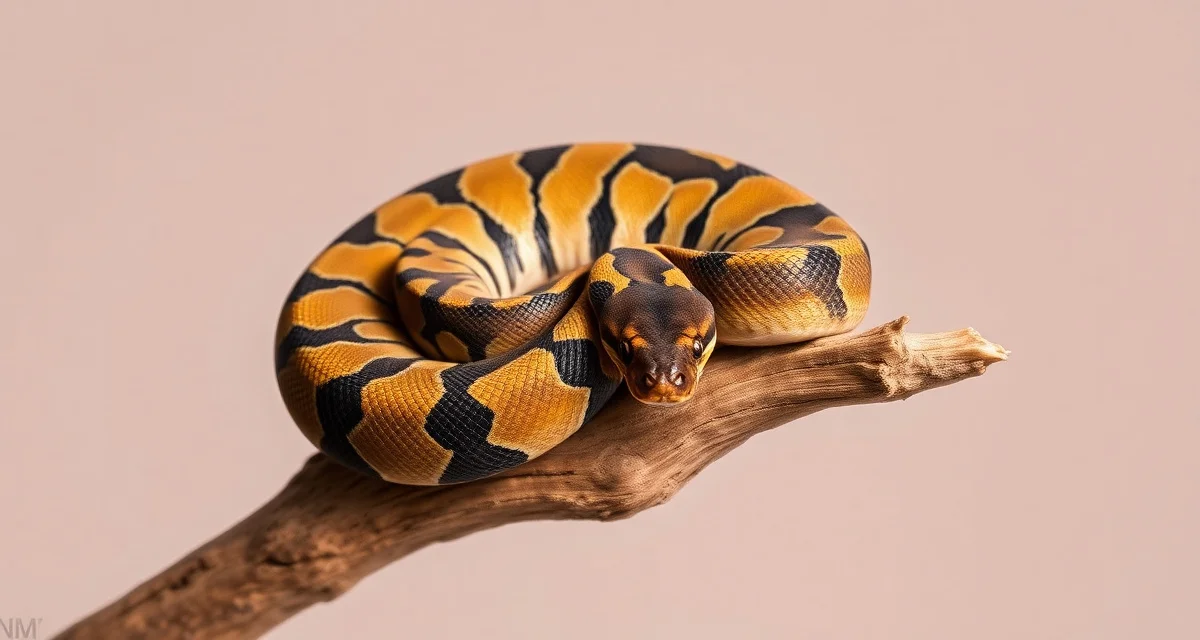
Case Study: Building a Profitable Clown Ball Python Project
By HatchLedger Editorial Team · Published 2025-07-13 · Updated Mar 13, 2026
The Clown morph is one of the most commercially successful recessive genes in ball python breeding. It's not the flashiest single-gene visual, but Clown combines beautifully with almost everything, the market for Clown combos is genuinely deep, and breeders who build a serious Clown project tend to produce it for years. This case study walks through what it actually looks like to build a profitable Clown project from scratch, including the timeline, the financial reality, and the management challenges.
TL;DR
- Ball python breeding operations require systematic record-keeping from pre-season preparation through end-of-season sales.
- Females at 1,200-1,500g or more are the target weight before introducing them to a breeding male.
- Ovulation detection is the key event that anchors pre-lay shed and lay date calculations.
- Clutch profitability guide depends on understanding actual cost basis per animal, not just gross sale revenue.
- Well-documented animals with complete feeding histories and clear genetic records consistently sell faster and at higher prices.
Starting Point: Why Clown?
For this case study, assume a breeder with 3-4 years of experience in ball pythons, a collection of 40-60 animals, and some experience with dominant and co-dominant morphs. The decision to build a Clown project comes down to a few factors:
Clown visuals remain in demand. While prices have normalized from their early peak, Clown animals in combos continue to command prices that justify the multi-year proving work. The gene enhances almost every morph it's paired with, meaning the combo potential is nearly limitless. And Clown is a confirmed, fully proven gene with a well-understood inheritance pattern, removing the uncertainty of investing in an emerging morph that might not perform as expected.
The downside is time. Clown is recessive. You don't see visual animals until the second or third generation at earliest, unless you purchase visual animals upfront.
Year One: Building Foundation Stock
Option A: Start with hets. A 100% het Clown female and a 100% het Clown male, both with additional genes (say, Pastel for the female, and Fire for the male), can be acquired for $300-700 each depending on their additional genetics guide and condition. Het Clown is inexpensive relative to visual Clown because the buyer is taking on the risk and time of proving.
Option B: Start with a visual. A visual Clown animal, even a plain single-gene Clown female, might cost $400-700. Paired to a het Clown male, this pairing produces 50% visual and 50% het offspring in the first clutch, you see results immediately. Starting with a visual is faster but costs more upfront.
In our hypothetical: the breeder acquires a visual Clown female (single gene, adult female, $600) and a Pastel het Clown male ($250). The total starting investment is $850 plus the ongoing cost of animal care.
The female is large enough to breed in the current season. The male is 18 months old and ready to pair.
Year One: First Clutch
The Clown female x Pastel het Clown pairing is straightforward to predict:
- 50% Pastel Clown (visual Clown with Pastel gene)
- 50% Clown (visual single-gene Clown)
- No hets produced, no normals
Wait, that's not right. Let's correct the pairing math. Visual Clown x Pastel het Clown:
- Visual Clown is homozygous for Clown (two copies), co-dom Pastel gene is separate
- If the male is Pastel het Clown, he carries one copy of Clown and one copy of Pastel
- Every offspring gets one Clown gene from the female. The male contributes either his Clown gene or his normal gene.
- 50% get two Clown genes (visual Clown), some also get Pastel from the male
- 50% get one Clown gene (100% het Clown), some also get Pastel
So the clutch produces:
- 25% Pastel Clown
- 25% Clown (no Pastel)
- 25% Pastel 100% het Clown
- 25% 100% het Clown (no Pastel)
A clutch of 8 eggs might produce 2 Pastel Clowns, 2 Clowns, 2 Pastel 100% het Clowns, and 2 100% het Clowns. The visual animals sell immediately: Pastel Clowns at $400-600, standard Clowns at $250-400. The 100% hets go to other breeders building Clown projects at $100-200 each.
Estimated revenue from this clutch: $1,800-3,200. Costs to this point: $850 acquisition plus 12 months of care at roughly $30/month per animal = ~$1,570 in care costs. First year net is modest, possibly negative, but the project is proving out with visual animals.
Year Two: Expanding with Combo Males
With visual Clown females now in the program from Year One (or held from the female's next clutch), the real expansion begins. The breeder now pairs:
- The original Clown female to a higher-value male carrying additional recessive hets
- A Year-One Pastel Clown daughter, now sub-adult, to a Banana het Clown or Pied het Clown male
Introducing Pied into the Clown project is a multi-year commitment, but Clown Pied is one of the most commercially successful combinations in ball python breeding. The process requires building 100% het Clown animals that also carry Pied genes (double hets), then pairing double hets together.
Year Two pairings might include:
- Clown female x Banana Pastel male = Banana Pastel Clown, Banana Clown, Pastel Clown, Clown
- Clown female x Pied male = 100% het Pied, 100% het Pied + Clown combinations
The Clown x Pied pairing in Year Two produces no visual Clown Pied animals. All offspring are het for one or both genes. These become the double-het breeding stock for Year Three or Four.
Year Three: Real Combo Production
By Year Three, a well-run Clown project is producing:
- Regular visual Clown combinations in various morphs (Banana Clown, Pastel Clown, Enchi Clown)
- Double het animals carrying both Clown and Pied
- 100% het Clowns with additional gene value for other breeders
Per-animal revenue has improved. Banana Clowns sell for $800-1,500. Pastel Clown females sell for $600-1,000. Double het Clown Pied animals (100% het for both) sell for $400-800 each depending on additional genes.
The project is now generating meaningful revenue and the genetic inventory has real value. The investment in Year One and Year Two is paying back.
Managing Records Across the Project
What makes a Clown project manageable across three or more years is records. You need to know:
- Which animals are visual Clown vs. 100% het vs. pos het
- Which visual animals carry additional co-dom genes
- Which hets came from which pairings (to track parentage and avoid accidental close relatives in subsequent pairings)
- The financial position of the project at each season end
The HatchLedger platform tracks genetic records and parent-to-offspring relationships across multiple seasons. When you're three years into a Clown project with 50+ Clown-related animals across multiple generations, having a connected record system rather than a notebook full of parentage tables matters enormously. Breeders using integrated software report 30% less time on administrative tasks, with the biggest time savings in exactly this kind of multi-generational project tracking.
Financial Summary: Is a Clown Project Worth It?
Year One: -$500 to +$500 (net, depending on clutch size and sale prices)
Year Two: +$1,500 to +$4,000 (more pairings, better combo animals)
Year Three: +$4,000 to +$10,000+ (complex combos, double hets, strong pipeline)
The total investment is front-loaded and the returns build over time. This is the nature of recessive projects. Breeders who go in expecting immediate profit will be disappointed. Breeders who treat it as a three-year development investment tend to be very happy with the outcome.
The Clown project also has self-sustaining value: once you have visual Clown animals and 100% het animals in your collection, the project generates breeding stock for itself. You're not buying foundation animals every year, you're producing them.
The Reptile Breeder Software Comparison Context
Spreadsheet-based tracking struggles with multi-year recessive projects. Parentage gets lost. Het status notation becomes inconsistent. Financial tracking requires separate files from genetic records. Platforms designed for reptile breeding, like HatchLedger, keep all of this in one connected system, which is why breeders who run serious recessive projects often cite software as one of the most impactful upgrades they've made.
Frequently Asked Questions
What is the best approach to ball python clown project case study?
Treat it as a three-year minimum investment, not a one-season project. Start with a visual female or pair of confirmed hets, track every pairing outcome and genetic lineage from day one, and begin building toward double-het combinations in Year One even if the visual combo payoff is two years away.
How do professional breeders handle ball python clown project case study?
Professional breeders run Clown as a core program gene, not a side project. They maintain multiple Clown-related females and males at different stages of their combo development, track financial performance at the clutch level, and deliberately build toward specific high-value targets like Clown Pied or Banana Clown Pied that command premium prices.
What records should every reptile breeder maintain per animal?
At minimum: acquisition date and source, morph and genetic documentation, feeding log, weight history, any veterinary treatments, and breeding history including pairing dates, clutch of origin for captive-bred animals, and offspring records. These records serve your own management, buyer documentation, regulatory compliance, and long-term genetic tracking.
How should reptile breeders document genetics for buyers?
A complete genetic record for sale includes the animal's visual morph name, confirmed het genes and their basis (parentage documentation or proven-out production), possible het genes with probability percentages, hatch date, and parent morph information. Including clutch-of-origin records lets buyers independently verify the claims.
What is Case Study: Building a Profitable Clown Ball Python Project?
This case study walks through building a profitable Clown ball python breeding project from scratch. It covers the full timeline from acquiring foundation animals to producing and selling Clown combos, including the financial reality of working with a recessive gene. The guide is designed for breeders with 3-4 years of experience who want to add a commercially strong recessive morph to their collection and build a sustainable, multi-season project around it.
How much does Case Study: Building a Profitable Clown Ball Python Project cost?
Startup costs for a Clown project vary based on whether you begin with proven Clown animals or het Clowns. A single visual Clown female can range from a few hundred to several thousand dollars depending on combo genetics. Het Clowns are more affordable but add 1-2 seasons before producing visuals. Beyond animal acquisition, factor in housing, feeding, veterinary care, and record-keeping tools. Total first-year investment for a serious foundation typically falls between $2,000 and $10,000.
How does Case Study: Building a Profitable Clown Ball Python Project work?
A Clown project works by pairing Clown males or het Clown animals to produce visual Clown offspring carrying the recessive gene. Females are conditioned to 1,200-1,500g before breeding season. The breeder monitors for ovulation, tracks pre-lay shed timing, and manages incubation. Clutch outcomes depend on pairings: two het Clowns yield a 25% chance of visuals per egg, while a visual Clown paired to a het produces 50% visual offspring on average.
What are the benefits of Case Study: Building a Profitable Clown Ball Python Project?
Clown is one of the most commercially durable recessive genes in ball python breeding. It combines well with nearly every dominant, co-dominant, and recessive morph, giving breeders a deep and ongoing market for combo animals. Clown combos consistently attract buyers, hold value, and generate repeat interest season after season. Breeders who establish a well-documented Clown collection also benefit from selling het animals, which provides revenue even in seasons without visual offspring.
Who needs Case Study: Building a Profitable Clown Ball Python Project?
This case study is best suited for intermediate ball python breeders who have experience managing a collection and working with co-dominant or dominant morphs, and are ready to invest in a longer-horizon recessive project. It is also useful for newer breeders planning ahead, or experienced breeders evaluating whether to add Clown to an existing program. Anyone serious about building a financially sustainable breeding operation with documented animals and clear genetic goals will find it relevant.
How long does Case Study: Building a Profitable Clown Ball Python Project take?
A Clown project typically requires two to three seasons before generating meaningful profit. The first season involves acquiring foundation animals and conditioning females. If starting with het animals, season two may be the first clutch, with visual Clowns potentially not appearing until season three. Breeders who start with proven visual Clown animals can compress this timeline. Once the project is producing, revenue tends to compound as het offspring from early seasons become breeding animals themselves.
Related Articles
Sources
- USARK (United States Association of Reptile Keepers)
- Association of Reptilian and Amphibian Veterinarians (ARAV)
- World of Ball Pythons (WoBP genetics reference database)
- MorphMarket (reptile industry marketplace)
- Reptiles Magazine (Bowtie Inc.)
Get Started with HatchLedger
Every part of a ball python breeding operation -- from pairing records to clutch documentation to financial tracking -- works better when the data is connected rather than scattered across notebooks and spreadsheets. HatchLedger is built for exactly that. Try it free with up to 20 animals.