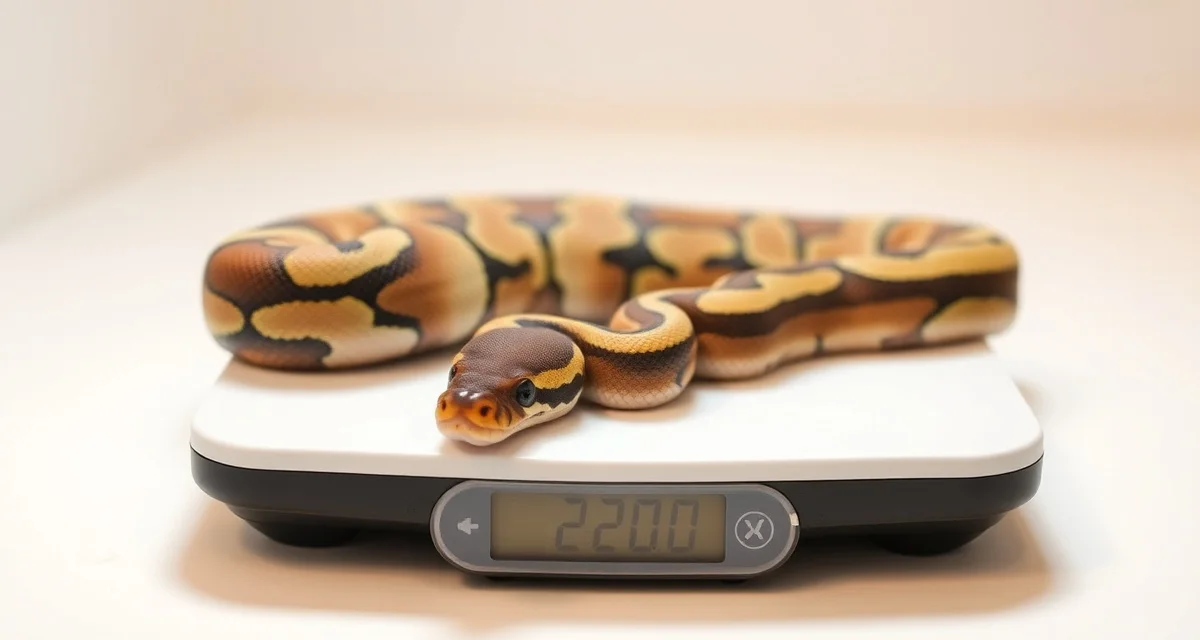
Breeding Weight Minimums for Ball Python Females: What You Need to Know
By HatchLedger Editorial Team · Published 2025-06-09 · Updated Mar 13, 2026
One of the most preventable mistakes in ball python breeding is putting a female into a breeding program before she's physically ready. Breeding underweight or undersized females leads to health complications, smaller clutches, lower fertility rates, and animals who never reach their full production potential because they were pushed too hard too early. Breeders using integrated software report 30% less time on administrative tasks, which gives you more attention to the conditioning work that prepares your females properly.
TL;DR
- Ball python breeding operations require systematic record-keeping from pre-season preparation through end-of-season sales.
- Females at 1,200-1,500g or more are the target weight before introducing them to a breeding male.
- Ovulation detection is the key event that anchors pre-lay shed and lay date calculations.
- Clutch profitability guide depends on understanding actual cost basis per animal, not just gross sale revenue.
- Well-documented animals with complete feeding histories and clear genetic records consistently sell faster and at higher prices.
The good news is that readiness is straightforward to assess: it comes down primarily to weight, age, and body condition evaluated together.
The Standard Weight Minimums
The most commonly cited guideline among experienced ball python breeders is:
1,200 grams minimum body weight before first breeding.
This figure appears consistently across experienced breeders, reptile veterinarians, and established keeper communities. Some breeders use 1,500 grams as their personal threshold, particularly for first-time breeders where the physical demands are highest. Very few experienced breeders breed females below 1,200 grams regardless of age.
Why 1,200 grams? At this weight, most female ball pythons have sufficient body mass to:
- Develop a viable clutch of reasonable size
- Maintain adequate body condition through the fasting period
- Recover fully after laying without risk to long-term health
A female bred below 1,200 grams faces elevated risk of dystocia (egg binding), produces smaller clutches with higher slug rates, and takes longer to recover post-lay. The short-term gain of producing a clutch one season earlier rarely justifies these risks.
Age Considerations
Weight is the primary marker, but age matters too. A ball python who reaches 1,200 grams quickly through aggressive feeding schedules may not be fully sexually mature in the same way a naturally growing female who reaches that weight over the normal timeline is.
Most female ball pythons reach breeding weight somewhere between 2.5 and 4 years of age under normal captive conditions. The general age guidance that accompanies the weight guideline is:
Don't breed females under 2 years of age, regardless of weight.
A female who has been pushed with frequent large meals to reach 1,200 grams at 18 months may have the mass but not the physiological maturity for breeding. Very fast growing animals also carry higher obesity risk, which creates its own breeding complications.
The combination of "at least 1,200 grams AND at least 2 years old" is the standard baseline.
Body Condition vs. Scale Weight
A female at exactly 1,200 grams is not automatically breeding-ready if she's at that weight because she's obese. Body condition score matters alongside raw weight.
A healthy breeding female should have:
- Clearly visible muscle tone along the back and sides
- Ribs that are palpable but not prominent
- No deep "troughs" running alongside the spine (a sign of being too thin)
- A rounded but not overly tubular midsection
An obese female (one with a very round cross-section, excessive fat deposits at the sides, and little muscle definition) faces different breeding risks: difficulty with ovulation, higher risk of dystocia, and poor condition management through the fasting period.
The best pre-breeding body condition is what experienced breeders often call "working weight" - well-muscled, well-filled, but not obese.
Tracking Progress Toward Breeding Weight
If you have juvenile females you're growing toward breeding condition, log their weights monthly. This gives you:
- A realistic estimate of when they'll hit your target weight
- Early identification of any females growing unusually slowly (which may indicate a health issue)
- A growth trajectory record that's useful context if health questions arise later
Plot these weights against age in your records. A female who was growing normally and suddenly plateaus warrants a closer look.
Breeding Decision Framework
Before putting a female into a breeding rotation, ask:
- Is she at least 1,200 grams (your personal minimum)?
- Is she at least 2 years old?
- Is she in good body condition (not too thin, not obese)?
- Has she been feeding consistently for at least 2-3 months without issues?
- Is she free of any ongoing health concerns?
If the answer to all five is yes, she's a reasonable breeding candidate. If you're answering "no" or "not sure" to any of these, wait another season.
Track these readiness benchmarks in HatchLedger's breeding management system so you can see at a glance which animals are approaching breeding weight and which need more time. For tools that help manage this kind of growth tracking, review the reptile breeder software comparison.
Frequently Asked Questions
What is the best approach to determining ball python female breeding weight minimums?
Use 1,200 grams as your floor, combined with a minimum age of 2 years. Weight alone isn't sufficient - assess body condition as well. A well-muscled female at 1,200 grams is a better candidate than an obese female at 1,400 grams. Track your females' weight monthly as they grow so you can project when they'll reach your target and plan your breeding seasons accordingly. Always prioritize the animal's long-term health over getting one more clutch this season.
How do professional breeders handle ball python female breeding weight standards?
Most experienced breeders use 1,200-1,500 grams as their minimum, with many personally using 1,500 grams as their preferred threshold. They also factor in age, body condition, and feeding consistency. Breeders with long-running programs have learned that animals bred at appropriate weight and condition produce better clutches over their careers than animals pushed into breeding too early. Long-term production records back this up consistently.
What software helps manage ball python female weight tracking for breeding readiness?
HatchLedger is purpose-built for reptile breeders, connecting animal records, breeding history, clutch outcomes, and financial tracking in one system. Unlike generic spreadsheets, it's designed around the specific workflow of an active breeding season. Free for up to 20 animals.
What records should every reptile breeder maintain per animal?
At minimum: acquisition date and source, morph and genetic documentation, feeding log, weight history, any veterinary treatments, and breeding history including pairing dates, clutch of origin for captive-bred animals, and offspring records. These records serve your own management, buyer documentation, regulatory compliance, and long-term genetic tracking.
How should reptile breeders document genetics for buyers?
A complete genetic record for sale includes the animal's visual morph name, confirmed het genes and their basis (parentage documentation or proven-out production), possible het genes with probability percentages, hatch date, and parent morph information. Including clutch-of-origin records lets buyers independently verify the claims.
What is Breeding Weight Minimums for Ball Python Females: What You Need to Know?
Breeding weight minimums for ball python females refers to the established size thresholds a female must reach before being introduced into a breeding program. The primary benchmark is 1,200–1,500 grams, evaluated alongside age and overall body condition. Meeting these minimums helps prevent health complications, poor clutch quality, and long-term production issues. Breeders who wait until females are truly ready consistently see better fertility rates, healthier clutches, and animals that maintain strong production potential throughout their breeding careers.
How much does Breeding Weight Minimums for Ball Python Females: What You Need to Know cost?
Assessing breeding readiness for ball python females costs nothing beyond a reliable scale and careful observation. The evaluation relies on weight (targeting 1,200–1,500g), age, and body condition score — all free to measure at home. Investing in record-keeping software can streamline tracking across multiple animals, with breeders reporting up to 30% less time on administrative tasks. The real cost of skipping this assessment is far higher: reduced clutch sizes, lower fertility, and females that underperform for the rest of their lives.
How does Breeding Weight Minimums for Ball Python Females: What You Need to Know work?
Determining breeding readiness works by evaluating three factors together: weight, age, and body condition. Weigh your female regularly and target the 1,200–1,500g range before pairing. Assess body condition by checking for adequate muscle tone and fat reserves along the spine and sides. Track feeding history to confirm consistent growth. Once a female is paired and bred, monitor for ovulation — the key event used to calculate pre-lay shed timing and expected lay dates with accuracy.
What are the benefits of Breeding Weight Minimums for Ball Python Females: What You Need to Know?
Waiting for proper breeding weight protects your female's long-term health and maximizes her production potential. Females bred at the right size produce larger clutches, healthier eggs, and recover more easily post-lay. You'll see higher fertility rates and fewer complications during gestation. Well-conditioned females with documented feeding histories also command stronger resale value for their offspring. Patience at the conditioning stage pays dividends across every season the animal breeds — making it one of the highest-return decisions in your program.
Who needs Breeding Weight Minimums for Ball Python Females: What You Need to Know?
Any ball python breeder — from hobbyists producing their first clutch to commercial operations managing hundreds of animals — needs to understand breeding weight minimums. This knowledge is especially critical for newer breeders who may feel pressure to breed females too early. It also matters to buyers evaluating breeder practices, since animals from well-managed programs with documented conditioning histories sell faster and at higher prices. If you're building a serious breeding program, this is foundational knowledge you cannot afford to skip.
How long does Breeding Weight Minimums for Ball Python Females: What You Need to Know take?
Reaching breeding weight is not a fixed timeline — it depends on how consistently and heavily a female is fed. Some females hit 1,200–1,500g in 18–24 months with aggressive feeding schedules; others take 3 or more years on lighter regimens. Age matters alongside weight, with most experienced breeders recommending females be at least 2–3 years old. Once introduced to breeding, the cycle from pairing through ovulation, pre-lay shed, and egg lay typically spans several months before a clutch is produced.
Related Articles
- Ball Python Rescue and Rehab: What Breeders Need to Know
- Advanced Ball Python Breeding: How to Build a Multi-Year Project Portfolio
Sources
- USARK (United States Association of Reptile Keepers)
- Association of Reptilian and Amphibian Veterinarians (ARAV)
- World of Ball Pythons (WoBP genetics reference database)
- MorphMarket (reptile industry marketplace)
- Reptiles Magazine (Bowtie Inc.)
Get Started with HatchLedger
Every part of a ball python breeding operation -- from pairing records to clutch documentation to financial tracking -- works better when the data is connected rather than scattered across notebooks and spreadsheets. HatchLedger is built for exactly that. Try it free with up to 20 animals.