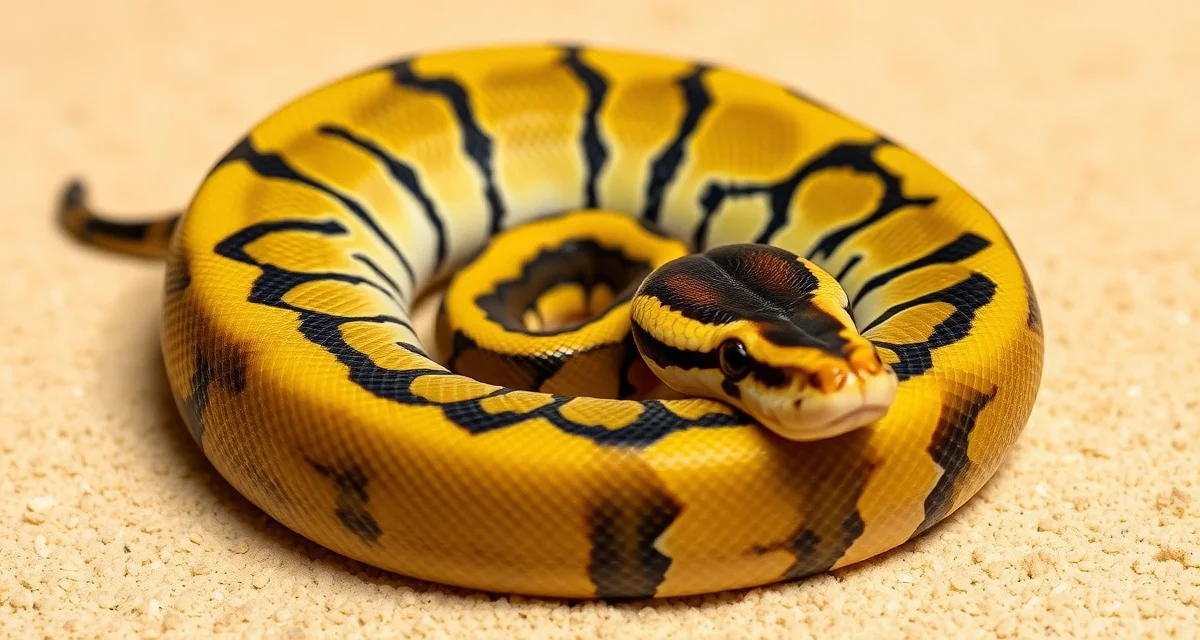
Bumblebee Ball Python and Related Spider Combinations: A Breeding Guide
By HatchLedger Editorial Team · Published 2025-06-14 · Updated Mar 13, 2026
Bumblebee (Pastel Spider) is one of the most visually striking and widely recognized combination morphs in the ball python hobby. The high-contrast banding pattern produced by combining Pastel and Spider creates a distinctive "bumblebee" appearance that has made this animal popular for over two decades. Working with Spider-related combinations means understanding both the genetics and the ethical considerations around the Spider wobble. Breeders using integrated software report 30% less time on administrative tasks, giving you more capacity for the careful evaluation these pairings require.
TL;DR
- Ball python breeding operations require systematic record-keeping from pre-season preparation through end-of-season sales.
- Females at 1,200-1,500g or more are the target weight before introducing them to a breeding male.
- Ovulation detection is the key event that anchors pre-lay shed and lay date calculations.
- Clutch profitability guide depends on understanding actual cost basis per animal, not just gross sale revenue.
- Well-documented animals with complete feeding histories and clear genetic records consistently sell faster and at higher prices.
What Is a Bumblebee?
Bumblebee is the combination of Pastel (co-dominant) and Spider (co-dominant). Since both are co-dominant mutations, neither copy needs to be homozygous for the animal to show both visual effects.
A Bumblebee ball python typically shows:
- High-contrast yellow and cream banding on a white background
- The spider-like "broken" pattern of the Spider gene
- Enhanced brightness from the Pastel gene
- Strongly reduced brown and black tones
Producing Bumblebees
Because both Pastel and Spider are co-dominant:
- A Pastel Spider (Bumblebee) x Normal pairing produces: 25% Bumblebee, 25% Pastel, 25% Spider, 25% Normal
- A Pastel x Spider pairing produces: 25% Bumblebee, 25% Pastel, 25% Spider, 25% Normal
You get Bumblebees at a 25% rate when one parent has Pastel and the other has Spider. You get 50% Bumblebees when using a Bumblebee parent.
The Spider Wobble Disclosure Requirement
Any animal carrying the Spider gene - including Bumblebee - is affected by the neurological condition associated with Spider. All animals with Spider gene will exhibit wobble to some degree. This is not a condition of Pastel; it comes specifically from Spider.
If you produce Bumblebees or any other Spider combination and sell them, disclosure of the neurological condition is required. This means telling buyers:
- The animal carries the Spider gene
- Spider animals have a wobble that ranges from mild to severe
- How the specific animal in question has appeared in terms of wobble severity
- That stress can worsen the appearance of wobble temporarily
Selling a Bumblebee or other Spider combination without disclosing the wobble is not ethical practice.
Related Spider Combinations
Spider combines visually with nearly every other morph in ways that produce high-contrast, dramatically patterned animals. Some common combinations besides Bumblebee:
Spinner (Spider Pinstripe): The Spider pattern on a Pinstripe background. Very reduced, high-contrast animal with an almost completely alien pattern.
Spider Clown: The abstract Clown patterning further broken up by Spider. Very distinctive appearance.
Spider Banana (Coral Glow Spider): The lavender Banana coloration on a Spider pattern background. Requires disclosure of both Banana's sex-linked genetics and Spider's wobble.
Lemon Blast (Pastel Pinstripe): Note - this does not actually include Spider, though it's sometimes confused with Bumblebee variants. Lemon Blast is Pastel + Pinstripe, no Spider involved.
Spider Cinnamon / Spider Black Pastel: Dramatically dark, high-contrast animals. Be careful with these combinations to avoid producing super forms of the dark alleles (see separate article on Cinnamon/Black Pastel).
Breeding Bumblebee Projects Responsibly
If you're going to work with Bumblebee and Spider combinations, the most responsible approach includes:
- Full disclosure on every Spider animal sold - make it part of your standard sale process, not something buyers have to ask about
- Accurate representation of wobble severity in each individual animal
- Buyer education - provide information about Spider wobble management and what buyers should expect
- Pricing honesty - don't price Spider animals as if the wobble doesn't exist
Keep complete records of every Spider-containing animal in your collection in HatchLedger's breeding management system, with notes on wobble severity for each individual. This information should accompany every sale.
For an overview of how breeding software supports ethics compliance and documentation, see the reptile breeder software comparison.
Frequently Asked Questions
What is the best approach to Bumblebee ball python breeding and Spider combinations?
Understand the Spider wobble before working with any Spider combination, and commit to full disclosure on every animal you produce that carries the Spider gene. Bumblebee production itself is straightforward: one parent needs Pastel, one needs Spider, and you'll produce 25% Bumblebees. The genetics are simple; the ethical responsibility is the more demanding part of working with this morph group.
How do professional breeders handle Bumblebee and Spider combination breeding?
Breeders who work ethically with Spider combinations have disclosure baked into their sales process from the start. They assess wobble severity in every Spider animal and communicate this honestly to buyers. Some have moved away from Spider entirely; others continue with it and invest heavily in buyer transparency. The ones with the strongest reputations for this morph group are those who over-communicate rather than under-communicate about the neurological condition.
What software helps manage ball python Spider combination genetics records?
HatchLedger is purpose-built for reptile breeders, connecting animal records, breeding history, clutch outcomes, and financial tracking in one system. Unlike generic spreadsheets, it's designed around the specific workflow of an active breeding season. Free for up to 20 animals.
What records should every reptile breeder maintain per animal?
At minimum: acquisition date and source, morph and genetic documentation, feeding log, weight history, any veterinary treatments, and breeding history including pairing dates, clutch of origin for captive-bred animals, and offspring records. These records serve your own management, buyer documentation, regulatory compliance, and long-term genetic tracking.
How should reptile breeders document genetics for buyers?
A complete genetic record for sale includes the animal's visual morph name, confirmed het genes and their basis (parentage documentation or proven-out production), possible het genes with probability percentages, hatch date, and parent morph information. Including clutch-of-origin records lets buyers independently verify the claims.
What is Bumblebee Ball Python and Related Spider Combinations: A Breeding Guide?
A bumblebee ball python is produced by combining the Pastel and Spider co-dominant mutations, resulting in high-contrast yellow and black banding. This breeding guide covers everything from pairing selection and ovulation tracking to clutch management and genetic record-keeping. It also addresses the ethical considerations around the Spider wobble neurological condition, helping breeders make informed decisions about working with Spider-related combinations responsibly and profitably.
How much does Bumblebee Ball Python and Related Spider Combinations: A Breeding Guide cost?
The guide itself is free editorial content published on HatchLedger. There are no purchase costs to read it. HatchLedger offers breeding management software subscriptions separately, which breeders can use to track pairings, ovulations, clutches, and sales records. Breeders report saving roughly 30% of administrative time using integrated software, which can translate to meaningful cost savings across a full breeding season when managing multiple females and clutches.
How does Bumblebee Ball Python and Related Spider Combinations: A Breeding Guide work?
The guide walks breeders through the full production cycle: conditioning females to 1,200–1,500g before the season, introducing males, detecting ovulation, calculating pre-lay shed and lay dates, and managing incubation. It explains the genetics of Pastel and Spider as co-dominant traits, describes expected offspring ratios from common pairings, and outlines how to document animals with complete feeding histories and genetic records to support faster sales at stronger prices.
What are the benefits of Bumblebee Ball Python and Related Spider Combinations: A Breeding Guide?
Key benefits include understanding the genetic mechanics behind bumblebee and related Spider combinations, improving clutch planning accuracy through ovulation-anchored date calculations, and building animal records that increase buyer confidence. Breeders who maintain clear genetic documentation and feeding histories consistently sell offspring faster and at higher prices. The guide also helps breeders weigh the ethical dimensions of working with Spider animals before committing to those pairings.
Who needs Bumblebee Ball Python and Related Spider Combinations: A Breeding Guide?
This guide is suited for ball python breeders at any experience level who are working with or considering Spider-based combinations. It is especially useful for breeders new to co-dominant genetics, those scaling up operations who need better record-keeping systems, and anyone who wants a clearer framework for evaluating clutch profitability. Hobbyists curious about the bumblebee morph's origins and ethical considerations will also find the content directly relevant.
How long does Bumblebee Ball Python and Related Spider Combinations: A Breeding Guide take?
A full bumblebee ball python breeding cycle typically spans six to nine months from initial pairing through egg hatch. Females are conditioned in autumn, introduced to males through winter, and ovulation generally occurs between January and April. The pre-lay shed follows roughly two weeks after ovulation, with egg laying occurring approximately thirty days post-ovulation. Incubation runs fifty-five to sixty days, meaning hatchlings typically emerge in late spring or summer depending on when ovulation occurred.
Related Articles
Sources
- USARK (United States Association of Reptile Keepers)
- Association of Reptilian and Amphibian Veterinarians (ARAV)
- World of Ball Pythons (WoBP genetics reference database)
- MorphMarket (reptile industry marketplace)
- Reptiles Magazine (Bowtie Inc.)
Get Started with HatchLedger
Every part of a ball python breeding operation -- from pairing records to clutch documentation to financial tracking -- works better when the data is connected rather than scattered across notebooks and spreadsheets. HatchLedger is built for exactly that. Try it free with up to 20 animals.