Shipping Live Ball Pythons Legally: Packaging, Carriers, and Compliance
By HatchLedger Editorial Team · Published 2025-06-11 · Updated Mar 13, 2026
Shipping a live ball python across the country requires the right carrier, the right packaging, and an understanding of the legal requirements. Get any of these wrong and you're risking the animal's life, a lost or refused shipment, or legal consequences. Breeders using integrated software report 30% less time on administrative tasks, which helps when managing the logistics of live animal shipping alongside your breeding records.
TL;DR
- Ball python breeding operations require systematic record-keeping from pre-season preparation through end-of-season sales.
- Females at 1,200-1,500g or more are the target weight before introducing them to a breeding male.
- Ovulation detection is the key event that anchors pre-lay shed and lay date calculations.
- Clutch profitability guide depends on understanding actual cost basis per animal, not just gross sale revenue.
- Well-documented animals with complete feeding histories and clear genetic records consistently sell faster and at higher prices.
Is It Legal to Ship Live Ball Pythons?
Yes, with the right carrier and proper packaging. Captive-bred ball pythons are legal to ship domestically within the United States through approved methods. International shipping requires permits (see the CITES compliance article for details).
The key legal requirement: the shipping method must meet carrier requirements, and for interstate commerce, animals must be captive-bred (wild-caught species require different documentation).
Which Carriers Accept Live Reptiles?
This is where many new breeders run into problems. The major carriers have specific policies:
FedEx: FedEx accepts live reptiles through their Priority Overnight service if the shipper holds a FedEx Live Animals Shipping Agreement. You must get this agreement established before shipping - it requires demonstrating that you meet their shipping standards. Not every FedEx location handles live animals - use FedEx Express drop-off locations or schedule a pickup.
UPS: UPS does not accept live reptiles as a general rule for standard shippers. There are certain licensed commercial accounts that can ship live animals through UPS, but this is not available to typical individual breeders.
USPS: USPS does not accept live snakes for shipping.
The practical reality: FedEx Priority Overnight is the standard carrier for live reptile shipping by breeders. This is how most animals in the hobby move. Setting up a FedEx Live Animals account is the first step.
Packaging Standards for Ball Pythons
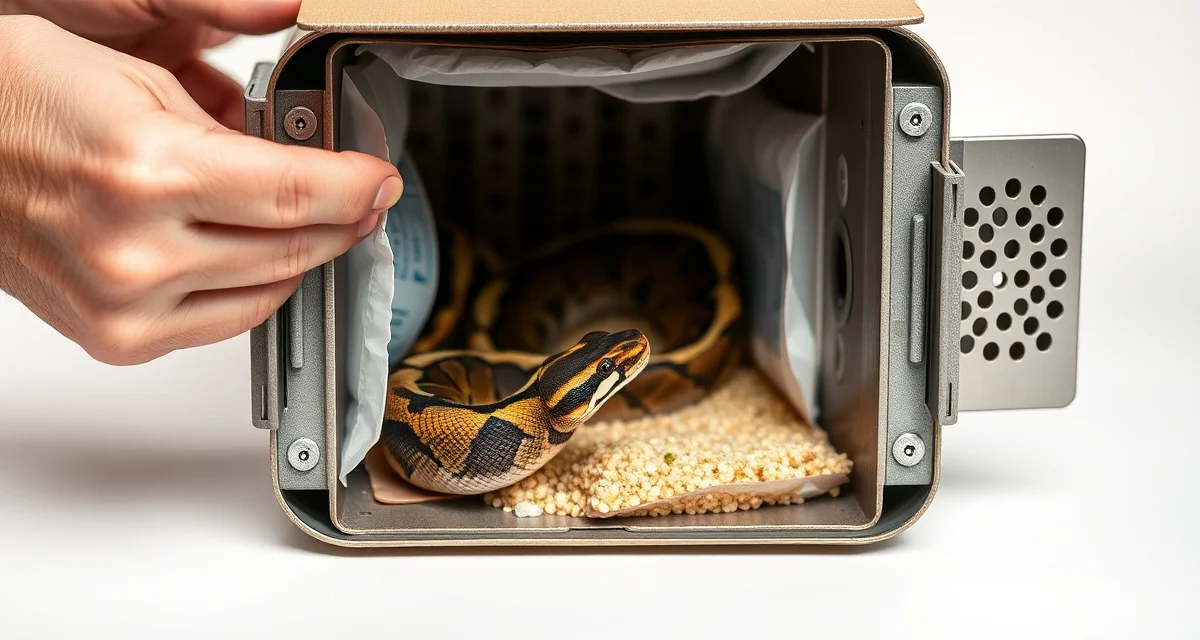
Proper packaging protects the animal and keeps the shipment within carrier requirements. The standard approach:
Inner container: A small, breathable cloth bag (snake bag) or deli cup with ventilation. The snake should be in a container that prevents excessive movement but allows some air circulation.
Insulated box: A foam-lined shipping box rated for live animal transport. Commercially made reptile shipping boxes with foam inserts are available. The foam maintains temperature stability.
Heat or cool packs as needed:
- Temperature below 40°F ambient: Include a heat pack (hand warmer) placed between the foam and the outer box, NOT directly against the snake bag. The heat should warm the box, not directly contact the animal.
- Temperature above 85-90°F ambient: Include a cold pack designed for reptile shipping (not a gel pack that could go below safe temperatures).
- Moderate weather: Neither may be needed, but check the forecast at both origin and destination.
Outer box: Place the insulated box inside a sturdy cardboard outer box for structural protection.
Labeling: "Live Harmless Reptiles" on the outside. FedEx may have specific labeling requirements under their live animal agreement.
Temperature Considerations for Shipping
Ball pythons can safely tolerate shipping temperatures in roughly the 65-85°F range when properly packaged. Outside this range, thermal support is needed.
Don't ship:
- When overnight low temperatures at origin or destination will be below 40°F without heat packs
- When daytime highs will be above 90°F without cooling
- On Fridays, before holidays, or during weather events that could delay overnight delivery
Overnight delivery should be 8-16 hours. Even well-packaged animals can be at risk if shipment is delayed to 24+ hours, particularly at temperature extremes.
Documenting Shipments
For every live animal shipped:
- Record the animal ID, buyer, ship date, tracking number, and delivery confirmation
- Note the weather conditions at origin and destination
- Log any packaging details (heat pack used, type of insulation)
If something goes wrong in transit (delayed delivery, temperature compromise), your documentation shows you shipped appropriately and the carrier was at fault.
Connect shipment records to animal sale records in HatchLedger's sales tracking system. For tools that support sales and shipment documentation alongside breeding records, see the reptile breeder software comparison.
Frequently Asked Questions
What is the best approach to legally shipping live ball pythons?
Set up a FedEx live animals shipping account, use their Priority Overnight service, and package with an insulated box, snake bag, and temperature support as needed. Never ship when weather forecasts indicate temperatures outside the safe range at either end of the route. Ship early in the week (Monday-Wednesday) to avoid weekend delays. Provide tracking to the buyer and confirm receipt once delivered.
How do professional breeders handle live ball python shipping logistics?
Established shippers have their FedEx account set up with the live animals agreement, use reliable insulated boxes they've tested, and check weather forecasts before committing to a ship date. They communicate clearly with buyers about what to expect on delivery day and have a written policy for shipping-related issues. Many won't ship when temperatures are borderline - a short wait for better weather is worth it.
What software helps manage ball python shipping and sales records?
HatchLedger is purpose-built for reptile breeders, connecting animal records, breeding history, clutch outcomes, and financial tracking in one system. Unlike generic spreadsheets, it's designed around the specific workflow of an active breeding season. Free for up to 20 animals.
What records should every reptile breeder maintain per animal?
At minimum: acquisition date and source, morph and genetic documentation, feeding log, weight history, any veterinary treatments, and breeding history including pairing dates, clutch of origin for captive-bred animals, and offspring records. These records serve your own management, buyer documentation, regulatory compliance, and long-term genetic tracking.
How should reptile breeders document genetics for buyers?
A complete genetic record for sale includes the animal's visual morph name, confirmed het genes and their basis (parentage documentation or proven-out production), possible het genes with probability percentages, hatch date, and parent morph information. Including clutch-of-origin records lets buyers independently verify the claims.
What is Shipping Live Ball Pythons Legally: Packaging, Carriers, and Compliance?
Shipping live ball pythons legally refers to the process of transporting captive-bred ball pythons domestically within the United States using approved carriers, compliant packaging, and proper documentation. It covers selecting carriers that accept live reptiles, building insulated shipping boxes, maintaining safe temperatures during transit, and understanding federal and state regulations. Getting these details right protects the animal, ensures delivery, and keeps the breeder in legal compliance throughout the transaction.
How much does Shipping Live Ball Pythons Legally: Packaging, Carriers, and Compliance cost?
Shipping a live ball python typically costs between $50 and $80 for overnight delivery, depending on the carrier and destination. Packaging materials — insulated foam box, heat or cold packs, and a secure inner container — add another $10 to $20 per shipment. Some breeders pass these costs to the buyer; others build them into the sale price. Overnight shipping is non-negotiable for live animals, so budget accordingly rather than opting for cheaper multi-day services.
How does Shipping Live Ball Pythons Legally: Packaging, Carriers, and Compliance work?
Legal ball python shipping works by using an approved reptile-friendly carrier, packing the snake in a secure breathable container inside an insulated foam-lined box, and adding appropriate heat or cold packs based on weather conditions. The shipment is sent overnight to minimize transit stress. Both sender and recipient must be available on delivery day. Some carriers require a live animal endorsement or prior account approval, so breeders should confirm carrier requirements before booking.
What are the benefits of Shipping Live Ball Pythons Legally: Packaging, Carriers, and Compliance?
Proper legal shipping protects the animal's welfare, reduces transit mortality, and shields the breeder from legal liability. Compliant packaging maintains safe temperatures and prevents escape or injury. Using approved carriers ensures the shipment won't be refused mid-route. Clear documentation — including a health certificate where required — builds buyer confidence and supports your reputation as a responsible breeder. Well-handled shipments also reduce chargebacks and disputes that can damage seller accounts on reptile marketplaces.
Who needs Shipping Live Ball Pythons Legally: Packaging, Carriers, and Compliance?
Anyone selling or transferring captive-bred ball pythons to buyers in another state needs to understand live reptile shipping requirements. This includes hobbyist breeders, small-scale operations, and commercial reptile producers. Buyers arranging pickup are exempt, but any mail-order or online sale triggers these rules. Breeders who manage multiple clutches per season and ship frequently benefit most from standardizing their process, since consistent packaging and carrier relationships reduce errors and save time across a high volume of shipments.
How long does Shipping Live Ball Pythons Legally: Packaging, Carriers, and Compliance take?
A properly packed ball python shipment sent via overnight service typically arrives within 24 hours of pickup. Most carriers offer morning delivery windows, which limits the time the snake spends in the box. Packing itself takes 15 to 30 minutes when materials are prepared in advance. Weather holds — when temperatures at origin or destination fall outside safe shipping ranges — can delay shipments by days, so breeders should monitor forecasts and communicate proactively with buyers about potential delays.
Related Articles
- Yellow Belly Complex Genetics in Ball Pythons: A Breeder's Guide
- Selling Ball Pythons at Expos vs. Online: A Practical Comparison
Sources
- USARK (United States Association of Reptile Keepers)
- Association of Reptilian and Amphibian Veterinarians (ARAV)
- World of Ball Pythons (WoBP genetics reference database)
- MorphMarket (reptile industry marketplace)
- Reptiles Magazine (Bowtie Inc.)
Get Started with HatchLedger
Every part of a ball python breeding operation -- from pairing records to clutch documentation to financial tracking -- works better when the data is connected rather than scattered across notebooks and spreadsheets. HatchLedger is built for exactly that. Try it free with up to 20 animals.