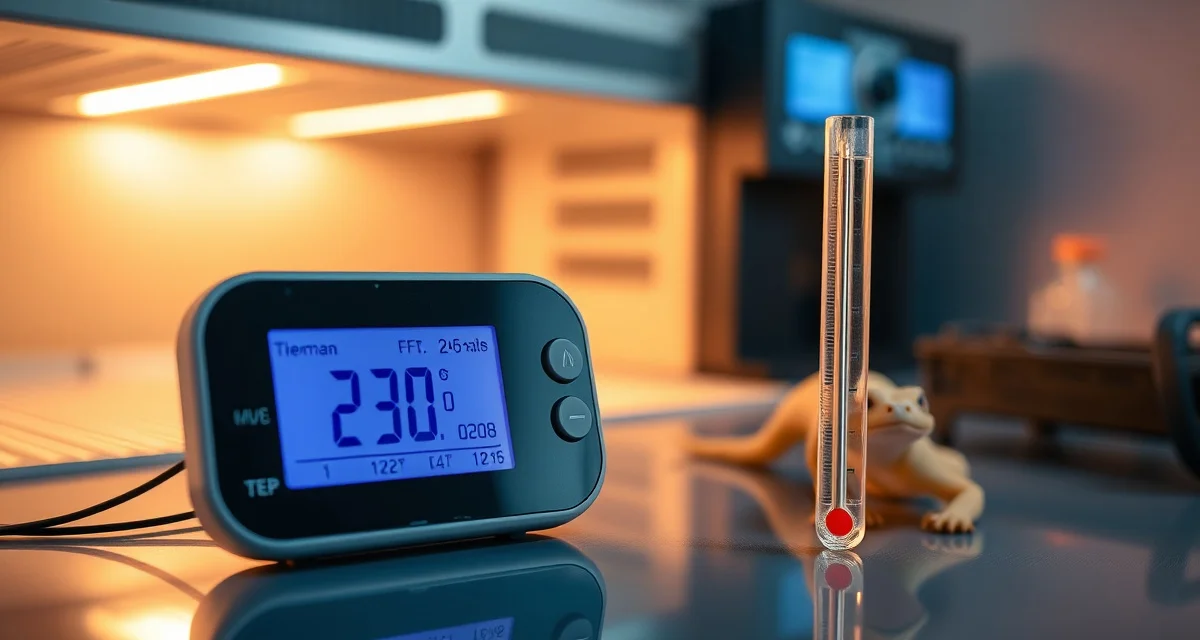
Thermostat Calibration for Ball Python Breeding Rooms
By HatchLedger Editorial Team · Published 2025-06-15 · Updated Mar 13, 2026
A thermostat that reads 88°F but actually delivers 91°F at the animal level is a problem that can go unnoticed for an entire breeding season, silently affecting animal health and potentially damaging developing eggs during incubation. Calibrating your thermostats isn't complicated, but it requires deliberate attention and the right tools. Breeders using integrated software report 30% less time on administrative tasks, which gives you time to do the verification work that temperature control demands.
TL;DR
- Ball python breeding operations require systematic record-keeping from pre-season preparation through end-of-season sales.
- Females at 1,200-1,500g or more are the target weight before introducing them to a breeding male.
- Ovulation detection is the key event that anchors pre-lay shed and lay date calculations.
- Clutch profitability guide depends on understanding actual cost basis per animal, not just gross sale revenue.
- Well-documented animals with complete feeding histories and clear genetic records consistently sell faster and at higher prices.
Why Calibration Matters
Your thermostat controls temperature based on what its probe reads. If the probe is accurate but placed in the wrong location, or if the probe itself has drift, the temperature at the animal level may be very different from your setpoint.
Common calibration problems:
- Thermostat probe placed too close to the heat source (reads high, thermostat underheats)
- Thermostat probe placed far from the heat source (reads low, thermostat overheats)
- Probe calibration drift over time (the probe reads differently than it did when new)
- Setpoint accuracy (the thermostat delivers a different temperature than displayed)
For breeding rooms with multiple thermostats controlling different zones (rack sections, incubators, individual enclosures), calibration errors compound.
What You Need for Calibration
Reference thermometer: A thermometer you trust to be accurate. Options include:
- A NIST-traceable calibrated probe thermometer (highest confidence, bought from scientific supply)
- An infrared thermometer with spot measurement accuracy (±1-2°F when used correctly)
- A high-quality digital probe thermometer that you've verified against ice bath (0°C/32°F at ice-water saturation) and boiling water (adjusting for altitude)
Don't use another cheap thermostat's probe as your reference - you'll just be comparing two potentially inaccurate instruments.
The Calibration Process
Step 1: Verify your reference thermometer.
If using an ice bath method: fill a container with ice and water (not just ice), let it stabilize, and confirm your reference reads 32°F (0°C). If it reads 33°F, you know it reads 1°F high and can compensate.
Step 2: Place the reference probe at the measurement point.
For a rack system: place your reference probe at animal level, in the area the thermostat probe is monitoring. Let both probes reach equilibrium for 15-20 minutes.
Step 3: Compare readings.
If your thermostat probe reads 88°F and your reference reads 90°F, your thermostat's probe reads 2°F cool - meaning it's delivering more heat than it thinks it is. Compensate by lowering your setpoint 2°F.
Step 4: Check at the actual target measurement point.
It's not enough to calibrate at the thermostat probe location - you want to know what temperature the animal is actually experiencing. Place your reference probe at the warm hide area of an enclosure and compare against the thermostat probe reading. The two may be different, and the animal's experience is what matters.
Step 5: Document your findings and adjustments.
Record:
- Date of calibration check
- Thermostat unit and zone
- Setpoint
- Reference thermometer reading at measurement point
- Offset found (if any)
- Adjustment made to setpoint
Calibration Frequency
Check calibration:
- At the start of each breeding season before introducing males to females
- When you get a new thermostat or replace a probe
- When you move equipment or change your rack configuration
- If you notice any animal health or behavioral changes that might relate to temperature
Thermostat probes can drift over time, particularly older analog types. Once-per-season verification is a reasonable minimum.
Incubator Calibration
Incubator temperature calibration follows the same process but with higher stakes. A 2°F error in your incubator running hot can affect developmental timing and potentially cause problems at high temperatures. Verify your incubator before each clutch season.
Practical tip: Check incubator temperature at egg level with a reference probe before placing eggs. This is the temperature your eggs will actually experience - not the air temperature at the top of the incubator.
Log all calibration checks in HatchLedger's facility records so you have a history of when your system was verified and what adjustments were made. This documentation is useful for troubleshooting any season where outcomes are unexpectedly poor.
For broader record-keeping tools that support husbandry documentation, see the reptile breeder software comparison.
Frequently Asked Questions
What is the best approach to thermostat calibration for ball python breeding rooms?
Use a reference thermometer you've verified against a known standard (ice bath or traceable reference). Compare your reference to your thermostat's probe reading at the measurement point, with both equilibrated for 15+ minutes. Adjust your setpoint to compensate for any offset found. Check at the actual animal level, not just the probe location. Document every calibration check with date and findings. Calibrate before breeding season and whenever you change your equipment configuration.
How do professional breeders handle thermostat calibration in their breeding facilities?
Experienced breeders typically have a dedicated reference thermometer for verification and check thermostat accuracy at the start of each breeding season and periodically during the year. For incubators, they verify temperature at egg level before setting clutches. After any calibration issue is found and corrected, they review whether the previous season's outcomes might have been affected by the error. This retrospective analysis helps them understand whether any past breeding or incubation problems had a temperature cause.
What software helps manage ball python thermostat calibration records?
HatchLedger is purpose-built for reptile breeders, connecting animal records, breeding history, clutch outcomes, and financial tracking in one system. Unlike generic spreadsheets, it's designed around the specific workflow of an active breeding season. Free for up to 20 animals.
What records should every reptile breeder maintain per animal?
At minimum: acquisition date and source, morph and genetic documentation, feeding log, weight history, any veterinary treatments, and breeding history including pairing dates, clutch of origin for captive-bred animals, and offspring records. These records serve your own management, buyer documentation, regulatory compliance, and long-term genetic tracking.
How should reptile breeders document genetics for buyers?
A complete genetic record for sale includes the animal's visual morph name, confirmed het genes and their basis (parentage documentation or proven-out production), possible het genes with probability percentages, hatch date, and parent morph information. Including clutch-of-origin records lets buyers independently verify the claims.
What is Thermostat Calibration for Ball Python Breeding Rooms?
Thermostat calibration for ball python breeding rooms is the process of verifying and correcting the difference between what your thermostat reads and the actual temperature experienced by your animals. A thermostat displaying 88°F may deliver 91°F at the animal level due to probe drift or poor probe placement. Calibration involves using a trusted reference thermometer to identify these discrepancies and adjust setpoints accordingly, ensuring temperatures are accurate throughout the breeding season and during egg incubation.
How much does Thermostat Calibration for Ball Python Breeding Rooms cost?
Thermostat calibration itself costs very little — the primary investment is a high-quality reference thermometer, which typically runs $20–$80 depending on accuracy and features. More advanced digital thermometers with calibration certificates can cost $100–$200. If you use a calibration service or purchase a NIST-traceable reference device, expect to spend more. The real cost of skipping calibration is far higher: compromised animal health, failed clutches, and an entire breeding season lost to undetected temperature errors.
How does Thermostat Calibration for Ball Python Breeding Rooms work?
Calibration works by comparing your thermostat's probe reading against a known-accurate reference thermometer placed at the same location — specifically at the animal level, not the probe level. You record the difference between the two readings and adjust your setpoint to compensate. For example, if your thermostat reads 88°F but your reference reads 91°F, you lower your setpoint by 3°F. Repeat this process across multiple rack levels and enclosures to catch any variation throughout your breeding room.
What are the benefits of Thermostat Calibration for Ball Python Breeding Rooms?
Proper calibration protects animal health by ensuring snakes are held at their correct temperature range, which is critical for conditioning, breeding behavior, and successful ovulation. During incubation, even a 2–3°F variance can affect embryo development and hatch rates. Calibrated systems also reduce wasted energy and give breeders confidence in their records. When combined with breeding management software, accurate temperature data makes it easier to correlate environmental conditions with clutch outcomes over multiple seasons.
Who needs Thermostat Calibration for Ball Python Breeding Rooms?
Any ball python breeder who uses thermostat-controlled racks, incubators, or dedicated breeding rooms needs regular thermostat calibration. This is especially important for operations running multiple racks or incubators simultaneously, where a single miscalibrated probe can affect dozens of animals or an entire clutch. Both hobbyist breeders and professional operations benefit, but larger facilities with more equipment face greater risk from undetected drift and should treat calibration as a non-negotiable part of seasonal preparation.
How long does Thermostat Calibration for Ball Python Breeding Rooms take?
A single calibration check takes 15–30 minutes per thermostat, including stabilization time for your reference thermometer. A full breeding room with multiple racks and an incubator can typically be calibrated in 2–4 hours. Calibration should be performed at the start of each breeding season, after any thermostat or probe replacement, and following power outages or equipment moves. Ongoing spot checks throughout the season add minimal time but catch probe drift before it becomes a serious problem.
Related Articles
- Ball Python Breeding Business Plan: Building a Sustainable Operation from the Ground Up
- Ball Python Cinnamon Morph Breeding Guide: Genetics, Combos, and What to Expect
Sources
- USARK (United States Association of Reptile Keepers)
- Association of Reptilian and Amphibian Veterinarians (ARAV)
- World of Ball Pythons (WoBP genetics reference database)
- MorphMarket (reptile industry marketplace)
- Reptiles Magazine (Bowtie Inc.)
Get Started with HatchLedger
Every part of a ball python breeding operation -- from pairing records to clutch documentation to financial tracking -- works better when the data is connected rather than scattered across notebooks and spreadsheets. HatchLedger is built for exactly that. Try it free with up to 20 animals.