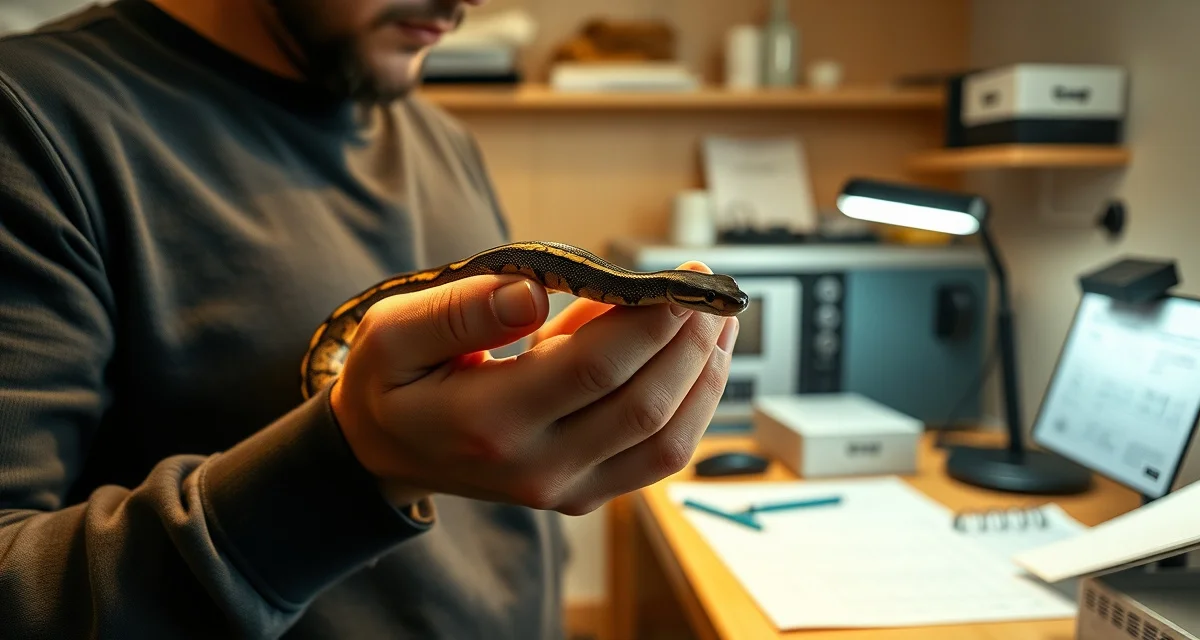
Building a Reptile Breeder Brand: Establishing Your Identity in the Ball Python Community
By HatchLedger Editorial Team · Published 2025-06-17 · Updated Mar 13, 2026
Your brand as a ball python breeder isn't just a logo or a business name - it's the sum of what buyers, collectors, and other breeders think of when they hear your name. Breeders with strong brands sell animals faster, at better prices, and to buyers who return season after season. Building that reputation takes consistent behavior over years, not a single marketing effort. Breeders using integrated software report 30% less time on administrative tasks, freeing up more time for the community engagement and animal quality that builds real reputation.
TL;DR
- Ball python breeding operations require systematic record-keeping from pre-season preparation through end-of-season sales.
- Females at 1,200-1,500g or more are the target weight before introducing them to a breeding male.
- Ovulation detection is the key event that anchors pre-lay shed and lay date calculations.
- Clutch profitability guide depends on understanding actual cost basis per animal, not just gross sale revenue.
- Well-documented animals with complete feeding histories and clear genetic records consistently sell faster and at higher prices.
What a Breeder Brand Actually Consists Of
Before thinking about logos and social media, understand what constitutes your brand in the reptile community:
Animal quality: Do you produce healthy, well-fed, well-documented animals? Quality is the foundation everything else builds on.
Accuracy and honesty: Are your genetic claims accurate? Do you disclose known issues? Breeders who are known for honest representation survive reputation challenges that inaccurate breeders don't.
Post-sale support: Do you answer questions from buyers after the sale? Do you stand behind your animals with a reasonable warranty? Reputation spreads through buyer experiences.
Consistency: Are you producing the same quality year after year? Consistent production beats occasional spectacular clutches.
Community involvement: Do you contribute knowledge, answer questions, mentor newer breeders? Community standing builds reputation in the hobby.
Naming Your Program
Your breeding program name is the most persistent element of your brand. Choose something:
- Memorable and pronounceable
- Not confusingly similar to established breeders
- Appropriate across the platforms where you'll use it (social media handles, domain names)
- Something you'll want to be associated with for years
Avoid names that lock you into specific morphs you may not always produce. "Ivory Pied Reptiles" is hard to pivot if you change direction.
Documenting Quality as Brand Building
Complete, accurate documentation for every animal you produce is both good practice and brand building. When buyers can verify:
- Parentage records in your breeding software
- Health history and quarantine documentation
- Feeding records showing consistent eating
- Accurate genetic claims backed by documentation
...they trust your claims on the next animal they buy from you without requiring the same verification. Trust, built through documentation, is a commercial asset.
Keep all of this documentation organized and accessible in HatchLedger's breeding management system. The ability to answer any question a buyer has with specific records rather than "I'm pretty sure" is a brand differentiator.
Consistency Over Flash
New breeders often focus on producing one exceptional clutch and marketing it heavily. Established breeders understand that the brand is built through consistency:
- Consistent animal quality
- Consistent communication response time
- Consistent documentation standards
- Consistent show presence or online engagement
A buyer who has a great experience with you twice will recommend you to their network. A buyer who has one great experience and one frustrating experience is less likely to.
Managing Your Reputation Online
In the reptile hobby, reputation spreads through social media, forum discussions, and word of mouth. A few considerations:
Respond to negative feedback professionally. Every breeder eventually has a buyer who's unhappy. How you respond matters more than the initial complaint. A professional, solution-oriented response to a public complaint demonstrates character. A defensive or dismissive response does the opposite.
Don't overpromise. Listing genetic claims you can't verify or making guarantees you can't fulfill consistently creates the very reputation problems you're trying to avoid.
Be known for specific things. Breeders who are "the Banana Pied person" or "the one who always has clean documentation" are easier to recommend. Specialization builds a more memorable brand than being everything to everyone.
For tracking your sales and buyer records that underpin your brand's reputation, see how different tools work in the reptile breeder software comparison.
Frequently Asked Questions
What is the best approach to building a reptile breeder brand in the ball python community?
Start with the fundamentals: consistent animal quality, accurate claims, and reliable communication. These create the reputation that branding then amplifies. Choose a program name that's flexible and memorable. Document everything so your accuracy claims are verifiable. Engage consistently in the community - forums, social media, expos - so your name is associated with knowledge and reliability. Reputation in the reptile hobby is built slowly and damages quickly.
How do professional breeders handle brand building and reputation management?
Established breeders focus on the operational excellence (documentation, animal quality, customer service) that creates reputation organically, then use marketing to make that reputation visible. They respond professionally to any public feedback, even when they disagree with it. Many have built specific expertise associations - certain morphs or genetic projects - that make their name synonymous with quality in those areas specifically.
What software helps manage ball python breeding records that support brand credibility?
HatchLedger is purpose-built for reptile breeders, connecting animal records, breeding history, clutch outcomes, and financial tracking in one system. Unlike generic spreadsheets, it's designed around the specific workflow of an active breeding season. Free for up to 20 animals.
What records should every reptile breeder maintain per animal?
At minimum: acquisition date and source, morph and genetic documentation, feeding log, weight history, any veterinary treatments, and breeding history including pairing dates, clutch of origin for captive-bred animals, and offspring records. These records serve your own management, buyer documentation, regulatory compliance, and long-term genetic tracking.
How should reptile breeders document genetics for buyers?
A complete genetic record for sale includes the animal's visual morph name, confirmed het genes and their basis (parentage documentation or proven-out production), possible het genes with probability percentages, hatch date, and parent morph information. Including clutch-of-origin records lets buyers independently verify the claims.
What is Building a Reptile Breeder Brand: Establishing Your Identity in the Ball Python Community?
Building a reptile breeder brand means establishing the reputation, trust, and identity that defines how buyers, collectors, and fellow breeders perceive you in the ball python community. It encompasses your animal quality, communication standards, genetic documentation practices, and long-term consistency. Unlike a logo or business name, your brand is built through repeated behavior over seasons — honest listings, healthy animals, and reliable follow-through that generates word-of-mouth referrals and repeat buyers year after year.
How much does Building a Reptile Breeder Brand: Establishing Your Identity in the Ball Python Community cost?
Building a reptile breeder brand has no fixed monetary cost — it's an investment of time, consistency, and operational discipline. Basic costs include quality enclosures, feeding supplies, and record-keeping tools. Breeder software like HatchLedger can reduce administrative time by up to 30%, freeing resources for community engagement. The real currency is reputation, earned through transparent genetic records, honest communication, and animals that arrive healthy and well-documented.
How does Building a Reptile Breeder Brand: Establishing Your Identity in the Ball Python Community work?
Building your breeder brand works by aligning every customer touchpoint — animal health, accurate genetic records, responsive communication, and post-sale support — into a consistent experience. Buyers who receive well-documented animals with complete feeding histories trust you and return. That trust compounds: positive reviews attract new buyers, your name circulates at expos and in forums, and your listings sell faster at stronger prices than competitors with weaker reputations.
What are the benefits of Building a Reptile Breeder Brand: Establishing Your Identity in the Ball Python Community?
A strong breeder brand lets you sell animals faster, at higher prices, and to buyers who return each season. Well-documented animals with clear genetic records consistently command premium value. Brand reputation reduces marketing effort — buyers seek you out. You gain access to better trade opportunities with other respected breeders, build a loyal customer base, and differentiate yourself in a crowded market where animal quality and trust are the primary purchasing drivers.
Who needs Building a Reptile Breeder Brand: Establishing Your Identity in the Ball Python Community?
Any ball python breeder looking to move beyond casual hobbyist sales into a sustainable operation needs to think about brand. This is especially important for breeders producing multiple clutches per season, working with valuable morphs, or selling at expos and online. If you want repeat customers, referral-driven sales, or the ability to charge premium prices for quality animals, intentional brand-building is essential — not optional — regardless of your operation's current size.
How long does Building a Reptile Breeder Brand: Establishing Your Identity in the Ball Python Community take?
Building a meaningful breeder brand takes multiple seasons of consistent behavior, not a single marketing push. Buyers remember their first purchase experience, and reputation spreads gradually through forums, social media, and expo networks. Expect at least two to three breeding seasons before your name carries real weight in the community. Systematic record-keeping and consistent animal quality from day one accelerates this timeline by giving buyers documented proof of your standards from the very start.
Related Articles
- Ball Python Follicle Development and Ovulation Timing: A Practical Breeder's Guide
- Building a Waitlist for High-Demand Ball Python Morphs
Sources
- USARK (United States Association of Reptile Keepers)
- Association of Reptilian and Amphibian Veterinarians (ARAV)
- World of Ball Pythons (WoBP genetics reference database)
- MorphMarket (reptile industry marketplace)
- Reptiles Magazine (Bowtie Inc.)
Get Started with HatchLedger
Every part of a ball python breeding operation -- from pairing records to clutch documentation to financial tracking -- works better when the data is connected rather than scattered across notebooks and spreadsheets. HatchLedger is built for exactly that. Try it free with up to 20 animals.