Ball Python Feeder Rodent Sourcing and Storage: Advanced Breeder Guide
By HatchLedger Editorial Team · Published 2025-04-24 · Updated Mar 13, 2026
Breeders using integrated software report 30% less time on administrative tasks, and feeder management is one of the areas where that efficiency shows up in your P&L. Feed is your largest ongoing operating cost. How you source, store, and manage feeders directly affects both your cost of production and the quality of nutrition you're providing your animals.
TL;DR
- Ball python breeding operations require systematic record-keeping from pre-season preparation through end-of-season sales.
- Females at 1,200-1,500g or more are the target weight before introducing them to a breeding male.
- Ovulation detection is the key event that anchors pre-lay shed and lay date calculations.
- Clutch profitability guide depends on understanding actual cost basis per animal, not just gross sale revenue.
- Well-documented animals with complete feeding histories and clear genetic records consistently sell faster and at higher prices.
For a breeding operation feeding 50-150 animals at various life stages, feeder procurement isn't an afterthought. It's a supply chain decision that deserves the same analytical attention you give to genetics guide and incubation.
Calculating Your Feeder Needs
Before optimizing your sourcing, know exactly what you need. Build a feeder inventory by running through your collection:
- How many animals of each size class do you have?
- What prey item size does each size class eat?
- What's the feeding frequency for each group?
A rough example for a collection of 80 animals:
- 30 hatchlings/juveniles (<400g): pinkies/hoppers/small mice, weekly = 120 mice/month
- 25 growing juveniles (400-800g): small rats/adult mice, every 7-10 days = 75-90 feeders/month
- 25 adults (800g+): medium/large rats, every 10-14 days = 50-60 rats/month
Running these numbers tells you your monthly consumption and how much freezer capacity you need for a 4-6 week supply (your standard buffer stock).
Live vs. Frozen/Thawed for Your Operation
If your animals are eating frozen/thawed (the strongly recommended standard), your sourcing options are much more flexible than if you maintain a live operation.
Frozen feeder advantages for breeding operations:
- Store for 6-12 months in proper freezer conditions
- Buy in bulk at notable per-unit discounts
- No ongoing animal care, space, or smell issues
- Consistent prey size by ordering specific categories
- Reduced handling stress vs. live feeding scenarios
Live feeder considerations:
- Necessary only for animals that haven't or won't convert to frozen/thawed
- Can be produced in-house (rodent breeding colony) for lower per-unit cost
- Requires dedicated space, equipment, and ongoing care
- Biosecurity risk (live feeders can carry parasites and disease)
For most operations, frozen/thawed procurement from commercial suppliers is the most practical and cost-effective approach.
Frozen Feeder Suppliers
The online frozen feeder market has several established suppliers that ship nationwide. Key factors when evaluating suppliers:
Quality indicators:
- Animals raised on appropriate diets (nutritional content matters)
- Clean processing and packaging
- Consistent sizing within categories (you don't want surprise variability in what's sold as "medium rat")
- Reliable inventory availability
Operational considerations:
- Minimum order sizes and quantities
- Shipping options and costs (overnight shipping for frozen goods)
- Packaging for transit (dry ice or gel packs, insulated packaging)
- Customer service responsiveness
Popular suppliers in the community (research current reviews before ordering): RodentPro, Layne Labs, Mice Direct, Big Cheese Rodents, and similar established operations. The market changes; check current community recommendations.
Buying in bulk: Ordering 500-1,000 feeders at a time typically produces the lowest per-unit cost. This requires adequate freezer capacity but pays off at scale.
Freezer Capacity Planning
Calculate your freezer needs: 500 adult mice occupy roughly 1-1.5 cubic feet. 200 medium rats occupy roughly 2-3 cubic feet. Plan for 4-6 weeks of supply plus some buffer.
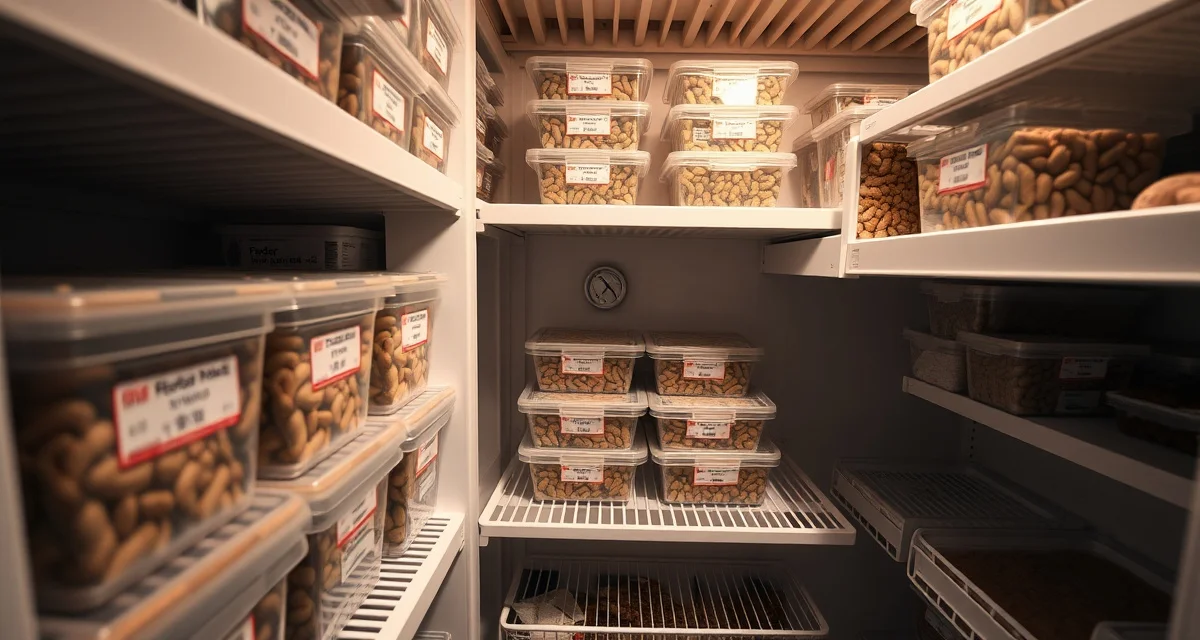
A dedicated chest freezer (5-7 cubic feet) handles most small-to-medium operations. Larger operations may need multiple chest freezers or upright freezers. Chest freezers are more energy-efficient and maintain temperature better during power outages.
Organization within the freezer:
- Use bins or bags to separate prey sizes
- Label clearly with purchase date for FIFO (first-in, first-out) rotation
- Keep a running inventory taped to the freezer lid
Thawing Best Practices
Thawing technique affects prey quality and feeding success:
Warm water method: Place frozen feeders in a sealed plastic bag and submerge in warm water (90-100F). Change water as it cools. Most feeders thaw in 15-30 minutes. This method maintains a warm surface temperature that triggers feeding responses.
Refrigerator overnight method: Move feeders from freezer to refrigerator the night before use. Slow, cold thawing is gentler on the cellular structure. Feeders will be cool (38-45F) and need warming before offering. Use warm water to bring up to temperature before feeding.
Counter thawing: Not recommended. Room temperature thawing allows bacterial growth on the exterior while the interior is still frozen. Creates inconsistent temperature and potential food safety issues.
Microwave: Only as a last resort and only briefly. Uneven heating risks hot spots and steam pockets. Not recommended.
Never refreeze: Once thawed, feeders should be used or discarded. Refreezing compromises tissue quality and can accelerate bacterial growth.
Rodent Breeding Colony as an Option
For large operations, breeding your own feeder rodents can reduce per-unit costs notably. An established mouse colony maintained by a family of 3-4 breeding pairs can produce enough pinkies and small mice for a notable hatchling population.
Considerations:
- Dedicated space required (rodent room or area separate from reptiles, ideally)
- Ongoing feed and bedding costs
- Smell management (ventilation, cleaning frequency)
- Disease transmission risk if rodents contact reptile areas
- Time investment for daily care
The economics work for large operations; for smaller ones, commercial frozen supply is usually more cost-effective when you account for all inputs including your time.
Tracking Feeder Costs
Feed costs should be tracked per feeding event and summed per animal per month. For a production operation, this tells you:
- Cost per animal per month (compare across size classes)
- Cost per clutch produced (important for P&L)
- Whether bulk buying is producing the per-unit savings you expect
HatchLedger's feeding logs connect each feeding to the specific animal, allowing cost-per-feeding tracking when you enter prey costs. This data connects to your clutch P&L, giving you accurate production costs that include the full feeding cost of raising animals from hatch to breeding size.
The HatchLedger reptile breeder software keeps this financial data connected to your operational records, making the cost analysis available when you need it for project planning and pricing decisions.
Frequently Asked Questions
What is the best approach to ball python feeder rodent sourcing and storage?
Calculate your monthly consumption by size class before ordering, maintain a 4-6 week supply in a dedicated chest freezer, and order in bulk from reputable online suppliers to minimize per-unit cost. Thaw feeders in warm water immediately before use and never refreeze thawed prey. Track feeder costs per animal to understand true production costs.
How do professional breeders handle feeder rodent sourcing and storage?
Production breeders treat feeder procurement like supply chain management: calculating consumption, maintaining buffer stock, and ordering on a schedule that prevents stock-outs without excessive overstocking. They use dedicated chest freezers, organize by prey size with FIFO rotation, and track feed costs as part of per-clutch P&L analysis.
What records should every reptile breeder maintain per animal?
At minimum: acquisition date and source, morph and genetic documentation, feeding log, weight history, any veterinary treatments, and breeding history including pairing dates, clutch of origin for captive-bred animals, and offspring records. These records serve your own management, buyer documentation, regulatory compliance, and long-term genetic tracking.
How should reptile breeders document genetics for buyers?
A complete genetic record for sale includes the animal's visual morph name, confirmed het genes and their basis (parentage documentation or proven-out production), possible het genes with probability percentages, hatch date, and parent morph information. Including clutch-of-origin records lets buyers independently verify the claims.
What is Ball Python Feeder Rodent Sourcing and Storage: Advanced Breeder Guide?
This guide covers professional-level feeder rodent sourcing, storage, and management strategies for ball python breeding operations. It addresses supply chain decisions for collections of 50–150+ animals, helping breeders calculate exact feeder needs by life stage, evaluate bulk purchasing versus live breeding, optimize freezer storage systems, and track feed costs as a true line item in their cost of production — ultimately improving both animal nutrition quality and operational profitability.
How much does Ball Python Feeder Rodent Sourcing and Storage: Advanced Breeder Guide cost?
The guide itself is free editorial content published on HatchLedger. The strategies inside help you reduce your actual feeder spend — bulk purchasing, rodent co-ops, and in-house breeding can each lower per-feeder costs significantly depending on your operation's scale. Breeders using HatchLedger's integrated software tools report roughly 30% less time on administrative tasks, which translates to real savings across feeder management and other operational areas.
How does Ball Python Feeder Rodent Sourcing and Storage: Advanced Breeder Guide work?
The guide walks you through building a feeder inventory matrix based on your collection's size distribution, then maps procurement options — local suppliers, online bulk shippers, breeding your own — against cost, logistics, and reliability. It covers freezer organization, thaw protocols, and integrating feeder records into your broader breeding software so feed history is attached to each animal, supporting accurate cost-of-production calculations per clutch.
What are the benefits of Ball Python Feeder Rodent Sourcing and Storage: Advanced Breeder Guide?
Key benefits include lower cost of goods through smarter bulk purchasing, reduced spoilage with proper freezer rotation systems, better animal health outcomes from consistent feeder sizing and nutrition, and cleaner financial records. Animals with documented feeding histories sell faster and at higher prices. Operationally, systematic feeder tracking reduces the guesswork in ordering cycles and prevents both shortfalls during peak feeding periods and costly overstock waste.
Who needs Ball Python Feeder Rodent Sourcing and Storage: Advanced Breeder Guide?
This guide is written for intermediate to advanced ball python breeders managing collections of 50 or more animals across multiple life stages. It's especially relevant for breeders treating their operation as a business — those tracking cost basis per clutch, managing cash flow around peak season, and looking to tighten margins. Hobbyists scaling up will also find the inventory calculation framework useful as their feeder volume grows.
How long does Ball Python Feeder Rodent Sourcing and Storage: Advanced Breeder Guide take?
Implementing the core framework — building your feeder inventory matrix and establishing a storage and ordering cadence — takes a few hours of initial setup. Ongoing management integrates into your regular husbandry routine. Breeders who connect feeder tracking to software like HatchLedger report the administrative overhead drops significantly once the system is running, with ordering decisions becoming faster and more data-driven within the first full breeding season.
Related Articles
Sources
- USARK (United States Association of Reptile Keepers)
- Association of Reptilian and Amphibian Veterinarians (ARAV)
- World of Ball Pythons (WoBP genetics reference database)
- MorphMarket (reptile industry marketplace)
- Reptiles Magazine (Bowtie Inc.)
Get Started with HatchLedger
Every part of a ball python breeding operation -- from pairing records to clutch documentation to financial tracking -- works better when the data is connected rather than scattered across notebooks and spreadsheets. HatchLedger is built for exactly that. Try it free with up to 20 animals.