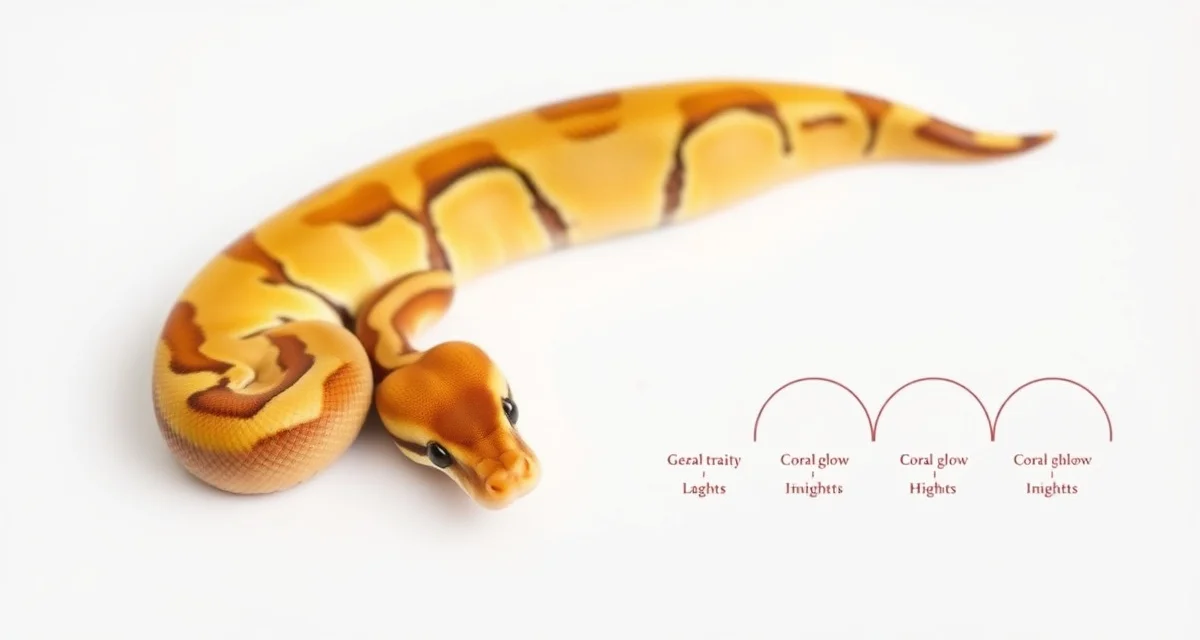
Ball Python Banana and Coral Glow Morph Guide: Sex-Linked Genetics
By HatchLedger Editorial Team · Published 2025-04-29 · Updated Mar 13, 2026
Breeders using integrated software report 30% less time on administrative tasks, and banana/coral glow is one of the morphs where that record-keeping efficiency matters most. Sex-linked inheritance produces offspring outcomes that differ depending on which parent carries the gene, and tracking which animals came from which sex parent is essential for accurately representing genetics to buyers.
TL;DR
- Ball python breeding operations require systematic record-keeping from pre-season preparation through end-of-season sales.
- Females at 1,200-1,500g or more are the target weight before introducing them to a breeding male.
- Ovulation detection is the key event that anchors pre-lay shed and lay date calculations.
- Clutch profitability guide depends on understanding actual cost basis per animal, not just gross sale revenue.
- Well-documented animals with complete feeding histories and clear genetic records consistently sell faster and at higher prices.
Banana (also sold as coral glow, with some debate about whether these are the same mutation) is one of the most commercially notable and genetically interesting ball python morphs. Understanding its sex-linked inheritance isn't optional for breeders working with this morph.
What Is Sex-Linked Inheritance?
Most ball python morphs follow standard autosomal inheritance where both parents contribute equally to offspring regardless of sex. Sex-linked traits are different: they're carried on the sex chromosomes (Z and W in snakes) rather than on autosomes.
Ball pythons are ZW in females and ZZ in males (opposite from mammals, where females are XX). The banana mutation is on the Z chromosome.
This creates a fundamentally different transmission pattern depending on which parent carries the gene:
The Transmission Asymmetry
Banana male (Z_banana Z_normal) x Normal female (Z_normal W):
- Sons receive one Z from dad (banana or normal, 50/50) and one Z from mom (normal)
- Daughters receive one Z from dad (banana or normal, 50/50) and the W from mom
- Result: ~50% banana sons, ~50% normal sons, ~50% banana daughters, ~50% normal daughters
Normal male (Z_normal Z_normal) x Banana female (Z_banana W):
- Sons receive one Z from dad (always normal) and one Z from mom (always banana)
- Daughters receive one Z from dad (always normal) and the W from mom
- Result: ~100% banana sons, 0% banana daughters, 0% normal sons, 100% normal daughters
This asymmetry is the key insight: a banana female always passes her banana gene to her sons. You cannot produce a banana daughter from a banana mother and a normal father.
Implications for Breeding Projects
If you want banana daughters: You need a banana male. A banana female cannot produce banana daughters when bred to a normal male.
If you want banana sons: Either parent can contribute the gene, but a banana female bred to a normal male produces 100% banana sons (though no banana daughters).
Super banana: When a son receives the banana gene from both a banana father and a banana mother (only possible from banana x banana pairings), you get a super banana (also called super coral glow). Super bananas are purer in their visual expression with less dark spotting than single-copy banana.
Banana vs. Coral Glow: One Gene or Two?
The community debate about whether banana and coral glow are the same mutation, or two mutations that produce similar appearances, has largely settled on the position that they're the same gene or at minimum alleles at the same locus. Both are sex-linked co-dominant with similar appearance and inheritance pattern.
Some breeders market the same morph as coral glow or banana depending on their preference or the lineage of their animals. When buying and selling, verify the sex-linked nature of the animal with the seller and don't assume "banana" and "coral glow" represent different genetics without confirmation.
Banana Combinations
The banana gene combines well with most other morphs. Its bright orange-yellow coloration adds warmth to nearly any visual combination. Some of the most popular:
Banana pastel: Pastel brightens and enhances banana's coloration. Very popular, accessible (pastel is co-dominant in single copy), good market value.
Banana pied: Stunning contrast of banana's coloration against pied's white areas. Requires one pied gene (recessive) plus banana. Strong demand.
Banana clown: Banana coloration with clown banding. One of the more visually distinctive and commercially successful combinations in current production.
Banana spider: Note wobble disclosure requirements (see spider article). The visual combination is striking but requires full buyer disclosure.
Banana black pastel: Darkening black pastel gene combined with banana creates a high-contrast animal often with dark spotting patterns.
Record-Keeping for Sex-Linked Breeding
With sex-linked morphs, the sex of the parent matters for interpreting offspring genetics. This means your records need to clearly track:
- Which parent (and which sex) carried the banana gene in each pairing
- The sex of every offspring
- The genetic expectations for each sex separately
A clutch from a banana male x normal female might produce 8 offspring: 4 banana sons, 2 normal sons, 4 banana daughters, 2 normal daughters (approximately). Your records should show both the morph status and sex of each hatchling.
A clutch from a normal male x banana female might produce: 5 banana sons, 0 banana daughters, 0 normal sons, 5 normal daughters. If you accidentally list a daughter from this cross as banana, you've misrepresented the genetics.
HatchLedger's morph tracking and offspring records support sex-linked trait inheritance tracking. Recording both the sex of each offspring and their morph designation, linked to the parentage records, creates verifiable documentation of sex-linked outcomes.
Buying Banana/Coral Glow Animals
When buying banana animals for a project, ask:
- What was the sex of the parent that carried the banana gene?
- Was the animal's sex confirmed by probing or popping?
- If sex was not determined by the seller, can you confirm it before purchase?
Sex determination is more commercially important with banana than with most other morphs because sex affects genetic value differently here.
Current Market for Banana
Banana is a mature morph in the hobby. Single gene banana animals sell for $75-200 depending on sex, quality, and current market conditions. Banana females are often valued slightly higher for the 100% banana sons production capability. Combination banana animals (banana pied, banana clown) command substantially higher prices.
Research current prices on Morph Market before listing, as banana is one of the morphs where value has shifted notably over the past several years.
The HatchLedger reptile breeder software tracks per-animal and per-clutch financial data alongside genetics, giving you the P&L context to evaluate whether your banana project is generating the returns you're targeting.
Frequently Asked Questions
What is the best approach to ball python banana sex-linked genetics?
Understand the transmission asymmetry: banana females pass the gene to all sons but no daughters; banana males pass it to 50% of offspring of both sexes. If your goal is producing banana daughters, you need a banana male. Always record both the sex of banana animals and which sex parent carried the gene in your breeding records.
How do professional breeders handle ball python banana genetics?
Experienced breeders plan banana pairings based on the specific offspring they want to produce (banana sons vs. banana daughters), confirm sex of all offspring before listing them, and accurately document the sex of the parent that carried the banana gene in all offspring records. They understand that mis-sexed banana animals can be misrepresented genetically even without intent to deceive.
What records should every reptile breeder maintain per animal?
At minimum: acquisition date and source, morph and genetic documentation, feeding log, weight history, any veterinary treatments, and breeding history including pairing dates, clutch of origin for captive-bred animals, and offspring records. These records serve your own management, buyer documentation, regulatory compliance, and long-term genetic tracking.
How should reptile breeders document genetics for buyers?
A complete genetic record for sale includes the animal's visual morph name, confirmed het genes and their basis (parentage documentation or proven-out production), possible het genes with probability percentages, hatch date, and parent morph information. Including clutch-of-origin records lets buyers independently verify the claims.
What is Ball Python Banana and Coral Glow Morph Guide: Sex-Linked Genetics?
The Ball Python Banana and Coral Glow Morph Guide covers sex-linked genetics for one of the most commercially significant ball python morphs. Banana and coral glow (likely the same mutation) follow sex-linked inheritance patterns, meaning offspring ratios differ based on which parent carries the gene. The guide explains how to predict clutch outcomes, maintain accurate genetic records, and represent animals correctly to buyers — essential knowledge for any breeder working with this morph.
How much does Ball Python Banana and Coral Glow Morph Guide: Sex-Linked Genetics cost?
The guide itself is free educational content on HatchLedger. However, the broader cost consideration for breeders is the investment in banana or coral glow animals, which remain premium-priced morphs. Females should reach 1,200–1,500g before breeding, representing months of feeding costs. Tracking your true cost basis per animal — including feeding, housing, and incubation — is critical to evaluating clutch profitability accurately rather than relying on gross sale revenue alone.
How does Ball Python Banana and Coral Glow Morph Guide: Sex-Linked Genetics work?
Sex-linked inheritance in banana/coral glow means the gene behaves differently depending on whether the mother or father carries it. Unlike standard recessive or dominant morphs, the sex of the carrying parent directly influences which offspring express or carry the trait. Breeders must record not just morph status but which sex parent contributed the gene in order to accurately predict future pairings and honestly represent the genetics of animals being sold.
What are the benefits of Ball Python Banana and Coral Glow Morph Guide: Sex-Linked Genetics?
Understanding sex-linked genetics gives breeders a competitive advantage when pricing, pairing, and marketing animals. Accurate genetic records allow you to confidently represent animals to buyers, which drives faster sales and higher prices. Knowing expected clutch ratios helps forecast revenue before eggs even hatch. Breeders using systematic record-keeping software report spending 30% less time on administrative tasks, freeing more time for animal husbandry and business growth.
Who needs Ball Python Banana and Coral Glow Morph Guide: Sex-Linked Genetics?
Any ball python breeder working with banana or coral glow morphs needs this knowledge — from hobbyists producing their first clutch to commercial operations running multiple pairings per season. It's especially important for breeders selling to informed buyers who ask detailed genetic questions. Breeders pairing banana animals without understanding sex-linked inheritance risk misrepresenting offspring genetics, which damages reputation and can lead to disputes with buyers.
How long does Ball Python Banana and Coral Glow Morph Guide: Sex-Linked Genetics take?
Learning the genetics itself takes minutes, but applying it correctly spans an entire breeding season. From pairing decisions in the fall, through ovulation detection and pre-lay shed tracking, to hatching and accurate offspring documentation — sex-linked record-keeping is an ongoing process. Females typically take several months from introduction to lay date. Building reliable records across multiple seasons is what separates breeders who scale successfully from those who struggle to maintain genetic accuracy.
Related Articles
Sources
- USARK (United States Association of Reptile Keepers)
- Association of Reptilian and Amphibian Veterinarians (ARAV)
- World of Ball Pythons (WoBP genetics reference database)
- MorphMarket (reptile industry marketplace)
- Reptiles Magazine (Bowtie Inc.)
Get Started with HatchLedger
Every part of a ball python breeding operation -- from pairing records to clutch documentation to financial tracking -- works better when the data is connected rather than scattered across notebooks and spreadsheets. HatchLedger is built for exactly that. Try it free with up to 20 animals.