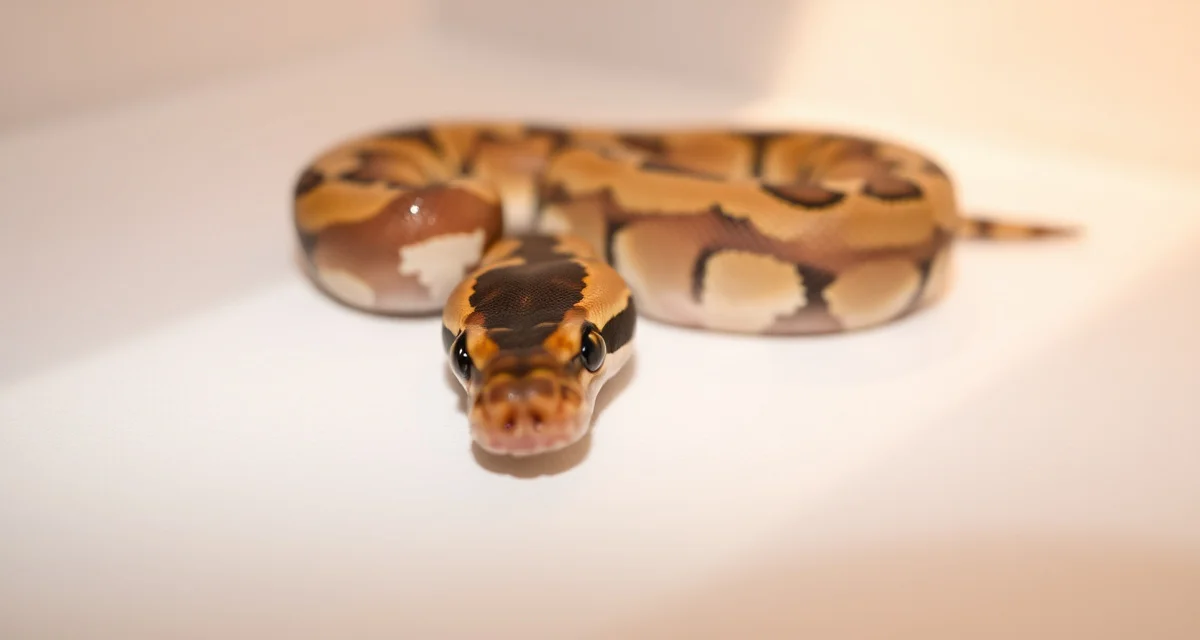
Ball Python Hatchling Morph Identification: Telling Morphs Apart at Hatch
By HatchLedger Editorial Team · Published 2025-04-29 · Updated Mar 13, 2026
Breeders using integrated software report 30% less time on administrative tasks, and accurate morph identification at hatch is foundational to every downstream record: listing accuracy, buyer trust, and sale price. Misidentifying a morph at hatch creates problems that compound as the animal grows through your system.
TL;DR
- Ball python breeding operations require systematic record-keeping from pre-season preparation through end-of-season sales.
- Females at 1,200-1,500g or more are the target weight before introducing them to a breeding male.
- Ovulation detection is the key event that anchors pre-lay shed and lay date calculations.
- Clutch profitability guide depends on understanding actual cost basis per animal, not just gross sale revenue.
- Well-documented animals with complete feeding histories and clear genetic records consistently sell faster and at higher prices.
Ball python morph identification at hatch is a skill that takes time and repetition to develop. Some morphs are obvious the moment they emerge from the egg. Others require experience, reference materials, and sometimes waiting for the animal to shed once before you're confident.
The Hatch-Day Inspection
Do your preliminary morph identification when hatchlings first pip, before or just after they emerge. Hatchlings are typically wet with residual egg contents, which can temporarily affect color appearance. The first shed, usually at 10-14 days old, often reveals the morph more clearly.
Your initial identification should be documented as "preliminary" if you have any doubt. A confirmed identification after first shed is more reliable.
What to look for immediately:
- Pattern structure: are the saddles complete or disrupted? Banded? Missing entirely?
- Background coloration: is it yellow, brown, black, white?
- Head pattern: normal head pattern or altered?
- Eye color: standard dark eye, blue eye (BEL complex), or red/pink eye (albino and related)?
Co-Dominant Morphs at Hatch
Most co-dominant morphs are identifiable at hatch because the visual change is obvious:
Pastel: Enhanced yellow, brighter background, often slightly reduced pattern contrast compared to normals. Lighter head coloration. Easy to identify in comparison to clutch-mates.
Spider: Distinctive pattern disruption: broken saddles, often a thin dorsal stripe down the spine, reduced lateral patterning. Spider hatchlings usually have a characteristic "banded" look distinct from normals.
Cinnamon: Darker background, richer brown-red tones, altered pattern contrast. More difficult in hatchlings than adults; compare to clutch-mates.
Black Pastel: Darker than cinnamon, with a more uniformly dark background. Compare to normal clutch-mates from the same clutch.
Lesser/Butter/Mojave (BEL complex members): Pattern reduction, altered pattern outline, and often a subtle brightening. These can be harder to differentiate from each other without experience. Eye color can be an indicator: Lesser and Mojave often have slightly altered eye appearance.
GHI: Heavy dark pattern, black pigmentation flooding the saddle edges. Often confused with darker normals; experience helps.
Recessive Morphs at Hatch
Visuals from recessive pairings are usually obvious:
Pied: The white areas are unmistakable. Pied hatchlings range from mostly white with small patterned sections to mostly patterned with small white areas. The sharp demarcation between white and patterned zones is characteristic.
Clown: Distinctive alien-head head pattern with a very reduced, distorted dorsal pattern and a characteristic "trail" running down the spine. Hard to mistake for a normal once you've seen a few.
Albino (T-): Red eyes, no black pigment, yellow and white base. Very distinctive.
Albino (T+): Brown/orange eyes, some visible pigment but drastically reduced. Can be confused with hypo normals by inexperienced eyes; the eye color and skin tone together confirm T+.
Axanthic (VPI line): Gray and white, absent yellow pigment at hatch. Axanthic hatchlings look dramatically different from normals.
The Tricky Identifications
Some morphs are genuinely difficult at hatch:
Het animals from recessive pairings: A het clown from a clown x normal pairing looks identical to a normal. You can't identify hets visually. You know the expected ratio from the pairing but you can't assign het status to a specific animal by looking at it.
Super forms of co-dominants: Super cinnamon and super black pastel look very similar. Super pastel and super enchi can be difficult. Reference photos of known super forms help.
Lesser vs. Butter: Both are BEL complex members with similar visual characteristics. Without documentation of parent identities, distinguishing them visually at hatch is not reliable.
Pinstripe: Easy in isolation, but partial pinstripe expression (het pinstripe?) is a myth in the hobby. A pinstripe is visual or it isn't.
Pattern normals: Occasionally a normal-looking hatchling from a clutch that should produce visible morphs may simply be a well-patterned normal or a het animal. Documenting the expected probability from the pairing and noting "possible het" status is the correct approach when visual ID is uncertain.
Documentation Practices
Document your morph identification at two points: immediately at emergence (preliminary) and after first shed (confirmed). Include any uncertainty in your notes.
Never assign a morph identity you're not confident about. If you're unsure whether a hatchling is a het cinnamon or a super cinnamon, note the uncertainty. Listing an animal with incorrect morph identification damages buyer trust and creates potential refund disputes.
HatchLedger's hatchling records let you document morph identification with a "preliminary" or "confirmed" status, connecting each hatchling's visual identity to the clutch genetics guide and parent records.
The HatchLedger reptile breeder software keeps hatchling records connected to the parent pairing, so the expected morph ratios from the clutch are always visible alongside the hatchling's individual record.
Frequently Asked Questions
What is the best approach to ball python hatchling morph identification?
Do a preliminary ID at hatch and a confirmed ID after first shed. Use clutch genetics to establish what's possible and compare each hatchling to its clutch-mates. Build a reference photo library for any morphs you work with regularly, and document uncertainty honestly in your records rather than guessing.
How do professional breeders handle ball python hatchling morph identification?
Experienced breeders do preliminary identification at hatch and confirmed identification post-first shed, consult with other breeders or community resources for genuinely ambiguous cases, and maintain honest uncertainty documentation rather than assigning incorrect labels. They build morphological reference libraries over multiple seasons of working with specific morph combinations.
What records should every reptile breeder maintain per animal?
At minimum: acquisition date and source, morph and genetic documentation, feeding log, weight history, any veterinary treatments, and breeding history including pairing dates, clutch of origin for captive-bred animals, and offspring records. These records serve your own management, buyer documentation, regulatory compliance, and long-term genetic tracking.
How should reptile breeders document genetics for buyers?
A complete genetic record for sale includes the animal's visual morph name, confirmed het genes and their basis (parentage documentation or proven-out production), possible het genes with probability percentages, hatch date, and parent morph information. Including clutch-of-origin records lets buyers independently verify the claims.
What is Ball Python Hatchling Morph Identification: Telling Morphs Apart at Hatch?
Ball python hatchling morph identification is the process of visually assessing and categorizing a hatchling's genetic morph traits immediately at hatch. This includes evaluating pattern, color, and visual markers that distinguish morphs like pastels, spiders, clowns, and pied combinations. Accurate identification at hatch is critical because it anchors all downstream records — listings, genetic pairings, and sale prices — to the correct morph designation from day one.
How much does Ball Python Hatchling Morph Identification: Telling Morphs Apart at Hatch cost?
Morph identification itself has no direct cost, but errors are expensive. Misidentifying a hatchling can mean selling a high-value morph at a lower-morph price, or listing incorrect genetics that erode buyer trust. Breeders using integrated record-keeping software report 30% less administrative time, meaning the real cost is the investment in experience, reference materials, and reliable software to manage records accurately.
How does Ball Python Hatchling Morph Identification: Telling Morphs Apart at Hatch work?
The process begins at pip — when hatchlings first break through the egg. Breeders inspect each animal for key visual traits: pattern disruption, color saturation, head stamps, and body blushing. Some morphs are immediately apparent; others require the animal to shed once before a confident call can be made. Notes are logged against each clutch record, cross-referenced with known parent genetics to confirm expected morph outcomes.
What are the benefits of Ball Python Hatchling Morph Identification: Telling Morphs Apart at Hatch?
Accurate morph identification protects listing integrity, supports buyer trust, and directly impacts sale price. Well-documented animals with correct genetic records sell faster and command higher prices. It also prevents compounding errors — a misidentified hatchling creates downstream problems in pairing records, offspring predictions, and resale documentation. Getting it right at hatch keeps your entire breeding operation's data clean and defensible.
Who needs Ball Python Hatchling Morph Identification: Telling Morphs Apart at Hatch?
Any ball python breeder producing clutches needs this skill, from hobbyists with a single pair to commercial operations running dozens of females. It's especially critical for breeders working with complex polygenic or multi-gene combinations where visual identification is harder. Breeders selling to other breeders face the highest stakes, as genetic accuracy directly affects the buyer's future pairing decisions and project outcomes.
How long does Ball Python Hatchling Morph Identification: Telling Morphs Apart at Hatch take?
Initial inspection happens at or just after pip, which takes minutes per animal. However, for ambiguous morphs, final identification may be deferred until after the first shed — typically 7 to 14 days post-hatch. Building confidence across all morphs takes seasons of repetition. Breeders new to complex multi-gene clutches should budget extra time for reference checks and, when uncertain, consult experienced breeders before finalizing records.
Related Articles
Sources
- USARK (United States Association of Reptile Keepers)
- Association of Reptilian and Amphibian Veterinarians (ARAV)
- World of Ball Pythons (WoBP genetics reference database)
- MorphMarket (reptile industry marketplace)
- Reptiles Magazine (Bowtie Inc.)
Get Started with HatchLedger
Every part of a ball python breeding operation -- from pairing records to clutch documentation to financial tracking -- works better when the data is connected rather than scattered across notebooks and spreadsheets. HatchLedger is built for exactly that. Try it free with up to 20 animals.