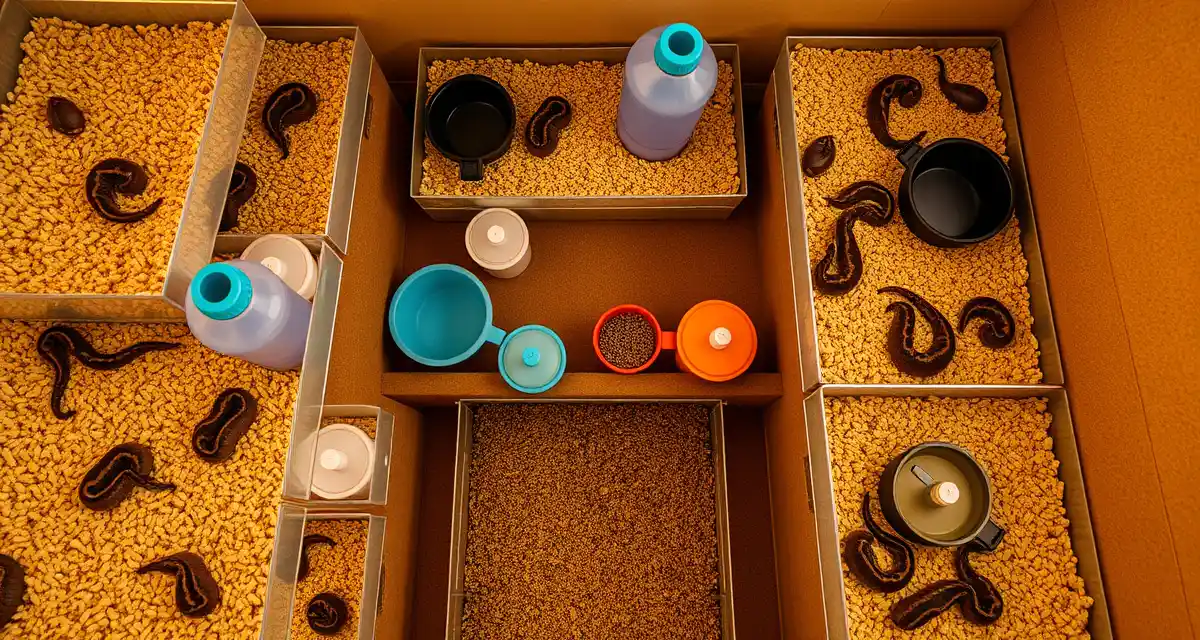
Ball Python Live Feeder Rodent Colony Management for Breeders
By HatchLedger Editorial Team · Published 2025-05-02 · Updated Mar 13, 2026
Breeders using integrated software report 30% less time on administrative tasks, which creates capacity to manage additional operational components like a feeder rodent colony. For larger breeding operations, raising your own feeder rodents can meaningfully reduce input costs, but it introduces a parallel husbandry operation with its own management requirements.
TL;DR
- Ball python breeding operations require systematic record-keeping from pre-season preparation through end-of-season sales.
- Females at 1,200-1,500g or more are the target weight before introducing them to a breeding male.
- Ovulation detection is the key event that anchors pre-lay shed and lay date calculations.
- Clutch profitability guide depends on understanding actual cost basis per animal, not just gross sale revenue.
- Well-documented animals with complete feeding histories and clear genetic records consistently sell faster and at higher prices.
This isn't the right choice for every operation. A small breeding program that goes through 20-30 prey items per month is often better served by a commercial supplier. But for operations consuming 100+ feeders per month, the economics of a colony start to make sense.
The Economics of a Feeder Colony
The break-even analysis for a feeder colony depends on:
- Your current per-unit cost from your supplier
- Your monthly consumption volume
- Your expected colony setup and startup costs
- Ongoing colony costs: bedding, food (rodent lab blocks), water, time
At low volumes, commercial F/T supply is almost always cheaper after accounting for time and startup costs. At high volumes, a well-run colony saves meaningful money per year. Run the math for your specific situation before committing.
The other factor: having your own colony gives you supply reliability. Supplier stockouts happen; show season creates shortages; specific prey sizes run out. A colony gives you supply certainty on your schedule.
Mice Colonies: The Basics
Mice reproduce quickly (litters every 3-4 weeks, 8-14 pups per litter) and are easier to manage than rats. A mouse colony can be established with relatively minimal space.
Colony setup:
- Standard 10-gallon aquariums or similar size bins with ventilated lids
- Breeding harems: one male to 3-5 females
- Bedding: aspen shavings or paper bedding. Cedar and pine are toxic and must be avoided
- Diet: commercial rodent lab blocks supplemented with seeds/vegetables
- Water: water bottles or heavy small dishes (minimize drowning risk for newborns)
Colony cycling:
- Separate pregnant females before birth to prevent stress-driven infanticide
- Wean pups at 3-4 weeks
- Separate males from females at weaning to prevent unwanted breeding
- Cull excess breeders when colony size exceeds your needs
Sizing the colony:
A single breeding trio (1 male, 2 females) producing two litters per month averaging 10 pups each gives you roughly 20 weanlings monthly. Scale breeding groups to your consumption needs.
Rat Colonies: Higher Production, More Space
Rats are the preferred prey size for adult ball pythons, but rat colonies require more space and management than mouse colonies. Rats are smarter, more social, and more destructive if they escape.
Key differences from mice:
- Slower reproductive rate (litters every 5-6 weeks, 8-14 pups per litter)
- Need notably more space per animal
- Social structure: rats are highly social and do better in pairs or groups of females
- More attentive to their young: rat does are less likely to cannibalize pups than mice under good conditions
- Escape prevention: rats chew through plastic and can escape poorly secured enclosures
Colony housing:
- Larger bins or dedicated rack systems with secure lids
- Wire mesh or heavy-duty plastic that rats can't chew through
- Separate housing for breeding pairs during the final week of gestation and first two weeks post-birth
Food: Commercial rat lab blocks. Rats also benefit from fresh vegetables and occasional protein supplementation.
Colony Health Management
A colony health event can take down your entire feeder supply. Basic biosecurity:
- New breeding animals quarantine for 14-30 days before introduction to the main colony
- Remove dead animals promptly
- Regular cleaning on a consistent schedule (at minimum weekly)
- Watch for respiratory signs, weight loss, parasites
Common colony health problems:
- Respiratory infection (Sendai virus, Streptococcus): Spreads quickly through a colony. Culling infected animals is often necessary to protect the colony.
- Fur mites: Treatable but require thorough bedding replacement and treatment of all animals
- Ringtail: In young rats, caused by low humidity. Maintain adequate humidity in rat housing.
Freezing Excess Production
A well-managed colony will produce more than you need at some periods. Freeze excess feeders for future use rather than overfeeding your snakes or wasting surplus:
- CO2 or other humane methods to euthanize excess
- Double-bag in freezer bags to prevent freezer burn
- Label bags by prey size and freeze date
- Use within 6-12 months for best quality
Tracking Colony Costs Against Feed Savings
The business case for a feeder colony only holds if you're actually tracking the numbers. What do you spend on bedding, food, water, and time per month? What's your cost per prey item produced compared to purchased cost?
HatchLedger's expense tracking lets you log colony costs as operational expenses, giving you the data to evaluate whether the colony is actually saving money compared to supplier costs.
The HatchLedger reptile breeder software connects feeding expenses to your per-animal costs, so you can see the full operational cost picture including whether your feeder colony is meeting its economic justification.
Frequently Asked Questions
What is the best approach to setting up a ball python feeder rodent colony?
Run the break-even analysis before starting: you need to be consuming enough prey items monthly for a colony to save money after accounting for setup, space, bedding, food, and time costs. Start with mice before rats (easier management), invest in proper colony housing to prevent escapes, and maintain basic biosecurity including quarantine for new breeding stock.
How do professional breeders handle feeder rodent colony management?
Production breeders who run colonies size them to their consumption needs with a buffer, freeze surplus production, track colony expenses as a line item against supplier costs to verify the colony remains economical, and treat the colony as a parallel husbandry operation with its own regular health monitoring schedule.
What records should every reptile breeder maintain per animal?
At minimum: acquisition date and source, morph and genetic documentation, feeding log, weight history, any veterinary treatments, and breeding history including pairing dates, clutch of origin for captive-bred animals, and offspring records. These records serve your own management, buyer documentation, regulatory compliance, and long-term genetic tracking.
How should reptile breeders document genetics for buyers?
A complete genetic record for sale includes the animal's visual morph name, confirmed het genes and their basis (parentage documentation or proven-out production), possible het genes with probability percentages, hatch date, and parent morph information. Including clutch-of-origin records lets buyers independently verify the claims.
What is Ball Python Live Feeder Rodent Colony Management for Breeders?
Ball python live feeder rodent colony management refers to the practice of breeding and maintaining your own mice or rat population to supply live prey for your ball pythons. Rather than purchasing feeders from commercial suppliers, breeders establish an in-house colony, managing breeding pairs, litter schedules, housing, nutrition, and health protocols to produce a steady, cost-controlled supply of appropriately sized prey items.
How much does Ball Python Live Feeder Rodent Colony Management for Breeders cost?
There is no fixed purchase price — the cost is the ongoing investment in setup and operations. Initial expenses include caging, bedding, water systems, and breeding stock. Monthly costs cover feed, bedding, and utilities. For operations consuming 100+ feeders per month, colony costs typically run significantly lower per unit than commercial supplier pricing, with most breeders reaching break-even within a few months of consistent colony output.
How does Ball Python Live Feeder Rodent Colony Management for Breeders work?
Breeding rodents are housed in dedicated enclosures, paired or grouped to produce regular litters. Offspring are tracked by age and size, then culled or fed at appropriate weights matching your pythons' prey size requirements. Successful management involves monitoring litter frequency, maintaining colony health, controlling odor and waste, and aligning production output with your pythons' feeding schedule to avoid surplus or shortage.
What are the benefits of Ball Python Live Feeder Rodent Colony Management for Breeders?
The primary benefit is cost reduction — particularly for large operations spending hundreds of dollars monthly on commercial feeders. Secondary benefits include guaranteed supply, control over prey diet and health, and the ability to size-match feeders precisely to individual animals. Breeders also gain independence from supplier availability issues, which can disrupt feeding schedules during peak demand periods like holiday seasons.
Who needs Ball Python Live Feeder Rodent Colony Management for Breeders?
Feeder colony management is best suited for medium-to-large ball python breeding operations consuming 100 or more prey items per month. Small hobbyist programs with 20-30 feeders monthly are generally better served by commercial suppliers. Operations scaling toward 50+ breeding females, or those seeking tighter cost control and supply chain independence, will find the labor and setup investment most justified at higher consumption volumes.
How long does Ball Python Live Feeder Rodent Colony Management for Breeders take?
Establishing a functional colony takes 6-10 weeks from acquiring initial breeding stock to first usable litters. However, reaching stable, predictable output that fully covers your feeding demand typically takes 3-4 months as colony size and breeding rhythm normalize. Ongoing management is a continuous parallel operation alongside your python program, requiring daily checks and weekly husbandry tasks indefinitely for as long as the colony runs.
Related Articles
- Ball Python Humidity Management: Advanced Techniques for Breeders
- Ball Python Weight Tracking for Breeders: Schedules, Growth Curves, and Warning Signs
Sources
- USARK (United States Association of Reptile Keepers)
- Association of Reptilian and Amphibian Veterinarians (ARAV)
- World of Ball Pythons (WoBP genetics reference database)
- MorphMarket (reptile industry marketplace)
- Reptiles Magazine (Bowtie Inc.)
Get Started with HatchLedger
Every part of a ball python breeding operation -- from pairing records to clutch documentation to financial tracking -- works better when the data is connected rather than scattered across notebooks and spreadsheets. HatchLedger is built for exactly that. Try it free with up to 20 animals.