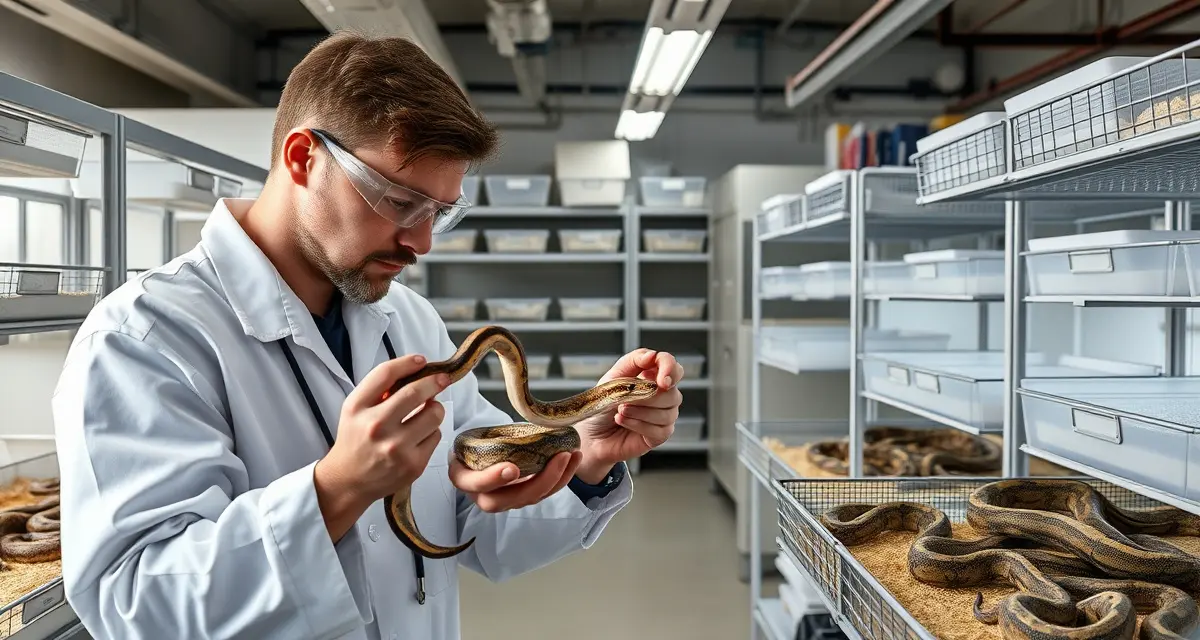
Ball Python Wholesale vs. Retail Selling: Which Strategy Is Right for Your Operation
By HatchLedger Editorial Team · Published 2025-04-28 · Updated Mar 13, 2026
Breeders using integrated software report 30% less time on administrative tasks, which matters when you're evaluating sales channel strategy. The time you spend managing retail buyer relationships, answering questions, and handling individual sales is a real operational cost that wholesale arrangements eliminate, at the cost of per-animal margin.
TL;DR
- Ball python breeding operations require systematic record-keeping from pre-season preparation through end-of-season sales.
- Females at 1,200-1,500g or more are the target weight before introducing them to a breeding male.
- Ovulation detection is the key event that anchors pre-lay shed and lay date calculations.
- Clutch profitability guide depends on understanding actual cost basis per animal, not just gross sale revenue.
- Well-documented animals with complete feeding histories and clear genetic records consistently sell faster and at higher prices.
Most ball python breeding operations of any scale need to understand both channels and make a deliberate choice about the right mix for their specific situation.
The Economics of Each Channel
Retail: You sell directly to the end consumer. The buyer pays the full market price. Your gross margin per animal is highest. You keep 100% of the retail price minus selling platform fees (Morph Market typically takes a small commission or charges listing fees).
Wholesale: You sell to a reseller (reptile stores, other breeders who retail directly, wholesale distributors) at a discount to retail. Typical wholesale discounts in the reptile trade run 30-50% off retail pricing. You receive less per animal, but you move volume faster with less per-animal management overhead.
The math:
- A pastel that retails for $75 might wholesale for $40-50
- If you produce 200 pastel-type animals per season, retail might gross $15,000 but requires managing 200 individual buyer transactions
- Wholesale might gross $8,000-10,000 but requires 2-5 transactions with volume buyers
Which option is better? It depends on your time, your market reach, and what your actual cost per animal is.
When Wholesale Makes Sense
High-volume, lower-price animals: If you're producing 50+ normals or basic co-dominants per season with retail prices in the $40-80 range, managing 50+ individual retail transactions has a cost. A wholesale arrangement with a local or online reptile retailer that moves 50 animals in two or three transactions may be better for your operation even at a lower per-unit price.
Animals you can't otherwise sell efficiently: The morph market is deep and competitive. A basic pastel or normal-looking animal can sit on Morph Market for weeks or months. A wholesale buyer who purchases 10-20 of these at a time solves the sales velocity problem.
Operational bandwidth constraints: If your operation is growing faster than your retail sales capacity, wholesale keeps cash flowing without requiring you to scale the buyer management side of the operation proportionally.
Seasonal overproduction: If you have more animals than you can sell retail in a reasonable timeframe, wholesale is a pressure valve that prevents the accumulation of unsold inventory that becomes a carrying cost and animal welfare concern.
When Retail Makes Sense
High-value morphs: A $2,500 combination animal sold retail at full price versus $1,500 wholesale represents a notable per-animal difference that probably justifies the additional transaction complexity. The higher the per-animal price, the more retail margin matters.
Animals with specific buyer demand: If you have a waiting list for a specific morph combination, retail is obviously better. Wholesale is for animals where demand is uncertain; if demand is clear, capture the retail price.
Operations built around marketing: If you've invested in a social media following, an email list, and a Morph Market presence, that infrastructure reduces the per-animal retail transaction cost. The investment in the channel is already made; you may as well use it.
Genetic documentation value: Animals with full HatchLedger records, known lineage, proven het documentation, and detailed health histories command retail premiums that wholesale buyers typically won't pay. The documentation value is a retail differentiator.
Hybrid Strategies
Most operations of any scale use both channels:
Retail for higher-value animals, wholesale for the rest: A simple tiering strategy. Set a price threshold (e.g., animals priced above $300 go retail; below goes wholesale). Adjust as you learn where your operational sweet spot is.
Retail first, wholesale as overflow: List all animals at retail pricing initially. Set a time window (60-90 days) after which unsold animals are offered wholesale. This captures retail margin where demand exists and uses wholesale for velocity where retail demand doesn't materialize.
Wholesale relationships for specific categories: Some breeders maintain ongoing wholesale relationships with reptile stores for specific lower-value categories (normals, basic co-dominants) while managing all retail sales themselves for higher-value morphs.
Tracking Channel Performance
Without tracking which sales came from which channel at what price, you can't evaluate which channel is actually performing better for your operation net of your time cost.
HatchLedger's sale records let you record the sales channel alongside the price for each animal, giving you the data to compare average realized price and time-to-sale by channel over a full season.
The HatchLedger reptile breeder software connects sale records to the full breeding and cost data for each animal, so you can calculate actual net margin per channel rather than just gross revenue.
Frequently Asked Questions
What is the best approach to deciding between wholesale and retail selling for ball pythons?
Use retail for higher-value morphs where the per-animal price difference from wholesale justifies the transaction management overhead, and use wholesale for high-volume lower-price animals or to clear inventory that isn't moving retail. Track actual results by channel to make data-informed decisions rather than assumptions.
How do professional breeders handle wholesale versus retail channel strategy?
Production breeders typically maintain both channels simultaneously, routing higher-value animals to retail and establishing wholesale relationships for volume movement of lower-value surplus. They track realized prices per channel, time-to-sale, and net margin to evaluate whether their channel mix is actually optimized or just habitual.
What records should every reptile breeder maintain per animal?
At minimum: acquisition date and source, morph and genetic documentation, feeding log, weight history, any veterinary treatments, and breeding history including pairing dates, clutch of origin for captive-bred animals, and offspring records. These records serve your own management, buyer documentation, regulatory compliance, and long-term genetic tracking.
How should reptile breeders document genetics for buyers?
A complete genetic record for sale includes the animal's visual morph name, confirmed het genes and their basis (parentage documentation or proven-out production), possible het genes with probability percentages, hatch date, and parent morph information. Including clutch-of-origin records lets buyers independently verify the claims.
What is Ball Python Wholesale vs. Retail Selling: Which Strategy Is Right for Your Operation?
Ball python wholesale vs. retail selling refers to the two primary sales channels available to reptile breeders. Retail means selling directly to end consumers at full market price, keeping maximum margin per animal. Wholesale means selling in bulk to pet stores or other dealers at lower per-animal prices but with faster inventory turnover. Most serious breeding operations evaluate both channels and choose a deliberate mix based on their scale, time availability, and cash flow needs.
How much does Ball Python Wholesale vs. Retail Selling: Which Strategy Is Right for Your Operation cost?
There is no fixed cost to choosing a sales strategy — it is an operational decision, not a product or service purchase. However, retail selling carries platform fees on marketplaces like MorphMarket, plus time costs for customer communication and individual sales management. Wholesale trades margin for simplicity. The real cost comparison is per-animal profit after accounting for your time, platform fees, and the carrying cost of animals that have not yet sold.
How does Ball Python Wholesale vs. Retail Selling: Which Strategy Is Right for Your Operation work?
Retail selling works by listing animals individually on platforms or your own site, communicating directly with buyers, and shipping or delivering one animal at a time. Wholesale works by establishing relationships with pet stores or dealers, negotiating bulk pricing, and moving larger numbers of animals in fewer transactions. Breeders with strong genetic records and feeding histories tend to command better prices in both channels, since documentation reduces buyer hesitation and supports premium positioning.
What are the benefits of Ball Python Wholesale vs. Retail Selling: Which Strategy Is Right for Your Operation?
Retail maximizes per-animal margin and lets breeders build a direct customer base and reputation. Wholesale offers faster cash flow, lower administrative burden, and predictable volume movement. Breeders using integrated record-keeping software report around 30% less time on administrative tasks, which improves retail viability at scale. Wholesale is valuable when inventory builds up, cash flow is tight, or the breeder lacks bandwidth to manage individual buyer relationships across a large season.
Who needs Ball Python Wholesale vs. Retail Selling: Which Strategy Is Right for Your Operation?
Any ball python breeder operating beyond a casual hobby scale needs to understand both channels. Operations producing larger clutch volumes often benefit most from a mixed strategy — retailing high-value morphs directly while wholesaling more common animals. Breeders who struggle with the time demands of individual sales, customer questions, and shipping logistics are strong candidates for leaning toward wholesale. Those with strong online followings and documentation practices are better positioned to capture full retail value.
How long does Ball Python Wholesale vs. Retail Selling: Which Strategy Is Right for Your Operation take?
There is no fixed timeline — this is an ongoing operational decision that evolves with your breeding program. A single season's selling window typically runs several months from when hatchlings are feeding consistently to when the market slows. Evaluating which channel worked better takes at least one full season of data. Breeders who track actual cost basis per animal, not just gross revenue, can compare channel performance accurately and refine their strategy each year.
Related Articles
- Pastel Ball Python Genetics: Expression, Combinations, and Breeding Strategy
- Ball Python Egg-Laying Box Setup: Getting It Right Before She Lays
Sources
- USARK (United States Association of Reptile Keepers)
- Association of Reptilian and Amphibian Veterinarians (ARAV)
- World of Ball Pythons (WoBP genetics reference database)
- MorphMarket (reptile industry marketplace)
- Reptiles Magazine (Bowtie Inc.)
Get Started with HatchLedger
Every part of a ball python breeding operation -- from pairing records to clutch documentation to financial tracking -- works better when the data is connected rather than scattered across notebooks and spreadsheets. HatchLedger is built for exactly that. Try it free with up to 20 animals.