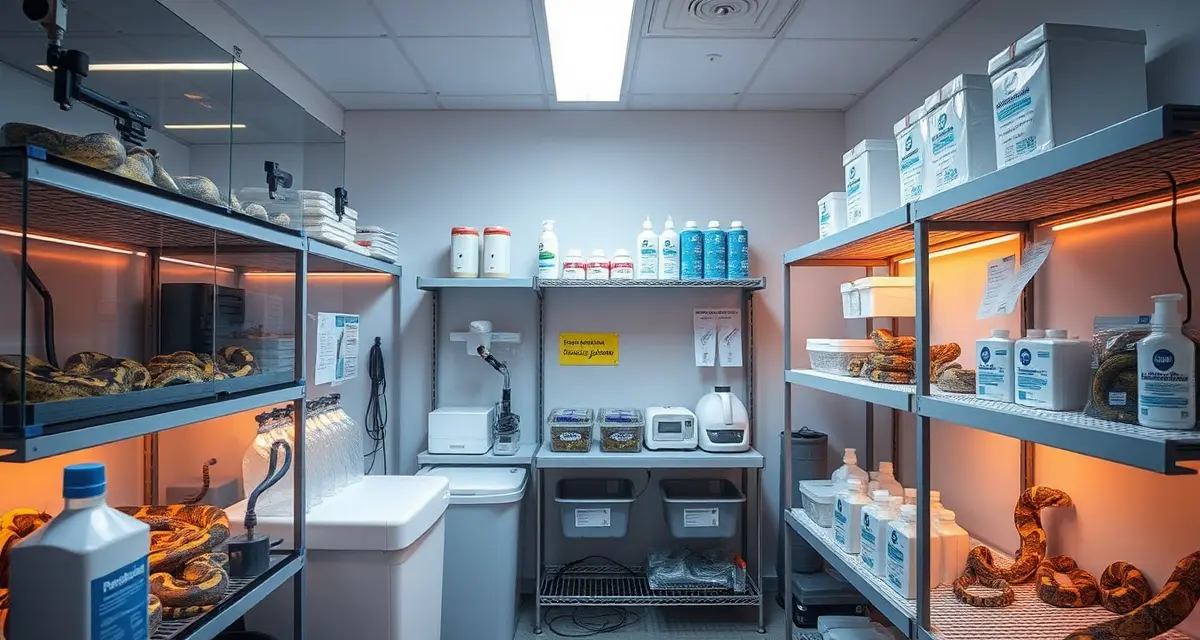
Ball Python Breeding Room Biosecurity: Preventing Disease Introduction and Spread
By HatchLedger Editorial Team · Published 2025-04-28 · Updated Mar 13, 2026
Breeders using integrated software report 30% less time on administrative tasks, and biosecurity protocol documentation is one of the areas where that administrative structure directly protects your investment. A collection-wide disease event is one of the most devastating things that can happen to a breeding operation. Biosecurity exists to prevent it.
TL;DR
- Ball python breeding operations require systematic record-keeping from pre-season preparation through end-of-season sales.
- Females at 1,200-1,500g or more are the target weight before introducing them to a breeding male.
- Ovulation detection is the key event that anchors pre-lay shed and lay date calculations.
- Clutch profitability guide depends on understanding actual cost basis per animal, not just gross sale revenue.
- Well-documented animals with complete feeding histories and clear genetic records consistently sell faster and at higher prices.
Biosecurity is the set of practices that reduce the probability of introducing pathogens into your collection and limit their spread if something does get in. It's not complicated in principle, but it requires consistency: one biosecurity failure can undo months of careful management.
Risk Assessment: Where Pathogens Enter
Understanding where disease can enter your collection helps you build targeted prevention:
New animals: The most common entry point. Any animal from outside your collection may carry pathogens, even if it appears healthy. This is why quarantine exists.
Your hands: If you handle animals outside your collection (at shows, at other breeders' facilities), your hands are a transmission vector. Pathogens on your hands from another collection can transfer to your animals when you return home.
Equipment: Anything brought in from outside your collection (purchased tubs, used rack equipment, second-hand supplies) may carry mite eggs, bacteria, or other pathogens. Disinfect before use.
Feeder animals: Live feeders from a colony you didn't raise or from a pet store with unknown biosecurity may carry parasites or bacteria. Commercial F/T feeders from reputable suppliers substantially reduce this risk.
Visitors: Anyone who visits your reptile room and has been in contact with other reptiles may transmit pathogens. Hand hygiene protocols for visitors are reasonable in a breeding facility.
You (from outside environments): If you've been to a reptile show, visited another breeder's facility, or handled animals outside your collection, changing clothes and washing hands before entering your reptile room reduces transmission risk.
Quarantine as the Primary Defense
Quarantine is described in detail in a separate article, but it deserves mention here as the single most important biosecurity measure:
- Minimum 90-day physical quarantine for all new acquisitions
- Separate space, separate equipment, separate handling order
- No exceptions, including "this is from a trusted breeder"
The trusted breeder may not know about every pathogen in their collection. Quarantine is about the limits of what's knowable, not about trust.
Routine Cleaning Protocols
Enclosure cleaning frequency: Individual tub cleaning at minimum when soiled (fecal matter, regurgitate), full cleaning and disinfection at minimum monthly.
Disinfection products:
- Dilute bleach (1:10 bleach:water) is effective against bacteria and many viruses, but rinse thoroughly and allow to fully dry before returning animals
- F10SC (benzalkonium chloride): popular in veterinary and reptile facilities, effective broad-spectrum disinfectant that's safer for residual contact than bleach
- Parvocide (accelerated hydrogen peroxide): effective against parvo, norovirus, and other difficult pathogens; not commonly needed but useful in high-risk situations
Water bowls: Clean and disinfect water bowls at minimum weekly. Contaminated water is a transmission route for bacteria and parasites.
Tools: Tongs, hooks, feeding forceps. Dedicated tools per animal or per rack section, or thorough disinfection between animals. Never use the same tongs between animals during a health event.
Responding to a Suspected Health Event
When one animal in your collection shows signs of infectious disease:
- Immediately isolate the affected animal in a separate enclosure with its own dedicated tools
- Stop transferring any equipment between the affected animal and any others
- Review recent acquisition history and contact history with other breeders or shows
- Contact a reptile veterinarian immediately; do not attempt to self-diagnose or self-treat serious conditions
- Document everything: when symptoms appeared, severity, progression, any animals it was in recent contact with
For confirmed IBD, cryptosporidiosis, or similar serious conditions, broader quarantine measures or collection culling decisions may be necessary. These are situations where veterinary guidance is essential.
Mite Prevention
Mites (Ophionyssus natricis) are the most common biosecurity threat in ball python collections. They spread quickly between animals in close proximity (rack systems) and can be brought in on new animals, equipment, or bedding.
- Inspect every new acquisition during quarantine
- Inspect your collection regularly for mite signs (visible mites, fecal specks, unusual behavior)
- Treat immediately at any sign of mites in the collection; do not wait
HatchLedger's health records track health observations, treatment events, and quarantine status across your entire collection, giving you the documentation to trace a disease event back to its likely entry point.
The HatchLedger reptile breeder software makes it possible to see which animals were in contact with any sick animal and flag them for monitoring, supporting effective outbreak management.
Frequently Asked Questions
What is the best approach to ball python breeding room biosecurity?
Treat every new acquisition as a potential pathogen vector until it completes a full 90-day quarantine, maintain hand hygiene protocols whenever you've been in contact with animals outside your collection, use dedicated equipment per animal or per section and disinfect between animals, and keep records of every health observation so you can trace a disease event to its source if one occurs.
How do professional breeders handle collection biosecurity?
High-volume breeders treat biosecurity as a non-negotiable operational standard rather than an optional precaution. They enforce quarantine without exceptions, use consistent disinfection protocols for routine cleaning, maintain dedicated equipment, restrict visitor access to the reptile room, and respond immediately and decisively when any animal shows signs of infectious disease.
What records should every reptile breeder maintain per animal?
At minimum: acquisition date and source, morph and genetic documentation, feeding log, weight history, any veterinary treatments, and breeding history including pairing dates, clutch of origin for captive-bred animals, and offspring records. These records serve your own management, buyer documentation, regulatory compliance, and long-term genetic tracking.
How should reptile breeders document genetics for buyers?
A complete genetic record for sale includes the animal's visual morph name, confirmed het genes and their basis (parentage documentation or proven-out production), possible het genes with probability percentages, hatch date, and parent morph information. Including clutch-of-origin records lets buyers independently verify the claims.
What is Ball Python Breeding Room Biosecurity: Preventing Disease Introduction and Spread?
Ball python breeding room biosecurity is a systematic set of practices designed to prevent pathogens from entering your collection and limit their spread if disease does get in. It covers quarantine protocols for new animals, hygiene procedures between enclosures, visitor policies, and documentation practices. For breeding operations, a single disease event can devastate an entire collection, so biosecurity functions as foundational risk management — protecting both animal welfare and the financial investment represented by your breeding stock and clutch production.
How much does Ball Python Breeding Room Biosecurity: Preventing Disease Introduction and Spread cost?
Implementing biosecurity protocols costs relatively little in materials — disinfectants, dedicated tools per enclosure, and quarantine housing. The real investment is time and consistency. Basic supplies run $50–$200 to set up. The more relevant cost calculation is the inverse: a collection-wide outbreak can result in losses of thousands to tens of thousands of dollars in animals, lost breeding seasons, and veterinary bills. Treating biosecurity as overhead rather than optional dramatically improves the return on your overall breeding operation.
How does Ball Python Breeding Room Biosecurity: Preventing Disease Introduction and Spread work?
Biosecurity works by identifying and controlling the pathways through which disease enters or spreads. New animals are quarantined separately for 60–90 days before joining the main collection. Dedicated tools, separate hand-washing between enclosures, and controlled visitor access limit cross-contamination. Documentation tracks animal health histories so early warning signs are detectable. The system is layered — no single measure eliminates all risk, but combined consistently, they reduce the probability of introduction and contain any outbreak that does occur.
What are the benefits of Ball Python Breeding Room Biosecurity: Preventing Disease Introduction and Spread?
The core benefits are collection protection, financial stability, and early detection. Healthy animals breed more reliably, produce stronger clutches, and command higher sale prices. Well-documented health records increase buyer confidence and reduce time-to-sale. Biosecurity also protects you legally and reputationally — buyers who receive sick animals generate chargebacks, negative reviews, and lost repeat business. At scale, systematic protocols also reduce the cognitive load of managing a large collection by building predictable routines into daily husbandry.
Who needs Ball Python Breeding Room Biosecurity: Preventing Disease Introduction and Spread?
Any ball python keeper maintaining a breeding operation benefits from biosecurity practices, but it becomes critical once your collection exceeds a handful of animals or involves regular acquisition of new stock. Breeders who attend expos, purchase animals from multiple sources, or allow visitors into their space face the highest risk. Even hobbyist breeders with small collections benefit — the cost of setting up basic quarantine and hygiene protocols is trivial compared to the cost of losing a proven breeding female or an entire clutch.
How long does Ball Python Breeding Room Biosecurity: Preventing Disease Introduction and Spread take?
Setting up a biosecurity system takes a few hours to establish — designating quarantine space, organizing dedicated tools, and documenting your protocols. Ongoing, the time cost is minimal if procedures are built into your daily routine. Quarantine periods for new animals run 60–90 days minimum. The documentation component, which includes health logs and feeding records, adds a few minutes per animal per week. Breeders using integrated record-keeping software report reclaiming significant administrative time while maintaining more complete and accurate health histories.
Related Articles
- Ball Python Cinnamon Morph Breeding Guide: Genetics, Combos, and What to Expect
- Ball Python Clown Morph Breeding Guide: Recessive Genetics and Top Combos
Sources
- USARK (United States Association of Reptile Keepers)
- Association of Reptilian and Amphibian Veterinarians (ARAV)
- World of Ball Pythons (WoBP genetics reference database)
- MorphMarket (reptile industry marketplace)
- Reptiles Magazine (Bowtie Inc.)
Get Started with HatchLedger
Every part of a ball python breeding operation -- from pairing records to clutch documentation to financial tracking -- works better when the data is connected rather than scattered across notebooks and spreadsheets. HatchLedger is built for exactly that. Try it free with up to 20 animals.