Ball Python Fire and Flame Morph Guide: Brightening Genes for Breeders
By HatchLedger Editorial Team · Published 2025-04-30 · Updated Mar 13, 2026
Breeders using integrated software report 30% less time on administrative tasks, and fire and flame projects benefit from systematic combination planning because their primary value is in multi-gene combinations rather than standalone production. Understanding what these genes do and where they add the most value helps you incorporate them productively into a breeding program.
TL;DR
- Ball python breeding operations require systematic record-keeping from pre-season preparation through end-of-season sales.
- Females at 1,200-1,500g or more are the target weight before introducing them to a breeding male.
- Ovulation detection is the key event that anchors pre-lay shed and lay date calculations.
- Clutch profitability guide depends on understanding actual cost basis per animal, not just gross sale revenue.
- Well-documented animals with complete feeding histories and clear genetic records consistently sell faster and at higher prices.
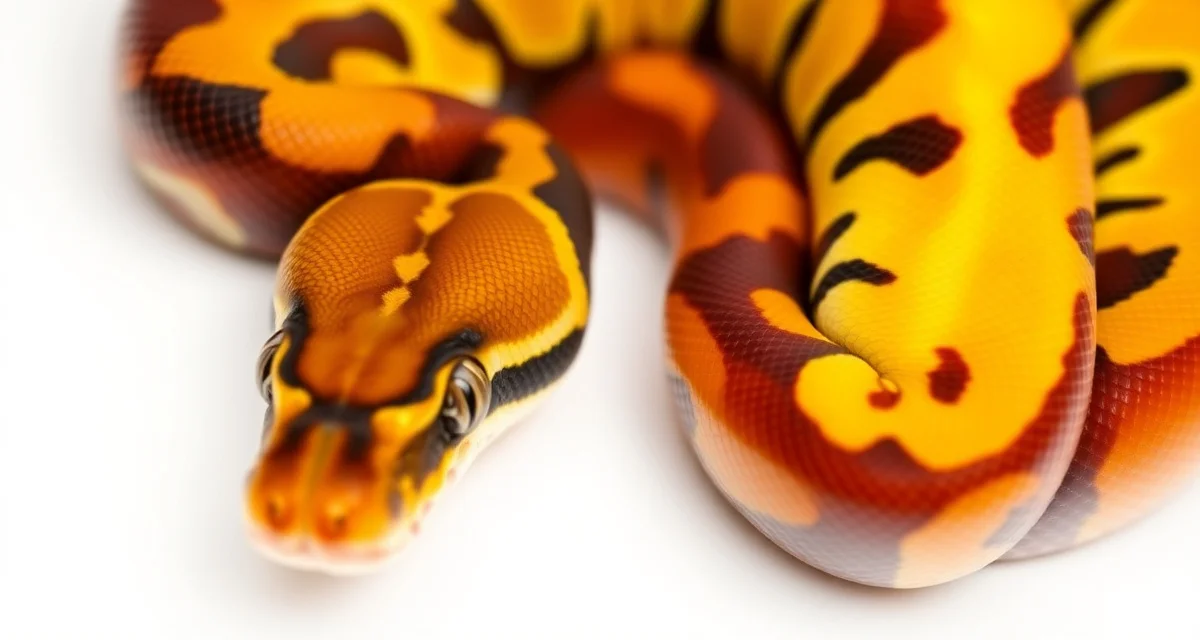
Fire and Flame are two co-dominant mutations that affect coloration in distinct ways, both particularly notable for their role in producing ball-eyed leucistic animals and for the enhancement effects they create in combination animals.
Fire: Characteristics and genetics guide
Fire is a co-dominant mutation that produces animals with:
- Enhanced, brightened yellow coloration
- Reduced pattern contrast (the pattern often appears more washed or faded)
- Overall lighter, more "fired up" appearance compared to normals
The super form of fire (two copies) is what fire is most famous for: super fire animals are near-leucistic, a white or very light-bodied animal that may have blue eyes and reduced or absent pattern. Super fire is part of the BEL (Blue-Eyed Leucistic) complex in some interpretations, though the precise allelic relationships of fire with other BEL complex members has been a subject of community discussion.
Fire in combinations: Fire is a useful enhancement gene in combinations:
- Fire Pastel: Brightened and pattern-reduced animals
- Fire Cinnamon (Sulfur): A named combination with distinctive appearance
- Fire GHI: Adds brightness to GHI's characteristically dark coloration
Flame: Distinct From Fire
Flame is a separate mutation sometimes confused with fire due to similar naming. Flame produces its own distinct visual characteristics:
- Pattern alteration with reduced lateral elements
- Color modification that differs from fire's expression
Flame has not been characterized as definitively as some more extensively documented morphs. Its specific allelic relationships with fire and other BEL complex members is an area where community research has not fully converged. Breeders working with flame should verify the current state of genetic characterization before planning complex projects.
The Super Fire / BEL Complex Context
One of fire's most commercially interesting outcomes is the blue-eyed leucistic produced by combining two BEL complex members. Fire is a member of this complex alongside Mojave, Lesser, Butter, Russo, and others.
When fire is bred with another BEL complex member (for example, Fire x Mojave), offspring that receive one copy from each parent produce blue-eyed leucistic animals. This is the same mechanism that produces BEL animals from other BEL complex pairings.
Important: Not all BEL complex members produce the same BEL quality when combined. The "cleanest" BEL (whitest body, most consistent blue eyes) from fire-involved pairings depends on which combination partner is used. Community knowledge on BEL quality from specific combinations is extensive; researching which pairings produce the most consistent BEL quality for your target market is worthwhile before building a project around BEL production.
Fire Combinations Outside the BEL Complex
Beyond BEL applications, fire adds value in:
Fire Banana: Banana's pink and yellow tones with fire's brightening and pattern reduction produces distinctive animals with strong visual appeal.
Fire Clown: The clown gene's pattern disruption combined with fire's brightness and pattern washing creates high-contrast animals.
Fire Pied: Fire's enhancement in the patterned sections of pied animals adds color depth.
Planning Fire Projects
Since fire is co-dominant with a viable super form (the near-leucistic):
- Fire x Normal: 50% fire, 50% normal
- Fire x Fire: 25% super fire, 50% fire, 25% normal
- Fire x BEL complex member (e.g., Mojave): 25% BEL, 25% fire, 25% Mojave, 25% normal
For BEL production targeting:
- Fire x Mojave is one of the most common BEL-producing pairings
- The expected 25% BEL rate from a fire x BEL complex member pairing is the standard probability
Market Positioning
Super fire as a standalone animal is a mature product with limited premium. Fire in BEL-producing pairings has consistent demand because BEL animals are popular with buyers across all experience levels.
Fire combination animals (fire pastel, fire cinnamon) occupy the mid-market range for combo animals.
HatchLedger's morph tracking records fire and flame as distinct genetic designations, supporting the precision required when planning BEL complex pairings.
The HatchLedger reptile breeder software connects genetic records to clutch outcomes, validating BEL production rates from fire combinations through actual results across multiple seasons.
Frequently Asked Questions
What is the best approach to ball python fire and flame morph breeding projects?
Use fire primarily in BEL-producing pairings with compatible BEL complex members, research which specific combination partners produce the highest-quality BEL animals, and incorporate fire into combination projects where its brightening effect adds visual interest. Clarify the current genetic characterization of flame before building flame-centered projects.
How do professional breeders handle fire morph breeding projects?
Experienced breeders working with fire use it in BEL production as the primary commercial application, combine it with other enhancement genes for combination animals, and stay current with community characterization of fire's allelic relationships with other BEL complex members. They document fire and flame as distinct genetic designations rather than treating them as interchangeable.
What records should every reptile breeder maintain per animal?
At minimum: acquisition date and source, morph and genetic documentation, feeding log, weight history, any veterinary treatments, and breeding history including pairing dates, clutch of origin for captive-bred animals, and offspring records. These records serve your own management, buyer documentation, regulatory compliance, and long-term genetic tracking.
How should reptile breeders document genetics for buyers?
A complete genetic record for sale includes the animal's visual morph name, confirmed het genes and their basis (parentage documentation or proven-out production), possible het genes with probability percentages, hatch date, and parent morph information. Including clutch-of-origin records lets buyers independently verify the claims.
What is Ball Python Fire and Flame Morph Guide: Brightening Genes for Breeders?
The Ball Python Fire and Flame Morph Guide is a breeder-focused resource covering two co-dominant mutations—Fire and Flame—that brighten coloration and unlock powerful multi-gene combinations, most notably ball-eyed leucistic animals. The guide explains how each gene works genetically, how they interact with other morphs, and how to incorporate them strategically into a breeding program using systematic record-keeping and combination planning for maximum profitability.
How much does Ball Python Fire and Flame Morph Guide: Brightening Genes for Breeders cost?
The guide itself is editorial content available on HatchLedger at no cost. The real investment is in the animals: Fire and Flame hatchlings typically range from $50–$200 as single-gene animals, with value increasing significantly in combination morphs. Building a productive Fire or Flame project requires budgeting for quality breeding stock, enclosures, feeding, and veterinary care across a full season.
How does Ball Python Fire and Flame Morph Guide: Brightening Genes for Breeders work?
Fire and Flame are co-dominant mutations, meaning each produces a visually distinct het form and a homozygous super form. In practice, breeders pair Fire or Flame animals to compatible morphs, track pairings and ovulation events, and use the guide to predict clutch outcomes. The guide anchors breeding timelines around key events like ovulation detection, pre-lay shed, and lay date to keep projects organized and profitable.
What are the benefits of Ball Python Fire and Flame Morph Guide: Brightening Genes for Breeders?
The primary benefits are cleaner, brighter animals in combination and a reliable pathway to leucistic production. Fire and Flame both enhance pattern and color when stacked with other genes, dramatically increasing hatchling value. Using the guide's systematic approach—tracking weights, feeding histories, and genetic records—breeders report up to 30% less administrative time and consistently achieve faster sales at higher prices due to well-documented lineage.
Who needs Ball Python Fire and Flame Morph Guide: Brightening Genes for Breeders?
This guide is designed for ball python breeders at any experience level who want to add brightening genes to their collection with a clear strategy. It's especially useful for intermediate breeders ready to move beyond single-gene projects and explore multi-gene combinations. Anyone planning leucistic projects—which require Fire or Flame as a foundational component—will find the genetic and production planning information directly applicable to their goals.
How long does Ball Python Fire and Flame Morph Guide: Brightening Genes for Breeders take?
Reading the guide takes under 30 minutes, but implementing a Fire or Flame breeding project spans a full season or more. Females must reach 1,200–1,500g before breeding, courtship and ovulation detection add weeks, and incubation runs roughly 55–60 days. From first pairing to selling hatchlings, expect four to six months minimum. Multi-generation combination projects to reach specific outcomes may require two or more full breeding seasons.
Related Articles
Sources
- USARK (United States Association of Reptile Keepers)
- Association of Reptilian and Amphibian Veterinarians (ARAV)
- World of Ball Pythons (WoBP genetics reference database)
- MorphMarket (reptile industry marketplace)
- Reptiles Magazine (Bowtie Inc.)
Get Started with HatchLedger
Every part of a ball python breeding operation -- from pairing records to clutch documentation to financial tracking -- works better when the data is connected rather than scattered across notebooks and spreadsheets. HatchLedger is built for exactly that. Try it free with up to 20 animals.