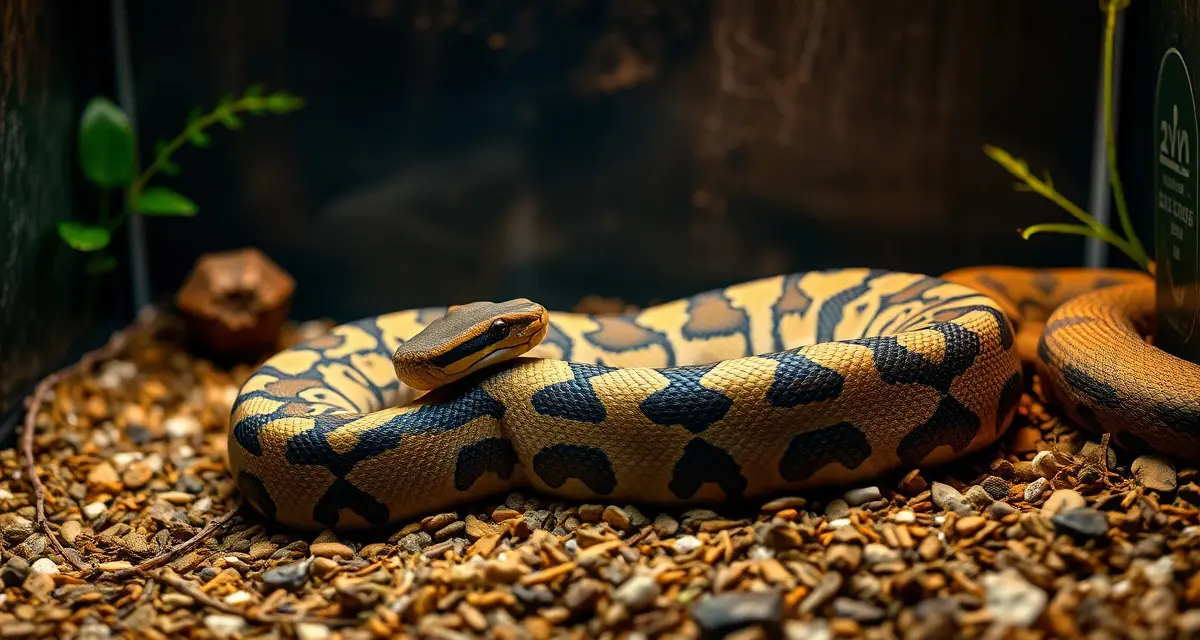
First-Year Ball Python Breeding: A Beginner's Complete Guide
By HatchLedger Editorial Team · Published 2025-01-17 · Updated Mar 13, 2026
Your first year breeding ball pythons is going to teach you more than any article can. But going in with realistic expectations, a solid plan, and good systems in place will make the difference between a first season that builds confidence and one that leaves you frustrated and unsure what went wrong.
TL;DR
- Ball python breeding operations require systematic record-keeping from pre-season preparation through end-of-season sales.
- Females at 1,200-1,500g or more are the target weight before introducing them to a breeding male.
- Ovulation detection is the key event that anchors pre-lay shed and lay date calculations.
- Clutch profitability guide depends on understanding actual cost basis per animal, not just gross sale revenue.
- Well-documented animals with complete feeding histories and clear genetic records consistently sell faster and at higher prices.
Breeders using integrated software report 30% less time on administrative tasks, and in your first year, when you're learning everything at once, having admin handled properly gives you more headspace for the actual animal work.
What Nobody Tells You About First-Year Breeding
The failure mode most first-year breeders hit isn't bad genetics guide or unlucky clutches. It's under-preparation. Animals that should have been at breeding weight in October are still being fed up in November. Males that seemed healthy turn out to be reluctant breeders. Ovulation gets missed because no one was watching closely enough.
None of this is shameful, it's the normal learning curve. But knowing about it in advance lets you prepare differently.
How to Successfully Breed Ball Pythons in Your First Year
Step 1: Make Sure Your Animals Are Actually Ready
Before you breed anything, honestly assess your animals. Your female needs to be at a minimum of 1,500g. If she's under 1,200g, she shouldn't be bred this year. Full stop.
Your male should be at least 800g and consistently feeding. A male that's been refusing food for months, or a female that's been off-feed, is not ready for the stress of breeding season.
First-year breeders sometimes rush this step out of excitement. Don't. The season will still be there when your animals are genuinely ready.
Step 2: Choose a Simple Pairing for Your First Season
This isn't the year to attempt a triple-recessive project or a complex codominant stack you don't fully understand. Choose a pairing where:
- You know exactly what genes your animals carry
- The expected clutch outcomes are clear and predictable
- You can identify hatchlings confidently at birth
A pastel x pastel pairing, or a het clown x het clown pairing, or any straightforward two-gene project gives you everything you need to learn the mechanics without drowning in genetic complexity.
Use the ball python morph calculator to understand exactly what your chosen pairing can produce before you make any introductions.
Step 3: Set Up Your Conditioning Protocol in September
September is when your first-year conditioning work begins. Weigh every animal you plan to breed. Log it. Then feed heavily through October, females every 7-10 days with appropriately sized prey.
Start your temperature drop in November. Drop night temperatures to 72-76°F while keeping day temps normal. This is what triggers reproductive behavior.
Step 4: Make Your First Introductions Correctly
First introductions should happen in the evening when temperatures have dropped. Use the female's enclosure. Introduce the male quietly, observe without disturbing, and log everything.
Don't panic if nothing happens immediately. Ball pythons can take time to settle. Check every hour or so. You're looking for a lock, the physical joining that confirms successful copulation.
Log every introduction. Note date, time, duration, and outcome. Even "no lock observed" is a useful data point.
Step 5: Identify Ovulation
This is where first-year breeders often get tripped up. Ovulation in ball pythons is visible as a distinct mid-body swelling, the female looks visibly heavier in her middle third for a period of 24-72 hours. It can be subtle if you're not looking for it.
Watch your females daily once you've had confirmed locks. Log the ovulation date the moment you see it. This date is the foundation of your entire hatching timeline.
Pre-lay shed follows at approximately 30 days. Egg laying follows the shed at approximately 16-18 days.
Step 6: Pull the Clutch and Start Incubation
When your female lays, move quickly. Pull the clutch within 24 hours if possible and get eggs into your incubation setup at 88-90°F and high humidity (90%+).
Label your incubation container with every piece of relevant information: female name, male name, lay date, expected hatch window. This label will matter in 60 days.
Don't open the container frequently. Check eggs weekly for any visible issues. Otherwise, let them do their thing.
Step 7: Process Hatchlings Methodically
When your first clutch hatches, usually 54-60 days after laying, process each animal methodically. Don't rush.
Sex each hatchling (probing or popping, done carefully), attempt morph identification, weigh them, and set up individual enclosures. First feed attempts usually happen 7-14 days after hatch, after the first shed.
Document everything. Your records from this first clutch are the foundation of everything you build going forward.
The ball python breeding hub has detailed guides on each stage of this process.
Common First-Year Mistakes
Breeding animals that aren't at weight. If your female is under 1,400g, give her another season. This is the single most common first-year mistake and the one with the most direct consequences.
Not watching for ovulation. If you miss the ovulation, you lose your timing anchor. Watch your females closely after confirmed locks.
Overcomplicating the project. Your first season should teach you the mechanics, not test your genetics knowledge. Simple pairings are the right choice.
Not logging from day one. Your records from year one are the baseline for everything that follows. Use the reptile breeder software comparison to understand why a purpose-built tool is worth setting up from the start.
What is the best approach to first year ball python breeding?
Ensure your animals are genuinely at breeding weight, choose a simple and well-understood pairing, log every step from introduction to hatch, and watch carefully for ovulation. Set up a tracking system before you start, not after things get complicated. Your first year is about learning the mechanics, not maximizing production.
How do professional breeders handle first year ball python breeding?
Professional breeders who were once beginners will tell you the same thing: patience with animal readiness and consistency with record-keeping are the two habits that separate successful first seasons from frustrating ones. They didn't start with complex projects, they built their knowledge on straightforward pairings where outcomes were clear and every lesson was learnable.
What software helps manage first year ball python breeding?
HatchLedger is built to help breeders at every stage, including beginners. It gives you a structured place to log every breeding activity, introductions, locks, ovulations, incubation, so nothing gets lost and you can build on a real data foundation from your very first clutch.
FAQ
What is First-Year Ball Python Breeding: A Beginner's Complete Guide?
This is a comprehensive beginner's guide to breeding ball pythons in your first season, published on HatchLedger. It covers everything from pre-season female conditioning and weight targets to ovulation detection, clutch management, hatchling care, and end-of-season sales. The guide emphasizes systematic record-keeping and realistic expectations so first-year breeders build confidence rather than frustration.
How much does First-Year Ball Python Breeding: A Beginner's Complete Guide cost?
The guide itself is free to read on HatchLedger. Costs associated with actually breeding ball pythons vary widely. Expect to invest in quality breeding animals, enclosures, feeding supplies, and record-keeping software. Understanding your true cost basis per animal — not just gross sale revenue — is a core concept the guide covers to help you assess real clutch profitability.
How does First-Year Ball Python Breeding: A Beginner's Complete Guide work?
The guide walks you through each phase of a breeding season sequentially: conditioning females to target weight (1,200–1,500g+), introducing males, detecting ovulation, predicting pre-lay shed and lay dates, managing the clutch through incubation, caring for hatchlings, and documenting everything. Integrated software is recommended to reduce administrative time by roughly 30% and keep genetic and feeding records accurate.
What are the benefits of First-Year Ball Python Breeding: A Beginner's Complete Guide?
The main benefits are entering your first breeding season with realistic expectations, a clear operational plan, and good record-keeping habits from day one. Well-documented animals with complete feeding and genetic histories sell faster and at higher prices. You'll also avoid the most common first-year failure mode — under-preparation — and spend more mental energy on the animals rather than paperwork.
Who needs First-Year Ball Python Breeding: A Beginner's Complete Guide?
This guide is for anyone planning their first ball python breeding season: hobbyists scaling up a collection, aspiring small-scale breeders, or anyone who wants to approach reptile breeding with a business mindset. It's especially useful if you're managing multiple animals simultaneously and need systems to track pairings, ovulation events, clutch records, and hatchling sales without losing important data.
How long does First-Year Ball Python Breeding: A Beginner's Complete Guide take?
A typical ball python breeding season runs approximately six to nine months from initial pairings through hatchling sales. Females are conditioned over several months before introduction, ovulation occurs weeks after successful pairings, incubation runs roughly 55–60 days, and hatchlings need time to establish feeding before sale. Your first full cycle — preparation through final sales — often spans most of a calendar year.
What should I look for when choosing First-Year Ball Python Breeding: A Beginner's Complete Guide?
Look for a guide that covers the full season lifecycle, not just pairing basics. Prioritize resources that explain ovulation detection as an anchor event, teach true cost-basis accounting for clutch profitability, and emphasize record-keeping for feeding histories and genetics. Guides integrated with or recommending dedicated breeder software are more practical than purely theoretical ones, especially when managing multiple animals simultaneously.
Is First-Year Ball Python Breeding: A Beginner's Complete Guide worth it?
Yes — for first-year breeders, investing time in a structured guide like this pays off quickly. Most early failures come from under-preparation, not bad luck or poor genetics. Understanding weight targets, ovulation timing, and cost tracking before your first season prevents costly mistakes and builds habits that scale. Breeders using good systems from the start report less stress and better outcomes than those learning reactively.
Sources
- USARK (United States Association of Reptile Keepers)
- Association of Reptilian and Amphibian Veterinarians (ARAV)
- World of Ball Pythons (WoBP genetics reference)
- MorphMarket (industry marketplace data)
- Reptiles Magazine (Bowtie Inc.)
Start Your First Season Right
Get Started with HatchLedger
Every part of a ball python breeding operation -- from pairing records to clutch documentation to financial tracking -- works better when the data is connected rather than scattered across notebooks and spreadsheets. HatchLedger is built for exactly that. Try it free with up to 20 animals.