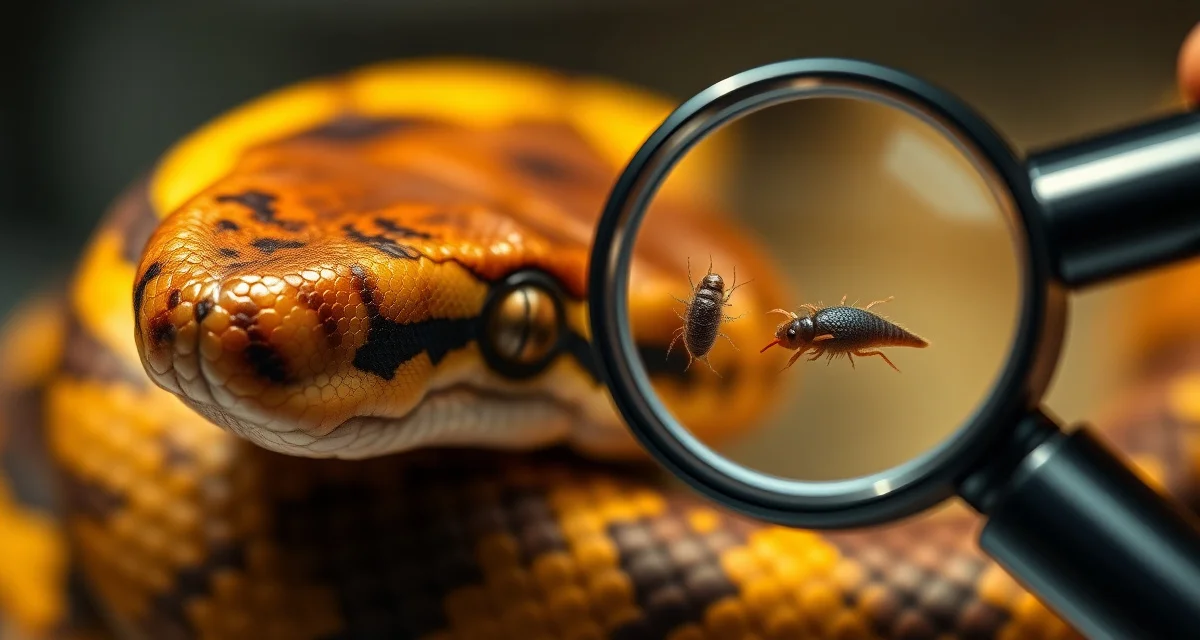
Ball Python Mites: Detection Treatment and Prevention
By HatchLedger Editorial Team · Published 2025-04-06 · Updated Mar 13, 2026
Mites are the most common pest problem in ball python collections, and in a collection of 20+ animals, an undetected mite infestation can spread to every enclosure within weeks. Early detection, systematic treatment, and prevention protocols keep mites manageable. A mite outbreak in a production collection during breeding season is one of the most disruptive problems a breeder faces.
TL;DR
- Ball python breeding operations require systematic record-keeping from pre-season preparation through end-of-season sales.
- Females at 1,200-1,500g or more are the target weight before introducing them to a breeding male.
- Ovulation detection is the key event that anchors pre-lay shed and lay date calculations.
- Clutch profitability guide depends on understanding actual cost basis per animal, not just gross sale revenue.
- Well-documented animals with complete feeding histories and clear genetic records consistently sell faster and at higher prices.
What Are Ball Python Mites?
The most common mite affecting captive ball pythons is Ophionyssus natricis (the snake mite). These are tiny, 0.5-1mm, eight-legged parasites that feed on blood. They're visible with the naked eye as moving dots, often seen near the heat pits, eye scales, and in the folds around the cloaca.
Mite infestations cause:
- Stress and reduced feeding response in affected snakes
- Anemia in severe infestations
- Skin irritation and increased soaking behavior
- IBD transmission (mites are a vector for Inclusion Body Disease), this alone makes mite prevention critical
Detection
What to Look For
On the snake:
- Moving dots on the skin, especially around heat pits, eyes, and cloaca
- Unusual restlessness, soaking behavior (mite-infested snakes often soak to drown mites)
- Tiny white specks in water dish (mite feces and shed skins)
In the enclosure:
- Fine dust-like material in corners of the enclosure
- Moving specks on the enclosure walls
On yourself:
- Mites crawling on your hands after handling an infested snake
Inspection Protocol
Inspect every new acquisition before it enters your collection space (see quarantine protocol). During routine checks, run your fingers along the neck/head region and check for mites. Take a white paper towel and wipe along the snake's body, mites show up clearly against white.
At minimum, do a mite inspection:
- On every new acquisition
- Monthly on all collection animals
- Immediately any time you see unusual soaking behavior
Log mite checks in HatchLedger's animal records. Establishing a baseline of clean inspections gives you documented evidence if a buyer later claims an animal arrived with mites.
Treatment
Immediate Steps When Mites Are Found
- Isolate the affected animal immediately. Move to quarantine housing.
- Identify all animals in contact or nearby. In a rack system, assume all animals in the rack are potentially exposed.
- Complete enclosure breakdown. Remove all substrate, hides, water dishes. Clean and disinfect everything.
- Treat all exposed animals.
Treatment Options
Provent-a-Mite (Permethrin-based spray):
The industry standard. Apply to the inside of the enclosure only, do not spray directly on the snake. Allow to dry completely (30+ minutes) before returning the animal. Very effective for killing mites in the environment.
Nix (Permethrin for humans, diluted):
Some breeders use diluted Nix solution on the snake itself for heavy infestations. Consult a reptile veterinarian for specific concentrations and technique before using this approach.
Reptile-safe pest strips (Vapona):
Placed in the enclosure outside the snake's direct contact area, very effective. Use with caution and follow dosage instructions carefully. Not for use with animals in the same air space continuously.
Veterinary treatment:
For severe infestations or valuable animals, a reptile vet can prescribe appropriate treatments including ivermectin (never use this yourself without veterinary guidance).
Treatment Timeline
One treatment is not enough. The mite life cycle includes eggs that survive treatment. You need:
- Treatment at Day 0
- Full enclosure cleaning at Day 0
- Second treatment at Day 7-10 (when remaining eggs hatch)
- Final treatment at Day 14-21
- Inspection at Day 30 to confirm eradication
Record every treatment date and animal ID in HatchLedger. If an infestation recurs, your records show whether treatment was completed properly.
Prevention
New Animal Quarantine
This is the primary prevention. All new acquisitions go through proper quarantine before contact with your main collection. (See ball python quarantine protocol.)
Regular Inspection
Monthly visual inspection of all collection animals. Mite populations are much easier to treat when caught at 10 mites than at 10,000 mites.
Provent-a-Mite Preventive Application
Some breeders apply Provent-a-Mite to enclosure interiors monthly as a preventive measure. This significantly reduces the risk of any mites introduced via prey items or airborne transmission establishing in the collection.
Hygiene Protocols
- Wash hands between handling different animals
- Keep feeding equipment clean
- Dispose of substrate in sealed bags immediately
Related Articles
- Ball Python Respiratory Infections: Causes, Treatment, and Prevention
- Ball Python Mite Treatment and Prevention: Complete Breeder Guide
- Ball Python Stomatitis (Mouth Rot): Identification, Treatment, and Prevention
- Ball Python Scale Rot and Skin Infections: Prevention and Treatment
FAQ
What is the best approach to ball python mites treatment?
Treat at Day 0, repeat at Day 7-10, and again at Day 14-21 to catch hatching eggs. Clean and disinfect all enclosures completely at each treatment. Assume all animals in contact with an infested animal are exposed and treat accordingly. Log every treatment date and outcome in your records.
How do professional breeders handle ball python mite infestation in large collections?
Experienced breeders treat mites as an operational crisis requiring immediate, systematic response across all potentially exposed animals. They isolate infested animals first, then work outward through proximity to identify all potentially exposed animals. They treat all affected enclosures simultaneously using consistent protocols and maintain treatment through the full mite life cycle rather than stopping after one application.
What is Ball Python Mites: Detection Treatment and Prevention?
Ball python mites are tiny blood-feeding parasites, most commonly Ophionyssus natricis, that infest captive snakes. This article covers how to identify an active infestation, treat affected animals and enclosures, and establish prevention protocols to stop mites from spreading through a collection. It is especially relevant for breeders managing multiple animals, where a single missed case can escalate into a collection-wide outbreak within weeks.
How much does Ball Python Mites: Detection Treatment and Prevention cost?
There is no cost to read this article on HatchLedger. Treatment supplies such as approved acaricide sprays, disposable gloves, and enclosure cleaning products carry their own retail costs, but the detection, treatment, and prevention guidance provided here is free. Catching mites early significantly reduces the total expense of treatment by limiting how many animals and enclosures require intervention.
How does Ball Python Mites: Detection Treatment and Prevention work?
The article walks through a systematic three-phase process: detect mites by inspecting animals under good lighting, focusing on heat pits, eye scales, and the cloacal region; treat affected snakes and fully strip and disinfect all enclosures; and prevent reinfestation through quarantine protocols, regular inspections, and careful management of incoming animals or equipment. Each phase builds on the previous one to break the mite life cycle.
What are the benefits of Ball Python Mites: Detection Treatment and Prevention?
Effective mite management protects animal health, preserves feeding responses, and prevents stress-related weight loss during critical periods like breeding season. It also protects the commercial value of your collection by keeping animals in sellable condition with clean health histories. Systematic treatment and prevention stop a single case from becoming a full collection outbreak, saving significant time, money, and animal welfare costs.
Who needs Ball Python Mites: Detection Treatment and Prevention?
Any ball python keeper can encounter mites, but this article is particularly relevant to breeders managing collections of 20 or more animals, where the risk of rapid spread is highest. It is also useful for hobbyists who recently acquired new animals, attended reptile expos, or noticed unexplained behavioral changes like soaking, reduced feeding, or visible movement on the snake's skin or enclosure walls.
How long does Ball Python Mites: Detection Treatment and Prevention take?
Detection can happen in minutes during a routine inspection. Treatment timelines depend on infestation severity, but a full enclosure decontamination cycle typically requires one to two weeks of repeated cleaning and monitoring to confirm the mite life cycle has been broken. Ongoing prevention is indefinite, built into regular husbandry routines such as quarantine periods for new animals and scheduled visual health checks across the collection.
Sources
- USARK (United States Association of Reptile Keepers)
- Association of Reptilian and Amphibian Veterinarians (ARAV)
- World of Ball Pythons (WoBP genetics reference database)
- MorphMarket (reptile industry marketplace)
- Reptiles Magazine (Bowtie Inc.)
Get Started with HatchLedger
Every part of a ball python breeding operation -- from pairing records to clutch documentation to financial tracking -- works better when the data is connected rather than scattered across notebooks and spreadsheets. HatchLedger is built for exactly that. Try it free with up to 20 animals.