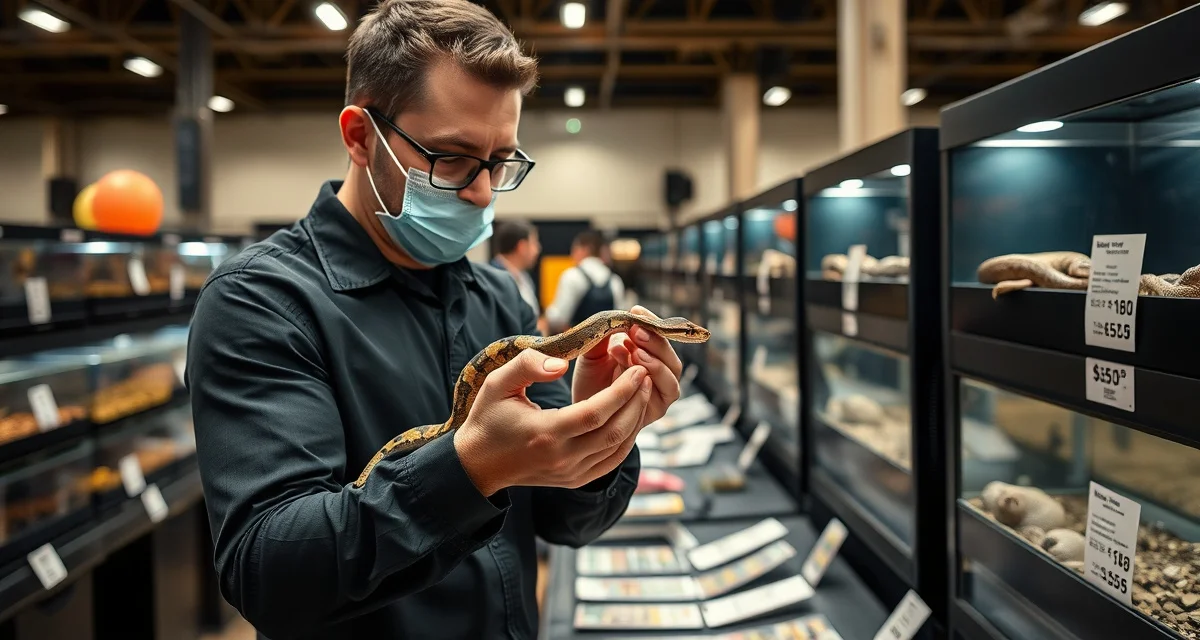
10 Tips for Selling Ball Pythons at Reptile Shows
By HatchLedger Editorial Team · Published 2025-05-12 · Updated Mar 13, 2026
Reptile shows can be excellent revenue events or expensive, exhausting days where you break even on table fees. The difference usually comes down to preparation, presentation, and how you manage the day. These ten tips will help you sell more and stress less.
TL;DR
- Ball python breeding operations require systematic record-keeping from pre-season preparation through end-of-season sales.
- Females at 1,200-1,500g or more are the target weight before introducing them to a breeding male.
- Ovulation detection is the key event that anchors pre-lay shed and lay date calculations.
- Clutch profitability guide depends on understanding actual cost basis per animal, not just gross sale revenue.
- Well-documented animals with complete feeding histories and clear genetic records consistently sell faster and at higher prices.
1. Know Your Pricing Before You Load the Van
Set your show prices before the morning of the event. Trying to price animals on the fly while buyers are asking questions leads to inconsistency and missed opportunities. Know what each animal is worth, what you'll accept as a floor price, and which animals you're willing to discount to clear before the drive home.
Print a price sheet or have prices clearly labeled on your display. Buyers who have to ask for every price are more likely to move on.
2. Bring More Animals Than You Think You'll Sell
That one box of five animals you planned to bring will generate interest in five animals. A diverse, larger display generates more traffic, more conversation, and often more sales. Buyers who weren't looking for something specific see your table and find something they didn't know they wanted.
Animals that don't sell come back home. Animals you didn't bring don't get sold.
3. Display Matters
A professional display isn't expensive, but it is impactful. Clean tubs, clear lids with ventilation, printed labels with morph information and price, and a sign with your business name and social media handle all tell buyers that you're serious. A chaotic, unlabeled table tells them the opposite.
Bring a tablecloth, some height variation with shelving or riser boxes, and enough lighting to show your animals properly if the venue is dim.
4. Handle Your Animals Comfortably
Buyers want to see the animals out. Be confident and comfortable handling your stock. A breeder who seems nervous about their own animals doesn't inspire confidence in a buyer making a $300 to $1,000 purchase. Practice handling your animals before the show.
That said, some animals don't want to be out for six hours. Read your animals and give them breaks.
5. Have Complete genetics guide Documentation
"I think it's het something" doesn't sell a ball python at a decent price. Know your animals' genetics, have documentation from your records, and be prepared to explain the genetics clearly to buyers of varying experience levels. A first-time buyer asking what "het Pied" means deserves a real answer, not a brush-off.
6. Offer a Feeding Record
Buyers who know an animal has established feeding on a specific prey type and size feel much more confident making a purchase. A feeding record doesn't have to be elaborate: three to five meals with dates and prey sizes is enough to demonstrate that the animal is eating reliably.
7. Accept Multiple Payment Methods
Cash is still common at reptile shows, but many buyers now expect to pay by card, Venmo, or PayPal. Get a card reader (Square, Stripe, and PayPal all offer them) and advertise that you accept cards. You'll lose sales if you're cash only.
8. Track Every Sale
Know which animal you sold, to whom, for what price, and what genetics documentation you provided. That tracking matters for your finances and for any post-sale customer service. If a buyer contacts you three weeks later with a question about genetics, you need to know what you sold them.
The ball python breeding hub covers business operations including sales tracking. With reptile breeder software comparison tools, you can see how different platforms handle sale logging and whether they connect to your animal records automatically.
9. Follow Up with Buyers
Get contact information from buyers when possible and follow up after the show. A simple check-in message a week later asking how the animal is settling in builds goodwill and turns one-time buyers into repeat customers who refer friends.
Show buyers who feel taken care of come back next season.
10. Debrief After Every Show
After you unload the van, write down what sold, what didn't, which animals generated the most interest but didn't close, and what you'd do differently. This data makes every subsequent show better.
If certain morphs consistently generate interest but don't sell, your price might be off. If certain animals never get looked at, think about whether to bring them next time or list them on MorphMarket instead.
Frequently Asked Questions
What tips help you sell ball pythons successfully at reptile shows?
Professional display, clear genetics documentation, feeding records, multiple payment options, and strategic pricing are the foundational elements. Knowing your animals, speaking confidently about genetics, and following up with buyers afterward converts interest into repeat customers.
How do professional breeders prepare for reptile show sales?
They pre-price every animal, build a professional display, bring a diverse selection of animals, ensure complete documentation for every listing, and have a system for tracking every sale they make during the event.
What software helps manage ball python show sales and inventory?
HatchLedger is purpose-built for reptile breeders, connecting animal records, breeding history, clutch outcomes, and financial tracking in one system. Unlike generic spreadsheets, it's designed around the specific workflow of an active breeding season. Free for up to 20 animals.
What records should every reptile breeder maintain per animal?
At minimum: acquisition date and source, morph and genetic documentation, feeding log, weight history, any veterinary treatments, and breeding history including pairing dates, clutch of origin for captive-bred animals, and offspring records. These records serve your own management, buyer documentation, regulatory compliance, and long-term genetic tracking.
How should reptile breeders document genetics for buyers?
A complete genetic record for sale includes the animal's visual morph name, confirmed het genes and their basis (parentage documentation or proven-out production), possible het genes with probability percentages, hatch date, and parent morph information. Including clutch-of-origin records lets buyers independently verify the claims.
What is 10 Tips for Selling Ball Pythons at Reptile Shows?
This article is a practical guide for ball python breeders looking to maximize sales at reptile shows. It covers ten actionable tips spanning pricing strategy, animal selection, display setup, and buyer communication. The goal is to help breeders turn show appearances into profitable events rather than costly break-even days. Topics include setting prices before the show, bringing enough inventory, presenting animals professionally, and using well-documented genetic and feeding records to justify asking prices and build buyer confidence.
How much does 10 Tips for Selling Ball Pythons at Reptile Shows cost?
The article itself is free to read on HatchLedger. There are no paywalls or purchase requirements. The tips inside focus on helping breeders recoup their costs and grow revenue at reptile shows, where table fees, travel, and time can eat into margins quickly. Implementing the advice may require investment in display materials, labels, or record-keeping tools, but the article's guidance is available to any breeder at no cost.
How does 10 Tips for Selling Ball Pythons at Reptile Shows work?
The article walks breeders through the full arc of a successful reptile show, from pre-event preparation to the drive home. It covers setting prices in advance, selecting which animals to bring, organizing your table for visual impact, handling buyer questions confidently, and knowing when to discount. Each tip is standalone and practical, designed to be applied immediately. Breeders with complete records and clear pricing are shown to close more sales than those who improvise on show day.
What are the benefits of 10 Tips for Selling Ball Pythons at Reptile Shows?
Breeders who follow these tips are better positioned to sell more animals per show, command higher prices for well-documented morphs, and reduce the stress of managing a busy table alone. Clear pricing eliminates awkward negotiations. Bringing extra inventory ensures you don't leave money behind. Animals with complete feeding histories and genetic records build buyer trust quickly, which shortens the sales cycle and supports premium pricing compared to undocumented animals from less prepared sellers.
Who needs 10 Tips for Selling Ball Pythons at Reptile Shows?
These tips are most useful for ball python breeders who are either new to reptile shows or consistently breaking even without understanding why. Hobbyist breeders scaling up, small operations trying to justify show expenses, and experienced keepers who want to improve their table efficiency will all find value here. Anyone who has ended a show day with unsold animals, uncertain pricing, or frustrated buyers will recognize the problems this article directly addresses.
How long does 10 Tips for Selling Ball Pythons at Reptile Shows take?
Reading the article takes roughly five to ten minutes. Implementing the tips fully requires preparation time before your next show, including pricing your animals, printing labels or a price sheet, and organizing transport and display materials. Most breeders can apply the core advice within one show cycle. The record-keeping habits mentioned, such as maintaining feeding histories and genetic documentation, deliver the most value when built consistently over a full breeding season.
Related Articles
Sources
- USARK (United States Association of Reptile Keepers)
- Association of Reptilian and Amphibian Veterinarians (ARAV)
- World of Ball Pythons (WoBP genetics reference database)
- MorphMarket (reptile industry marketplace)
- Reptiles Magazine (Bowtie Inc.)
Get Started with HatchLedger
Every part of a ball python breeding operation -- from pairing records to clutch documentation to financial tracking -- works better when the data is connected rather than scattered across notebooks and spreadsheets. HatchLedger is built for exactly that. Try it free with up to 20 animals.