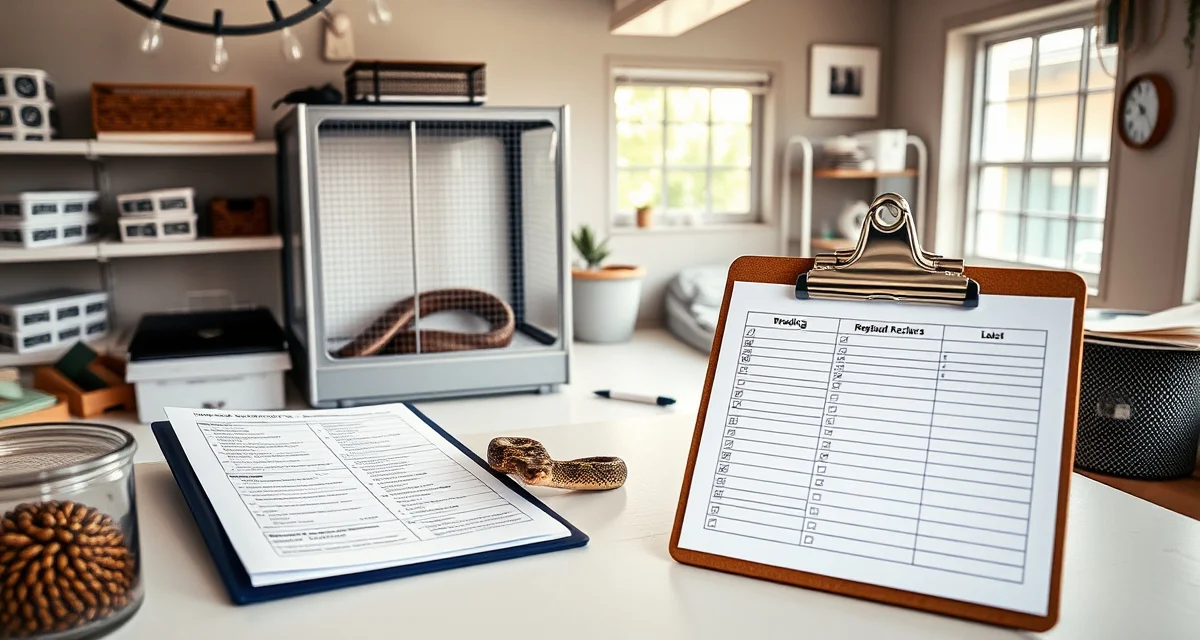
Burmese Python Buyer Waitlist Management: Complete Breeder Guide
By HatchLedger Editorial Team · Published 2025-05-29 · Updated Mar 13, 2026
Managing a buyer waitlist for Burmese pythons involves complications that don't apply to smaller species. Because many states restrict or prohibit Burmese ownership, you need to verify that potential buyers can legally receive animals before committing to hold a spot for them. Buyers who wait months for a specific morph animal then discover they can't legally own it are an outcome everyone wants to avoid. Breeders using integrated software report 30% less time on administrative tasks, freeing up time for the careful buyer management that a waitlist in a regulated species market requires.
TL;DR
- Burmese pythons (Python bivittatus) are among the largest constrictors in captivity, with breeding females commonly exceeding 100-200 lbs.
- Clutch sizes average 25-50 eggs, making Burmese pythons among the most productive large constrictors in captive breeding.
- Cycling typically involves a 4-8 week period of reduced temperatures (dropping 8-12 degrees Fahrenheit) and reduced feeding frequency.
- Incubation parameters runs 60-65 days at 88-90 degrees Fahrenheit, with females capable of thermoregulating eggs by muscular shivering.
- Compliance requirements requirements for Burmese python ownership and interstate transport vary by state, with federal protections under the Lacey Act applying in some jurisdictions.
Despite these complications, a well-managed waitlist gives you the best possible sales position going into hatch season. Matching animals to committed buyers before they're even hatched is far more efficient than producing animals and then searching for buyers.
Building a Compliant Waitlist
Every entry on your waitlist should include the buyer's location and a verification that they can legally possess Burmese pythons. Don't wait until you're ready to ship to verify this. State-level restrictions for Burmese pythons are non-trivial -- Hawaii prohibits them entirely, and multiple other states have restrictions ranging from permit requirements to outright prohibitions.
Verify buyer eligibility at intake, not at sale. If a buyer in a restricted state inquires, explain the regulations clearly rather than taking their information and discovering the problem at transaction time. Directing buyers to check their state regulations and confirm eligibility before joining the waitlist protects both parties.
Keep documentation of your eligibility verification for each buyer. If you ask buyers to confirm their state's rules in writing (even an email response), that creates a paper trail that demonstrates your due diligence.
What Your Waitlist Needs to Capture
For each buyer on your waitlist, you need:
- Full name and contact information (email and phone minimum)
- Verified state/location and ownership legality confirmation
- What they're looking for (morph, sex, size at sale)
- How they heard about you (referral, MorphMarket, expo)
- Date added to the waitlist
- Deposit status and amount, if applicable
- Any additional notes about their preferences or timeline
This information lets you match animals to buyers efficiently when a hatch arrives. Buyers who don't specify a preference get first refusal on available animals in order. Buyers who specified "female albino only" don't need to be contacted until you have a female albino available.
Communication Through Long Wait Periods
Burmese breeding timelines are long. A buyer who gets on your waitlist in October for a morph that won't be hatched until June-July is waiting 8-9 months. During that time, they may have found their animal elsewhere or changed their plans entirely. Staying in contact through the wait period reduces the number of buyers who have moved on by the time you're ready to sell.
Monthly or bi-monthly updates through breeding season are appropriate: a brief message when cycling begins, a note when you confirm successful breeding, an update when you confirm a female is gravid, a notification when the clutch is laid and in incubation, and a final contact when hatch begins and you're ready to match animals to buyers.
These communications don't need to be elaborate. A brief, informative update that tells buyers where the season stands keeps them engaged and confident that you're a professional seller who delivers what they're waiting for.
Processing the Hatch and Matching Animals
When eggs begin to hatch, you'll have 1-3 days of staggered emergence followed by a few weeks before animals are eating. Use this period to notify waitlist buyers that hatch is in progress, give preliminary information about what morphs are coming out (visual versus possible het, sex when observable), and begin the matching process.
Give each buyer a defined response window -- 48-72 hours -- to confirm their pick before you move to the next buyer on the list. Buyers who don't respond within the window forfeit their spot for that animal (but may stay on the waitlist for future availability depending on your policy).
HatchLedger lets you maintain buyer records alongside your animal inventory, connecting waiting buyers to specific available animals as they become ready for sale.
HatchLedger links buyer transactions to your P&L so every waitlist conversion flows directly into your financial tracking.
Frequently Asked Questions
What is the best approach to Burmese python buyer waitlist management?
Verify buyer state eligibility at intake, before adding them to the waitlist. Capture full contact information, morph preferences, and deposit status for every entry. Send regular seasonal updates to keep buyers engaged through the breeding-to-hatch timeline. When animals are ready, notify waitlist buyers in order and give a defined response window. Document all buyer communications and eligibility confirmations to protect yourself from compliance and dispute issues.
How do professional breeders handle Burmese python buyer waitlists?
Professionals in the Burmese market take compliance seriously at every stage of the buyer relationship. They verify eligibility before investing time in a waitlist relationship that won't be convertible. They communicate proactively through the breeding season rather than going silent and then suddenly needing buyers when animals are ready. Their waitlist records are organized well enough to match specific buyers to specific morph outcomes quickly when hatch season arrives.
What software helps manage Burmese python buyer waitlists?
HatchLedger tracks every animal, clutch, and sale record for Burmese python breeders, with documentation that supports regulatory compliance and buyer confidence. When managing large clutches and compliance requirements simultaneously, a connected system prevents the record-keeping gaps that create problems at sale. Free for up to 20 animals.
Are Burmese pythons legal to own and breed in all US states?
No. Burmese pythons are listed as an injurious species under the Lacey Act, which restricts interstate transport. Several states have additional bans on ownership entirely. Check current state and federal regulations before acquiring or transporting animals. USARK maintains updated resources on applicable regulations.
How large should a Burmese python enclosure be for a breeding pair?
Breeding females typically require enclosures of at least 8x4 feet and often larger for full-grown adults. Dedicated breeding rooms or custom builds are standard at scale. Thermal gradient with hot spots at 88-92 degrees Fahrenheit and ambient temperatures in the mid-70s allows proper thermoregulation.
What is Burmese Python Buyer Waitlist Management: Complete Breeder Guide?
Burmese Python Buyer Waitlist Management: Complete Breeder Guide is a comprehensive resource for reptile breeders managing presale lists for one of the most legally complex constrictor species in captivity. It covers legal compliance verification across states, morph-specific deposit structures, communication workflows, and how to use integrated breeding software to reduce administrative overhead by up to 30%. Given clutch sizes averaging 25-50 eggs and long buyer wait times, structured waitlist management is essential for serious Burmese python breeders.
How much does Burmese Python Buyer Waitlist Management: Complete Breeder Guide cost?
The guide itself is a free educational resource. Costs associated with implementing its recommendations vary by breeder. Dedicated reptile breeding software with waitlist features typically runs $10-50 per month. Legal consultation for interstate transport compliance may add additional cost. Deposit structures recommended in the guide typically range from $100-500 per animal depending on morph rarity. The bigger financial protection the guide offers is preventing costly failed sales to buyers in states where Burmese ownership is restricted or prohibited.
How does Burmese Python Buyer Waitlist Management: Complete Breeder Guide work?
The guide works by walking breeders through a staged waitlist process: collecting buyer information, verifying state-level legal eligibility before holding any animal, structuring refundable or non-refundable deposits, and setting clear communication timelines aligned with incubation and hatch schedules. Breeders document buyer preferences by morph and sex, then match animals to waitlist positions after clutch assessment. Software integrations automate reminders, track deposit status, and flag compliance issues, reducing manual coordination across what can be 25-50 animals per clutch.
What are the benefits of Burmese Python Buyer Waitlist Management: Complete Breeder Guide?
Key benefits include fewer failed transactions from buyers who cannot legally own Burmese pythons in their state, clearer expectations for both breeder and buyer during the 60-65 day incubation period, and significantly less administrative time. Breeders using structured systems report 30% reductions in time spent on paperwork and follow-up. For a species with large clutches, high individual value, and complex legal requirements, a disciplined waitlist process directly protects revenue and breeder reputation.
Who needs Burmese Python Buyer Waitlist Management: Complete Breeder Guide?
Any breeder producing Burmese pythons at scale needs this framework, particularly those selling across state lines. Because Burmese pythons are a federally listed injurious species under the Lacey Act with additional state-level restrictions, breeders without a compliance-first intake process risk holding animals for buyers who ultimately cannot receive them. Breeders managing multiple breeding females, large clutches averaging 25-50 eggs, or high-value morphs benefit most from the systematic approach the guide outlines.
How long does Burmese Python Buyer Waitlist Management: Complete Breeder Guide take?
Implementation timeline depends on where you are in your breeding season. Setting up buyer intake forms, deposit agreements, and compliance screening can be done in a few days. Aligning your waitlist workflow with your breeding cycle — including a 4-8 week cooling period, a 60-65 day incubation, and post-hatch assessment — means a full waitlist cycle from initial buyer contact to animal delivery typically spans 4-6 months. Software onboarding for automated tracking generally takes one to two weeks.
Related Articles
- Reticulated Python Buyer Waitlist Management: Complete Breeder Guide
- Boa Constrictor Buyer Waitlist Management: Complete Breeder Guide
- Corn Snake Buyer Waitlist Management: Complete Breeder Guide
- Hognose Snake Buyer Waitlist Management: Complete Breeder Guide
Sources
- USARK (United States Association of Reptile Keepers)
- Association of Reptilian and Amphibian Veterinarians (ARAV)
- US Fish and Wildlife Service (Injurious Wildlife regulations)
- Journal of Herpetology (Society for the Study of Amphibians and Reptiles)
- Florida Fish and Wildlife Conservation Commission
Get Started with HatchLedger
Burmese python breeding involves large animals, large clutches, and compliance documentation that is difficult to manage without a dedicated system. HatchLedger tracks every animal, clutch, and sale record in one place, giving you the documentation you need for regulatory compliance and buyer confidence. Try it free with up to 20 animals.