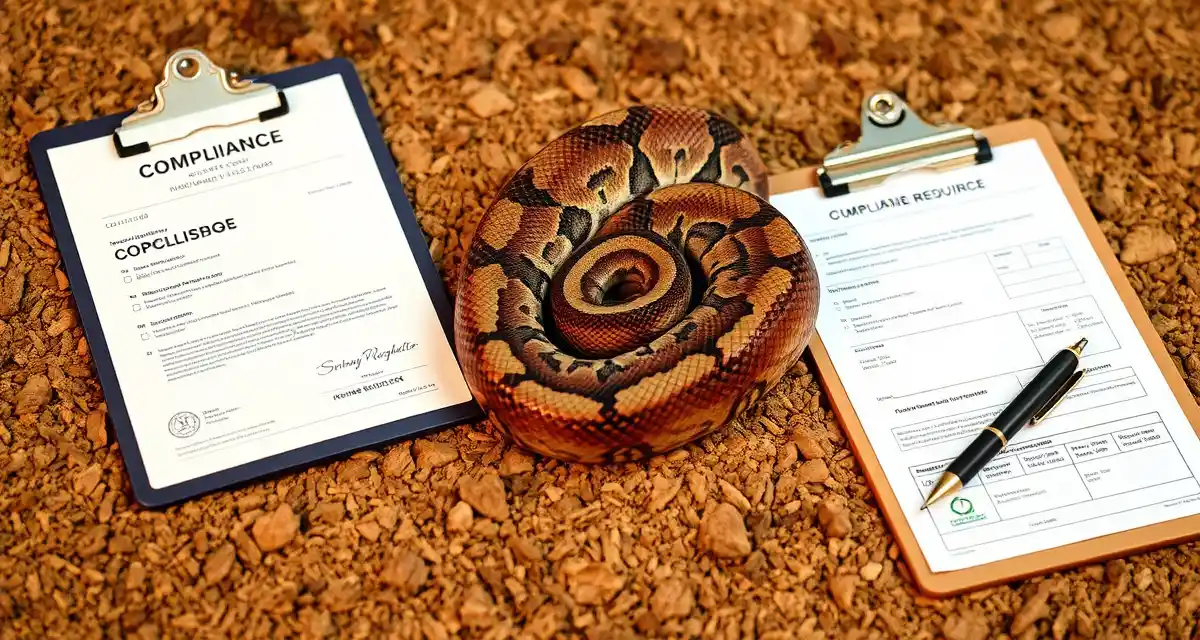
Burmese Python Compliance and Shipping: Complete Breeder Guide
By HatchLedger Editorial Team · Published 2025-03-09 · Updated Mar 13, 2026
Burmese python compliance and shipping is among the most regulated areas of captive reptile commerce. Burmese pythons have been specifically targeted in US federal regulation as injurious wildlife, and state-level restrictions vary considerably. Selling or shipping a Burmese to the wrong location without understanding the applicable laws creates serious legal exposure. Breeders using integrated software report 30% less time on administrative tasks, which matters when the administrative burden of compliance research and documentation is genuinely significant for Burmese breeders.
TL;DR
- Burmese pythons (Python bivittatus) are among the largest constrictors in captivity, with breeding females commonly exceeding 100-200 lbs.
- Clutch sizes average 25-50 eggs, making Burmese pythons among the most productive large constrictors in captive breeding.
- Cycling typically involves a 4-8 week period of reduced temperatures (dropping 8-12 degrees Fahrenheit) and reduced feeding frequency.
- Incubation parameters runs 60-65 days at 88-90 degrees Fahrenheit, with females capable of thermoregulating eggs by muscular shivering.
- Compliance requirements for Burmese python ownership and interstate transport vary by state, with federal protections under the Lacey Act applying in some jurisdictions.
Understanding the regulatory landscape -- federal, state, and international -- is not optional if you're running a commercial Burmese breeding operation. The laws are specific, they change, and ignorance is not a legal defense.
Federal Regulations for Burmese Pythons
Burmese pythons (Python bivittatus) were listed as injurious wildlife under the Lacey Act by the US Fish and Wildlife Service. The key implication of this listing is that it prohibits interstate transport of live Burmese pythons, except under specific exceptions and permit conditions that USFWS administers.
This is a significant regulatory burden for commercial breeders. Unlike most other captive-bred python species, you cannot simply ship Burmese pythons to buyers in other states without navigating the injurious wildlife import/export framework. The specific requirements have been interpreted differently by different legal counsel, and staying current through USARK (United States Association of Reptile Keepers) and legal advice specific to your situation is essential.
Captive-bred specimens may have different status than wild-caught under certain regulatory interpretations, but this is an area where you need current legal guidance rather than relying on forum discussions or secondhand information.
State-Level Restrictions
Several states prohibit or significantly restrict Burmese python ownership independently of federal regulations:
- Hawaii -- Strict prohibition. No Burmese pythons.
- California -- Restricted species; permits may be required.
- Florida -- State-level restrictions on Burmese pythons specifically; Florida has seen significant wild invasive population issues that have driven strict regulatory responses.
- New York -- Restrictions apply to large constrictors.
Other states have regulations that may apply depending on the specific situation. Never ship to a buyer in a new state without researching that state's current laws. Regulations change and what was permissible two years ago may not be today.
Documentation for Every Transaction
Every Burmese python sale should be documented with:
- Animal ID and description
- Buyer name and address (state verification)
- Date of transaction
- Any applicable permit numbers or regulatory documentation
- Any health certificates required by the destination state
Keep these records permanently. If a transaction is ever questioned by regulatory authorities, your documentation is your protection. Incomplete or missing records put you in a much more difficult position even if the transaction was conducted appropriately.
Shipping Logistics
If interstate shipping is permissible for your situation under current regulations, the practical logistics require:
- Appropriate carriers and shipping methods (most commercial parcel carriers prohibit live animal shipments; use specialized reptile shipping services or cargo options)
- Weather-appropriate packaging and conditions
- Overnight shipping to minimize transit time
- Receiver readiness on the arrival day
- Health certificates if required by destination
Given the regulatory complexity around Burmese pythons specifically, many breeders in this space operate primarily through in-person transactions at reptile expos rather than shipping. Expos in states where Burmese are legal to sell and possess avoid the interstate commerce complications entirely.
HatchLedger tracks sales and shipping records for each transaction, keeping documentation organized and searchable when compliance verification is needed.
HatchLedger links transaction records to your P&L so compliance costs and shipping expenses are part of your complete financial picture.
Frequently Asked Questions
What is the best approach to Burmese python compliance and shipping?
Consult a lawyer or USARK for current legal guidance on interstate transport of Burmese pythons before conducting interstate sales. Research destination state laws for every transaction. Document every sale with buyer state verification, animal ID, and any applicable permit documentation. Consider in-person expo transactions as an alternative to shipping to avoid interstate commerce complications. Keep all compliance records permanently in an organized, searchable system.
How do professional breeders handle Burmese python compliance?
Professional Burmese breeders maintain active awareness of both federal and state regulations through USARK membership and periodic legal consultation. They don't rely on secondhand information in forums or casual conversations about what's currently legal. They document every transaction thoroughly, verify buyer eligibility before committing to any sale, and build compliance costs (legal consultation, permits, documentation) into their financial planning. They treat regulatory compliance as a non-negotiable cost of operating in this space.
What software helps manage Burmese python compliance records?
HatchLedger tracks every animal, clutch, and sale record for Burmese python breeders, with documentation that supports regulatory compliance and buyer confidence. When managing large clutches and compliance requirements simultaneously, a connected system prevents the record-keeping gaps that create problems at sale. Free for up to 20 animals.
Are Burmese pythons legal to own and breed in all US states?
No. Burmese pythons are listed as an injurious species under the Lacey Act, which restricts interstate transport. Several states have additional bans on ownership entirely. Check current state and federal regulations before acquiring or transporting animals. USARK maintains updated resources on applicable regulations.
How large should a Burmese python enclosure be for a breeding pair?
Breeding females typically require enclosures of at least 8x4 feet and often larger for full-grown adults. Dedicated breeding rooms or custom builds are standard at scale. Thermal gradient with hot spots at 88-92 degrees Fahrenheit and ambient temperatures in the mid-70s allows proper thermoregulation.
What is Burmese Python Compliance and Shipping: Complete Breeder Guide?
This guide covers everything Burmese python breeders need to know about legal compliance and safe shipping. It explains federal regulations under the Lacey Act, state-level restrictions on ownership and interstate transport, and documentation requirements for selling captive-bred specimens. It also addresses practical shipping protocols for large constrictors, helping breeders avoid legal exposure when moving animals across state lines or selling to buyers in regulated jurisdictions.
How much does Burmese Python Compliance and Shipping: Complete Breeder Guide cost?
The guide itself is free educational content published on HatchLedger. However, the underlying compliance work it describes—permits, health certificates, legal consultations, and specialized shipping services—carries real costs that vary by state and carrier. Breeders using HatchLedger's integrated software report saving roughly 30% of administrative time, which can meaningfully offset the overhead of managing documentation for a high-regulation species like the Burmese python.
How does Burmese Python Compliance and Shipping: Complete Breeder Guide work?
The guide walks breeders through identifying which federal and state laws apply to their specific situation, assembling required documentation before a sale, and selecting compliant shipping methods for large constrictors. It covers cycling, incubation, and clutch management alongside the regulatory framework, so breeders understand both the biology and the legal landscape. Integrated record-keeping tools help track animals, sales, and compliance documentation in one place.
What are the benefits of Burmese Python Compliance and Shipping: Complete Breeder Guide?
Following this guide reduces legal risk when selling or transporting Burmese pythons, which are among the most heavily regulated reptiles in US commerce. Breeders gain clarity on which states prohibit ownership or import, what federal Lacey Act obligations apply, and how to document sales correctly. Proper compliance protects your breeding operation from fines, seizures, and reputational damage—and gives buyers confidence they're purchasing from a responsible, law-abiding source.
Who needs Burmese Python Compliance and Shipping: Complete Breeder Guide?
Any breeder, hobbyist, or seller working with captive Burmese pythons in the United States needs this information. Because Burmese pythons are federally listed as injurious wildlife, even experienced reptile professionals can inadvertently violate interstate commerce rules. It's especially critical for breeders producing large clutches—averaging 25–50 eggs—who regularly sell across state lines and must vet every buyer's location against a patchwork of state and federal restrictions.
How long does Burmese Python Compliance and Shipping: Complete Breeder Guide take?
Reading the guide takes under an hour, but implementing full compliance is an ongoing process. Researching state-specific laws for each sale, preparing documentation, and arranging compliant shipping can add several hours per transaction for a high-regulation species like the Burmese python. Breeders using integrated software report cutting administrative time by around 30%, which compounds significantly across a breeding season producing dozens of animals from clutches of 25–50 eggs.
Related Articles
- Reticulated Python Compliance and Shipping: Complete Breeder Guide
- Boa Constrictor Compliance and Shipping: Complete Breeder Guide
- Burmese Python Breeding Season Timing: Complete Breeder Guide
Sources
- USARK (United States Association of Reptile Keepers)
- Association of Reptilian and Amphibian Veterinarians (ARAV)
- US Fish and Wildlife Service (Injurious Wildlife regulations)
- Journal of Herpetology (Society for the Study of Amphibians and Reptiles)
- Florida Fish and Wildlife Conservation Commission
Get Started with HatchLedger
Burmese python breeding involves large animals, large clutches, and compliance documentation that is difficult to manage without a dedicated system. HatchLedger tracks every animal, clutch, and sale record in one place, giving you the documentation you need for regulatory compliance and buyer confidence. Try it free with up to 20 animals.