Clutch Monitoring Records: Tracking Eggs Through Incubation
By HatchLedger Editorial Team · Published 2025-03-17 · Updated Mar 13, 2026
Incubation is not a set-it-and-forget-it process. Conditions shift, eggs change, problems develop. Breeders who check their clutches regularly and keep records of what they observe catch problems early and maintain the data needed to understand outcomes after hatch.
What to Record at Each Inspection
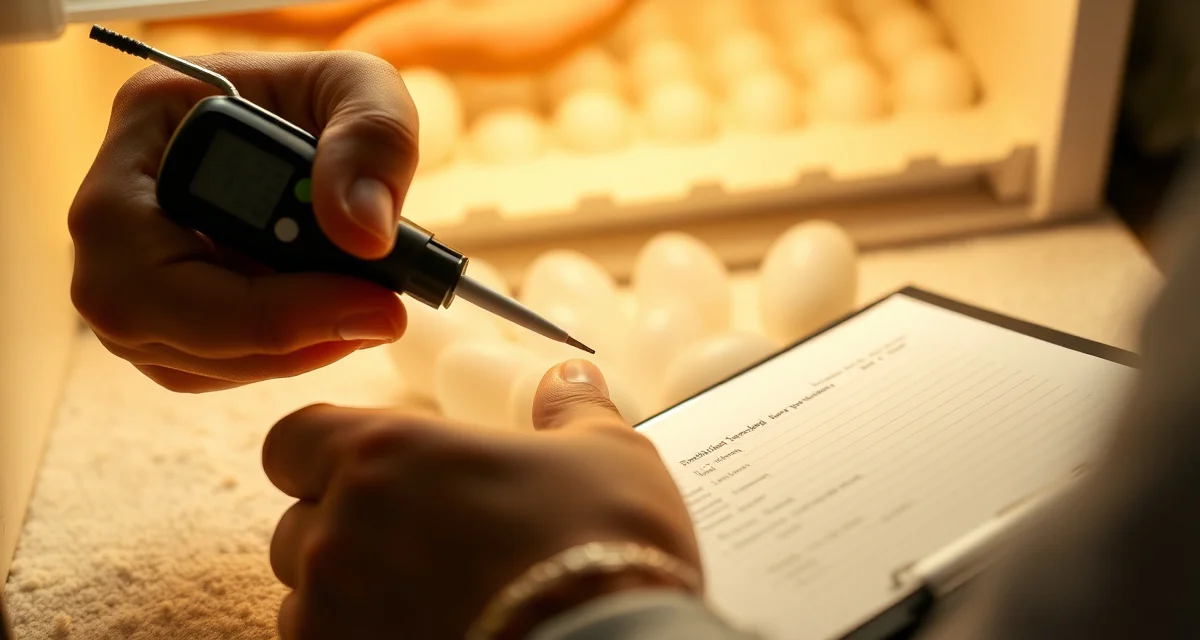
Regular clutch inspections should generate notes, not just eyeball assessments. For each check, record:
Date and time: Gives you a timeline to reference if something changes between inspections.
Temperature and humidity readings: Pull actual readings from your probe, not just what the thermostat is set to. Probes drift. Thermostats malfunction. Knowing what the incubator actually ran at is crucial when investigating a poor hatch.
Egg condition: Color, firmness, and size. Healthy ball python eggs stay white to cream and remain firm throughout incubation. Sweating (condensation on the egg surface) is normal and indicates appropriate humidity. Denting indicates moisture loss.
Any eggs of concern: Flag specific eggs that show changes. Track them individually at subsequent inspections to see whether the condition worsens or stabilizes.
Mold: If present, note which eggs are affected and what action you took. Small amounts of mold on the egg surface can sometimes be treated with a damp cloth or a dilute betadine solution. Eggs with mold penetrating the shell are generally not recoverable.
Inspection Frequency
For a standard ball python clutch at 88-90°F, weekly inspections are adequate during the first month. In the second month, as pip date approaches, every 2-3 days is reasonable. Some breeders check daily in the final week.
The goal is to catch problems in time to intervene, not to hover unnecessarily. Opening the incubator too frequently introduces temperature and humidity fluctuations. Find a rhythm that keeps you informed without disrupting the environment.
Individual Egg Tracking
In clutches with any variation in egg appearance, number each egg in the container and track them individually. This is particularly important when:
- One or more eggs appear borderline viable
- You want to correlate hatchling outcomes with individual egg development
- You're troubleshooting a clutch with multiple problem eggs
Numbering eggs with a soft pencil (not marker) on the top surface allows you to track which end is up (important for some species) and correlate your notes to specific eggs throughout incubation.
Temperature Records and Probe Placement
Incubator temperature fluctuates, especially in ambient-dependent setups or during extreme outdoor weather. If your incubation room drops 10 degrees during a cold snap, your incubator's performance changes. Record actual temperature readings at each inspection and note any unusual ambient conditions.
Probe placement matters. The temperature at the probe location may differ from the temperature at the egg level. If you're seeing poor hatch rates, experimenting with probe placement while keeping careful records lets you identify whether temperature variance is a contributing factor. Your clutch hatch tracking history over multiple seasons will show whether outcomes correlate with temperature data.
Problem Egg Documentation
When an egg fails, document it thoroughly:
- Which egg (by number or position)
- When the problem first appeared
- What the egg looked like at each subsequent inspection
- Whether you intervened and how
- Final outcome (dead-in-egg, slug, contaminated)
This documentation isn't just for the current season. When you're reviewing a year of clutch records and notice that one incubator has more failures than the other, or that a particular female's clutches have a higher failure rate, you need this detail to understand why.
Connecting to the Broader Record
Clutch monitoring records live within the larger context of the clutch's history. The female's female health tracking records provide background on her condition before lay. The breeding season records show you when she was paired, when she ovulated, and what the timeline looked like.
All of this connects in HatchLedger so you're never looking at incubation data in isolation. When a clutch goes wrong, you have the full picture: the female's health, the pairing history, the incubation environment, and the progression of egg changes through the incubation period. That's what allows you to actually learn from the outcome rather than just cataloging the loss.
FAQ
What is Clutch Monitoring Records: Tracking Eggs Through Incubation?
Clutch monitoring records are detailed logs kept by reptile breeders throughout the incubation period, tracking each egg's condition, temperature, humidity, and any changes observed at regular inspections. Rather than passively waiting for hatch day, breeders document dates, probe readings, egg firmness, coloration, and concerns like mold or denting. These records create a timeline that helps identify problems early, understand what conditions led to successful hatches, and improve future breeding outcomes.
How much does Clutch Monitoring Records: Tracking Eggs Through Incubation cost?
Clutch monitoring records cost nothing beyond a notebook or a free spreadsheet. Digital tools like HatchLedger offer structured logging at low or no cost. The real investment is time — a few minutes per inspection to record what you observe. That time pays for itself when early documentation helps you catch a failing egg, troubleshoot an incubator malfunction, or explain a poor hatch rate after the season ends.
How does Clutch Monitoring Records: Tracking Eggs Through Incubation work?
At each scheduled inspection, you record the date, actual temperature and humidity readings from your probe, and the condition of every egg — color, firmness, sweat, or denting. Eggs showing changes get flagged and tracked individually at future checks. Notes on mold, repositioning, or interventions are logged alongside the data. Over the incubation period, this builds a complete timeline from lay date to hatch.
What are the benefits of Clutch Monitoring Records: Tracking Eggs Through Incubation?
Good records let you catch problems before they become losses. If an egg starts denting, you can adjust humidity before it collapses. If temperatures spiked, you know when and for how long. After hatch, records help you correlate conditions with outcomes — which clutches thrived, which struggled, and why. Over multiple seasons, that data improves your incubation setup, reduces losses, and builds confidence in your process.
Who needs Clutch Monitoring Records: Tracking Eggs Through Incubation?
Any reptile breeder incubating eggs benefits from clutch monitoring records, but they are especially important for ball python breeders managing multiple clutches across a season. Breeders new to incubation use records to build intuition about what healthy eggs look and feel like over time. Experienced breeders use them to refine protocols and troubleshoot anomalies. Anyone who wants to improve hatch rates season over season needs this data.
How long does Clutch Monitoring Records: Tracking Eggs Through Incubation take?
Clutch monitoring records span the entire incubation period — typically 55 to 65 days for ball pythons. Each individual inspection takes only a few minutes. The habit is what matters: consistent check-ins every few days, logged at the time of inspection rather than recalled later. Starting records at the lay date and maintaining them through hatch gives you a complete picture of what each clutch experienced.
What should I look for when choosing Clutch Monitoring Records: Tracking Eggs Through Incubation?
Look for a system that is fast to use during inspections, easy to search later, and structured enough that you record the same data points every time. Whether you use paper, a spreadsheet, or a purpose-built app like HatchLedger, it should capture date, temperature, humidity, and per-egg observations. Bonus features include flagging individual eggs, attaching photos, and comparing outcomes across clutches or seasons.
Is Clutch Monitoring Records: Tracking Eggs Through Incubation worth it?
Yes. Clutch monitoring records are one of the highest-return habits in reptile breeding. The cost is minimal — a few minutes per inspection — and the upside is significant: earlier problem detection, fewer preventable losses, and a growing dataset that makes you a better breeder over time. Breeders who skip records often repeat the same mistakes across seasons. Those who keep them compound their knowledge with every clutch they run.