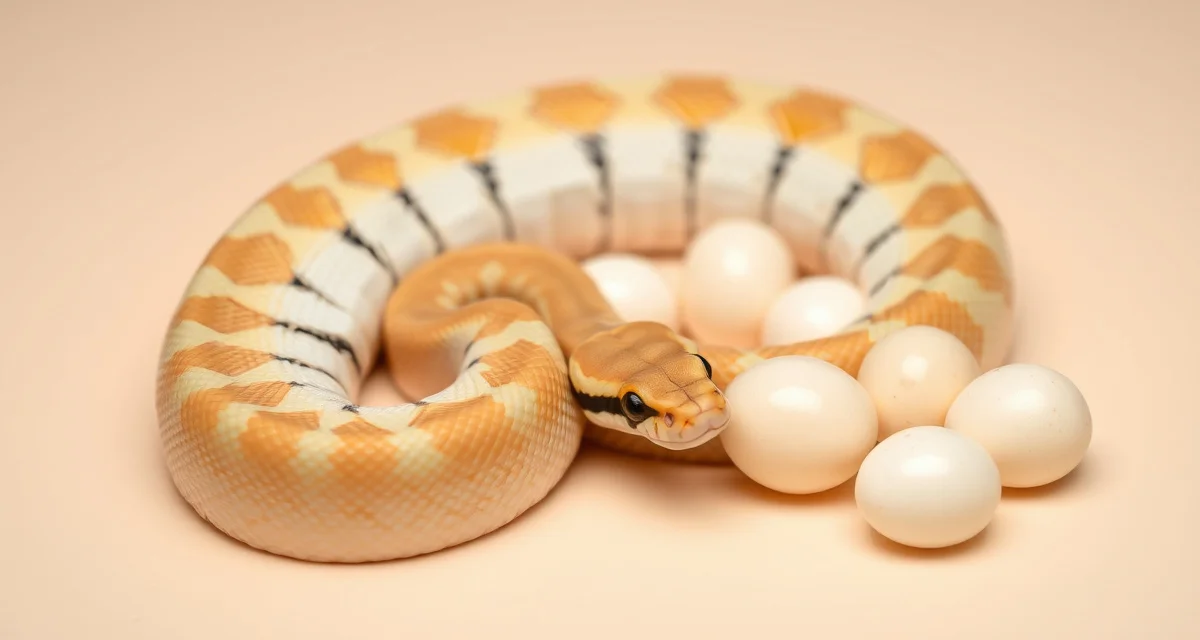
Corn Snake Clutch Size and Egg Count: Complete Breeder Guide
By HatchLedger Editorial Team · Published 2025-03-23 · Updated Mar 13, 2026
Corn snake clutch size and egg count are directly tied to female age, body condition, and the quality of your seasonal cycling. Understanding what drives clutch size variation allows you to optimize your program for better production year over year. Breeders using integrated software report 30% less time on administrative tasks, freeing focus for the conditioning decisions that most affect your clutch outcomes.
TL;DR
- Corn snakes (Pantherophis guttatus) are the most widely bred colubrid in captivity, with hundreds of documented morphs spanning all three major inheritance patterns.
- Seasonal cycling of 60-90 days at 50-60 degrees Fahrenheit is the standard cycling protocol for reliable spring breeding.
- Clutch sizes average 12-24 eggs for adult females, with experienced breeders often producing 2 clutches per season from well-conditioned females.
- Incubation setup runs 55-65 days at 78-82 degrees Fahrenheit, cooler than most python species.
- Corn snake morph genetics include multiple allelic series, including the amelanistic and anerythristic pathways, that interact in non-obvious ways.
Corn snakes are among the most productive colubrid breeders in captivity. A healthy, mature female can produce clutches of 12 to 24 eggs annually, sometimes producing two clutches in a season. First-time breeders typically produce smaller clutches of 4 to 8 eggs.
What Determines Corn Snake Clutch Size
Female Age and Breeding History
Young females, typically 18 to 24 months at first breeding, produce their smallest clutches. As females mature through their prime breeding years (ages 2 to 6), clutch size generally increases. Very old females may show declining production. Track breeding history for each female to identify where she is in her productivity arc.
Body Condition Before Breeding
Body condition at the start of the breeding season is the most controllable factor in clutch size. A female that enters the cooling period at optimal weight, comes out with good body condition, and eats well before breeding develops more follicles than one that's underconditioned.
Weigh females monthly throughout the year, not just during breeding season. Log weights in your individual animal records so you can see long-term trends. A female slowly losing weight over months needs attention before breeding season, not after.
Cooling Duration and Quality
Females that receive adequate winter cooling consistently produce larger clutches than those cycled superficially. A 60 to 90-day cooling period at 55-65°F is the target. Shorter or warmer cooling periods produce acceptable results but often with smaller clutches and lower fertility rates.
Tracking Your Clutch from Lay to Hatch
At lay, record immediately:
- Total egg count
- Number of eggs that appear fertile versus clearly infertile (slugs look yellowish and deflated compared to white, firm viable eggs)
- Lay date and time
- Female weight before and after laying
Candle eggs at 10 to 14 days using a flashlight in a dark room. Viable eggs show vascularization; infertile eggs remain opaque or begin to collapse. Remove clearly infertile eggs at this point.
Log your candling results in your clutch record. Over multiple seasons, your candling accuracy relative to actual hatch outcomes tells you how good your assessment is getting. This kind of multi-season comparison is exactly what HatchLedger's reptile breeder hub enables when you store records in a consistent format.
Double Clutching
Corn snakes can sometimes produce a second clutch in the same breeding season, particularly with extended pairing access and good feeding after the first lay. If your female resumes eating aggressively after her first clutch and her condition is good, there's a reasonable chance she'll produce another clutch 4 to 6 weeks after the first.
Not all females double clutch, and forcing a second clutch from a female in borderline condition is detrimental to her long-term health and future breeding productivity. Prioritize female health over maximum annual production.
Log whether a female double clutched each season and compare the two clutches. Second clutches are often slightly smaller than first clutches but can still be worthwhile.
Connecting Clutch Size to Revenue
Clutch size directly determines your revenue ceiling for a breeding season. A female producing 20 eggs with 18 viable, 17 hatching, and all selling is a very different business outcome than a female producing 8 eggs with 6 viable and 5 hatching.
Track your actual P&L per clutch in reptile breeder software comparison-recommended tools. HatchLedger connects egg count to hatch count to sales to P&L automatically, so you always know which clutches and which females drive your program's profitability.
Frequently Asked Questions
What is the best approach to corn snake clutch size and egg count?
Focus on female condition throughout the year. A female at optimal weight entering breeding season, cooled adequately for 60 to 90 days, and eating well before introductions will consistently produce your best clutch sizes. Log weights monthly, record clutch data immediately at lay, and candle at 10 to 14 days. Compare clutch sizes across seasons for each female to identify trends. The females producing consistently large, viable clutches are your most valuable breeding animals; your records should make this obvious.
How do professional breeders handle corn snake clutch size and egg count?
Professional corn snake breeders track female weight year-round, not just during breeding season. They condition females with extra feeding in the months before cooling begins, ensure adequate cooling duration, and run multiple pairing sessions to maximize fertility rates. They record complete clutch data at lay and at candling, and they compare these numbers across seasons to assess female productivity. Many review clutch size trends as part of their annual program evaluation to decide which females to continue breeding and which to retire.
What software helps manage corn snake clutch size and egg count?
HatchLedger is purpose-built for reptile breeders, connecting animal records, breeding history, clutch outcomes, and financial tracking in one system. Unlike generic spreadsheets, it's designed around the specific workflow of an active breeding season. Free for up to 20 animals.
Can corn snakes produce two clutches in a single breeding season?
Yes, many adult corn snake females will double-clutch reliably, especially when kept at ideal temperatures and fed aggressively between clutches. Allow females at least 4-6 weeks of heavy feeding between the first and second clutch. Tracking body weight before and after each clutch helps assess whether a female is in condition for a second clutch that season.
What temperature should corn snake eggs be incubated at?
Corn snake eggs incubate best at 78-82 degrees Fahrenheit. Higher temperatures up to 84 degrees accelerate development but reduce the hatch window and can increase developmental problems. Below 75 degrees slows development significantly. Unlike ball python eggs, corn snake eggs tolerate a wider temperature range reasonably well.
What are the most profitable corn snake morphs for breeders?
Multi-gene combination morphs command the highest prices. Motley, Tessera, and Scaleless are structural genes that add significant value to color morph animals. Scaleless corn snakes in particular fetch $300-800 or more depending on color morph combination. Single-gene morphs like Amelanistic and Anerythristic are common and prices are compressed; combinations including structural genes maintain stronger margins.
What is Corn Snake Clutch Size and Egg Count: Complete Breeder Guide?
This guide covers everything corn snake breeders need to know about clutch size and egg production. It explains how female age, body condition, and seasonal cycling influence clutch outcomes, details the standard 60-90 day cooling protocol at 50-60°F, and covers incubation setup at 78-82°F for 55-65 days. It also addresses morph genetics and how to optimize your breeding program for consistent annual production of 12-24 eggs per clutch.
How much does Corn Snake Clutch Size and Egg Count: Complete Breeder Guide cost?
The Corn Snake Clutch Size and Egg Count: Complete Breeder Guide is free educational content published on HatchLedger. There is no purchase required to access the article. HatchLedger also offers breeding management software that breeders can use to track clutches, reduce administrative time, and improve program consistency — but reading the guide itself costs nothing.
How does Corn Snake Clutch Size and Egg Count: Complete Breeder Guide work?
The guide works by breaking down the key variables that drive corn snake reproductive success. It walks breeders through seasonal cycling protocols, body condition scoring, clutch size expectations by age and experience level, and incubation parameters. By understanding how each factor interacts, breeders can make targeted conditioning decisions rather than guessing — leading to more reliable clutches and better hatchling outcomes each season.
What are the benefits of Corn Snake Clutch Size and Egg Count: Complete Breeder Guide?
The guide helps breeders set realistic clutch size expectations, avoid common cycling and incubation mistakes, and understand the genetics behind popular corn snake morphs. Breeders who apply these principles can optimize female conditioning for repeat clutches within a single season. Integrated tracking tools referenced in the guide can also reduce administrative overhead by around 30%, freeing more time for the husbandry decisions that directly affect production.
Who needs Corn Snake Clutch Size and Egg Count: Complete Breeder Guide?
This guide is ideal for new corn snake breeders learning foundational protocols, intermediate hobbyists looking to improve clutch consistency, and serious breeders managing multiple females across morph projects. It is also useful for anyone transitioning from python species who needs to understand how corn snake incubation parameters differ. Whether you produce a handful of clutches annually or run a larger colubrid program, the core principles apply at every scale.
Related Articles
- Burmese Python Clutch Size and Egg Count: Complete Breeder Guide
- Carpet Python Clutch Size and Egg Count: Complete Breeder Guide
Sources
- USARK (United States Association of Reptile Keepers)
- Association of Reptilian and Amphibian Veterinarians (ARAV)
- Herpetological Review (Society for the Study of Amphibians and Reptiles)
- Reptiles Magazine (Bowtie Inc.)
- Society for the Study of Amphibians and Reptiles (SSAR)
Get Started with HatchLedger
Corn snake breeders managing multiple morphs, double-clutching females, and complex genetic documentation benefit from a system that links animal records to clutch outcomes and keeps morph genetics traceable across generations. HatchLedger handles all of this, free for up to 20 animals.