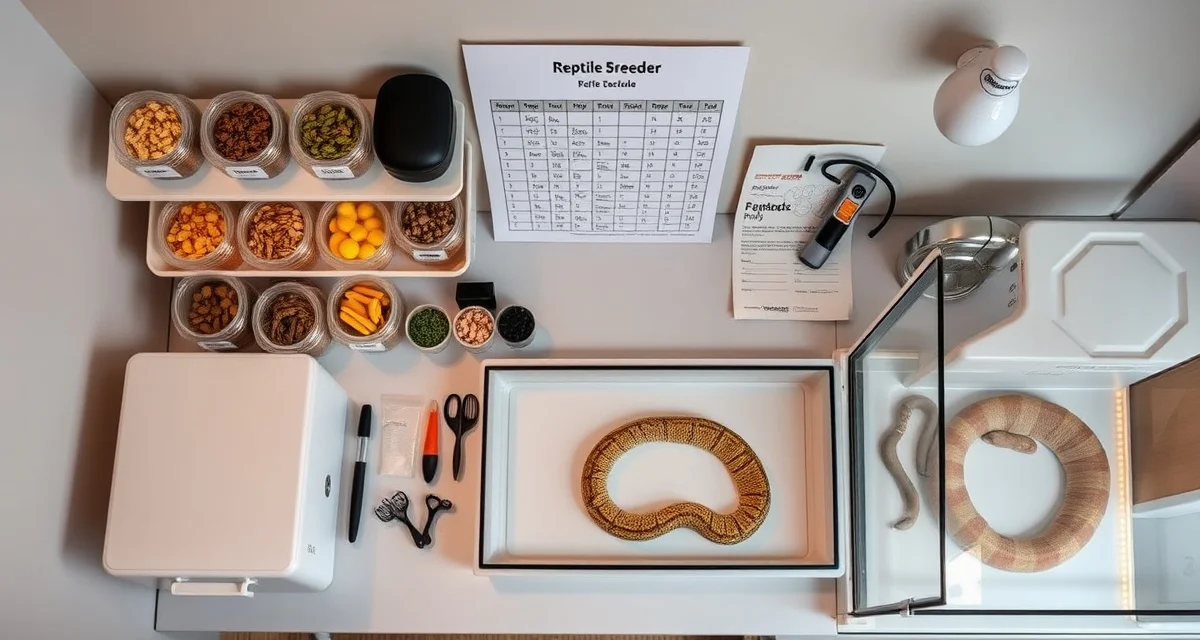
Feeding Schedule Management for Reptile Breeders
By HatchLedger Editorial Team · Published 2025-01-25 · Updated Mar 13, 2026
A feeding schedule is more than just knowing that snakes eat on Sundays. For a breeding program with many animals, a well-managed feeding schedule determines which animals get the prey type and size they need, which animals get skipped because they're in shed or pre-lay, and whether feeding tasks are distributed efficiently across the week.
Building a Species-Appropriate Schedule
Different species have genuinely different metabolic rates and feeding frequency requirements. A feeding schedule that works for ball pythons doesn't work for the corn snakes in the same collection.
Ball pythons: Adults every 10-14 days is standard. Grow-out juveniles every 7 days or tighter. Breeding females skip voluntarily during the pre-lay period and through incubation if coiling clutch.
Blood pythons: Similar to ball pythons, every 7-14 days. Blood pythons are prone to obesity, so tracking prey size and weight together is important. Don't increase prey size just because an animal is eating well.
Corn snakes: Every 7-10 days for adults, every 5-7 days for juveniles. They're more active metabolically than pythons and process prey faster.
Western hognose snakes: Typically every 5-7 days. Feeding challenges are common in this species, and the schedule may need to be adjusted based on individual response.
Boa constrictors: Adults every 14-21 days. Larger boas can go longer between meals. Growing boas can be fed weekly.
Structuring the Weekly Schedule
For a collection of 30-50 animals across multiple species, feeding every animal on the same day is inefficient and creates logistical problems (ordering enough prey, thawing everything). A rotating schedule distributes feeding tasks across multiple days.
A common approach:
- Monday: Ball python juveniles and hatchlings (weekly feeders)
- Wednesday: Corn snakes and hognose
- Saturday: Adult ball python and boa females (bi-weekly feeders)
This also staggers prey thawing, which reduces spoilage and waste.
Tracking Who Gets Skipped and Why
Not every animal on the schedule gets fed every cycle. Document skips and why:
- In shed: Many reptiles refuse while in the blue phase. Don't force it; log the skip.
- Pre-lay: Breeding females often fast voluntarily.
- Recent regurgitation: Skip 1-2 weeks after a regurge and offer smaller prey when resuming.
- Vet-ordered fast: Some health treatments require fasting.
- Recent transport: Newly acquired animals often refuse for days to weeks.
These skips matter for the feeding record tracking. An animal that shows as "refused" repeatedly is different from one that was systematically skipped for documented reasons.
Prey Inventory Management
A feeding schedule requires prey inventory to support it. Most reptile breeders buy frozen feeders in bulk. An organized schedule tells you what you'll need each week and month, which allows better purchasing decisions.
Track what you have and what you need. Running out of medium rats mid-week and having to feed large rats to animals that should be on mediums disrupts the program. Maintaining a buffer stock proportional to your collection size prevents emergency orders.
Breeding Season Adjustments
The feeding schedule changes during the breeding season. Breeding females in active pairing may be less interested in food. Post-lay females need to rebuild condition quickly and may be fed more frequently or with larger prey. Males often continue eating through the breeding season with minimal disruption.
Document these seasonal schedule adjustments so you can see year-over-year what the feeding pattern looks like across your collection. This connects to breeding season management planning, knowing when breeding-related fasting typically starts and ends lets you anticipate prey inventory needs and schedule adjustments.
HatchLedger's feeding schedule view lets you see which animals are due for feeding, which were recently fed, and which have been skipped with documented reasons. Feeding log management through HatchLedger reduces the administrative overhead of maintaining records for large collections so you can focus on the animals.
FAQ
What is Feeding Schedule Management for Reptile Breeders?
Feeding schedule management for reptile breeders is the practice of systematically tracking when, what, and how much each animal in a collection eats. It goes beyond a simple weekly reminder — it accounts for species-specific metabolic rates, prey sizing, breeding status, and skip conditions like shed cycles or pre-lay periods. For breeders managing multiple animals, it ensures every snake or reptile receives appropriate nutrition without overfeeding, underfeeding, or missing critical feeding windows during the breeding season.
How much does Feeding Schedule Management for Reptile Breeders cost?
Feeding schedule management itself has no direct cost — it's a husbandry practice, not a product. The real costs are in the tools you choose to implement it. A basic spreadsheet is free. Dedicated reptile management software like HatchLedger typically runs a monthly subscription. The hidden cost of not managing schedules well — missed feedings, obese breeders, poor reproductive output — often far exceeds whatever a tracking tool costs.
How does Feeding Schedule Management for Reptile Breeders work?
Feeding schedule management works by assigning each animal a feeding interval based on species, age, and status, then logging every feeding attempt and outcome. You record prey type, size, and whether the animal ate or refused. Over time, you build a history that reveals patterns — which animals are reliable feeders, which need schedule adjustments, and which should be skipped due to shed, pre-lay, or post-breeding recovery. That history drives better decisions going forward.
What are the benefits of Feeding Schedule Management for Reptile Breeders?
The core benefits are consistency, efficiency, and better breeding outcomes. A managed schedule ensures no animal is accidentally skipped or fed twice. It helps you avoid overfeeding weight-prone species like blood pythons. It flags animals due for feeding so tasks can be distributed across the week rather than all hitting at once. Over a full breeding season, consistent feeding records also help you correlate nutrition with clutch quality, hatch rates, and female recovery time.
Who needs Feeding Schedule Management for Reptile Breeders?
Any breeder managing more than a handful of animals benefits from structured feeding schedule management. It becomes essential once you're running multiple species with different feeding intervals, or when animals cycle through different statuses — breeding, gravid, in shed, post-lay. Hobbyists with a single enclosure can track things mentally, but anyone operating at scale, or anyone who wants reliable data to improve their program year over year, needs a system.
How long does Feeding Schedule Management for Reptile Breeders take?
There's no fixed time commitment — feeding schedule management is an ongoing practice that runs alongside your breeding program year-round. Setting up initial schedules takes an hour or two depending on collection size. Daily or weekly maintenance is minimal: log feedings as they happen, update animal status, review who's due. The time investment is small relative to the payoff. Most breeders who adopt a system report it saves time by eliminating guesswork and preventing repeat-check habits.
What should I look for when choosing Feeding Schedule Management for Reptile Breeders?
Look for a system that supports species-specific intervals rather than forcing a one-size-fits-all schedule. It should let you log prey type and size, mark skip reasons like shed or pre-lay, and surface feeding history per animal quickly. Bonus features include weight tracking alongside feeding logs and alerts for overdue animals. Whether you use software or a spreadsheet, the key is that the system fits how you actually work — if it's too complex to update consistently, it won't be used.
Is Feeding Schedule Management for Reptile Breeders worth it?
Yes, for any breeder running a serious program, feeding schedule management is worth the effort. Untracked feeding leads to inconsistent growth in juveniles, accidental weight gain in breeding females, and missed signals when an animal's appetite changes. Good records turn anecdotal impressions into actionable patterns. The investment in setting up and maintaining a schedule pays back through healthier animals, more productive breeding seasons, and the confidence that comes from knowing exactly what's happening across your entire collection.