Kingsnake Incubation Parameters: Complete Breeder Guide
By HatchLedger Editorial Team · Published 2025-05-24 · Updated Mar 13, 2026
Kingsnake incubation parameters are similar to corn snake requirements and among the most forgiving in reptile breeding. Kingsnake eggs tolerate a reasonable range of temperatures and humidities, making successful incubation achievable with modest equipment. Understanding the optimal targets and common mistakes still matters when you're managing multiple clutches and want to maximize hatch rates. Breeders using integrated software report 30% less time on administrative tasks, and consistent incubation monitoring is what protects your investment in each clutch.
TL;DR
- Kingsnakes and milksnakes span the genus Lampropeltis, with numerous species and subspecies each having distinct cycling requirements.
- Most kingsnake species require 90-120 days of brumation at 45-55 degrees Fahrenheit for consistent breeding.
- Clutch size datas average 8-20 eggs depending on species, with California kingsnakes commonly producing 6-12 eggs.
- Incubation runs 55-75 days at 78-82 degrees Fahrenheit, similar to corn snakes.
- Kingsnake morph genetics overview include albino, anerythristic, and hypo lines plus combination morphs with active development in California kingsnakes, gray-banded kingsnakes, and Mexican black kingsnakes.
Target Parameters
Temperature
The recommended incubation temperature for kingsnake eggs is 78 to 82°F (25.5 to 27.8°C), with 80°F as a common target. This range works for most Lampropeltis subspecies.
Temperature affects incubation duration: at 82°F expect hatching around 55 to 65 days; at 78°F incubation extends to 65 to 80 days. Avoid sustained temperatures above 85°F, which can cause developmental defects.
Verify temperature at egg level with a secondary probe. Incubator displays often read differently from actual conditions at the container.
Humidity
Target 80 to 100% relative humidity within the egg container. Achieve this with a semi-moist substrate in a sealed or semi-sealed container.
Vermiculite at a 1:1 weight ratio (vermiculite to water) is standard. Perlite at 1:0.5 ratio works similarly. Both should feel moist but not release water when squeezed.
Incubation Container Setup
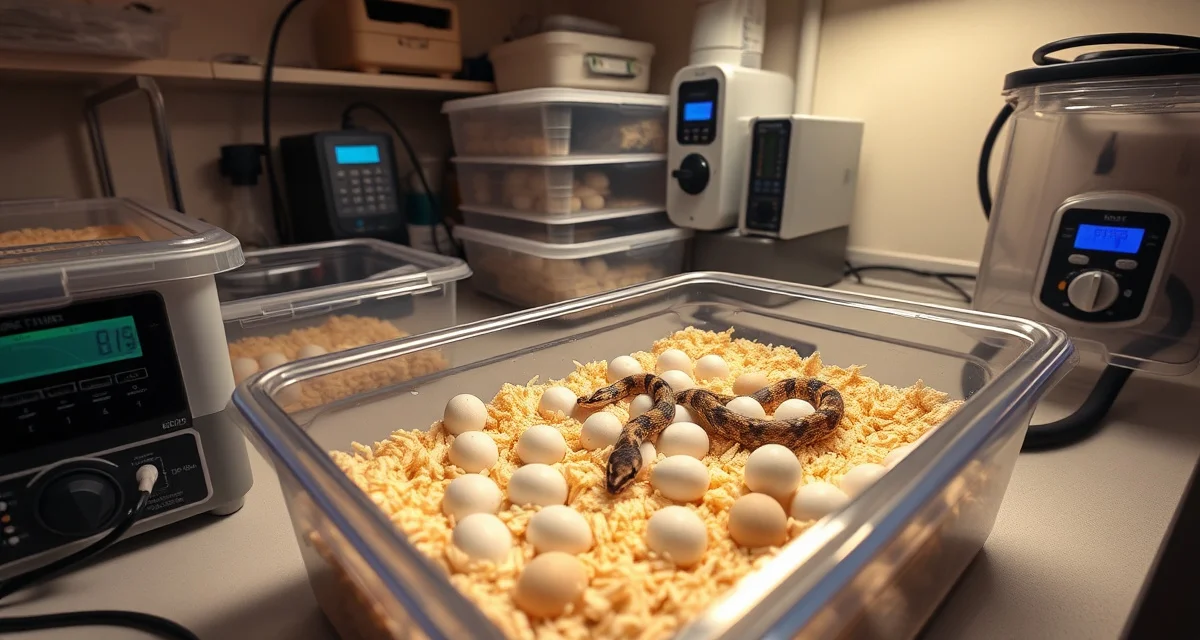
Use plastic containers sized appropriately for your clutch, with lids that seal or close tightly with small vent holes. Create depressions in the substrate for each egg. Eggs should sit stable without pressure from adjacent eggs where possible.
Label every container with clutch ID, lay date, parent IDs, and expected hatch window. This label links to your digital clutch record in HatchLedger's reptile breeder hub.
Run containers fully sealed or with minimal venting to maintain humidity. Open briefly every 7 to 10 days to check eggs and refresh air.
Monitoring Schedule
Check every 7 to 10 days:
- Verify incubator temperature
- Assess egg condition visually
- Check substrate moisture
- Log date and observations
Candle at 10 to 14 days. Kingsnake eggs candle easily; viable eggs show clear vascularization. Remove confirmed infertile eggs immediately.
Log every check-in in your clutch record. Over multiple seasons, your incubation logs connected to hatch rate outcomes in reptile breeder software comparison-supported software tell you exactly which conditions produce your best results.
Common Mistakes
Too-wet substrate causes eggs to absorb excess moisture and may compromise development. If substrate releases water when squeezed, it's too wet.
Inconsistent temperature from a poorly regulated incubator is a common cause of partial hatch failure. Invest in a quality thermostat if temperature stability is inconsistent.
Opening containers too frequently disrupts humidity equilibrium. Limit to every 7 to 10 days.
Frequently Asked Questions
What is the best approach to kingsnake incubation parameters?
Target 80°F with 80-100% humidity in semi-sealed containers with properly moistened vermiculite or perlite. Verify temperature at egg level with a secondary probe. Check containers every 7 to 10 days, candle at 10 to 14 days, and log every observation. Kingsnake eggs are forgiving, but consistent parameters and attentive monitoring still produce significantly better hatch rates than a neglected setup. Remove confirmed infertile eggs at candling to protect adjacent viable eggs.
How do professional breeders handle kingsnake incubation parameters?
Professional kingsnake breeders verify their incubator setup before each season, maintain consistent monitoring schedules, and log every check-in. They candle clutches at 10 to 14 days and again near the midpoint of incubation to track development. After each season, they compare incubation records to hatch rate outcomes to identify whether any protocol adjustments improved results. They review their data to catch patterns such as consistently poor hatch rates from one incubator position or specific substrate batches.
What software helps manage kingsnake incubation parameters?
HatchLedger manages multi-species collections with distinct cooling protocols, morph genetics, and clutch records in one system. For kingsnake breeders working across subspecies or multiple species, keeping each animal's protocol and lineage clearly organized prevents the documentation errors that affect buyer trust. Free for up to 20 animals.
Do all kingsnake species need the same cooling duration?
No. California kingsnakes from warmer coastal localities may respond to 90 days of cooling at 50-55 degrees Fahrenheit, while gray-banded kingsnakes from higher elevation Texas habitats may benefit from 120 days at lower temperatures. Eastern kingsnakes from northern localities often need the most aggressive cooling. Research the specific ecology of your animals' locale or subspecies.
Can different kingsnake species be housed together?
Kingsnakes are ophiophagous (snake-eating) and should never be cohabited, including with animals of the same species. Even animals cohabited without incident for extended periods can result in cannibalism. This applies to breeding introductions as well: supervise all introductions and separate animals immediately after copulation.
What is Kingsnake Incubation Parameters: Complete Breeder Guide?
This guide covers everything kingsnake breeders need for successful egg incubation, including temperature targets (78-82°F), humidity management, and incubation timelines. It spans the full Lampropeltis genus — California kingsnakes, gray-banded kingsnakes, Mexican black kingsnakes, and milksnakes — addressing species-specific variations in brumation cycling, clutch size expectations, and morph genetics. Whether you're a first-time breeder or managing multiple clutches, it consolidates the core parameters into one practical reference.
How much does Kingsnake Incubation Parameters: Complete Breeder Guide cost?
The guide is free to read on HatchLedger. There's no paywall or subscription required to access the incubation parameters, species breakdowns, or breeding recommendations. HatchLedger also offers breeding management software that helps track clutches, monitor incubation data, and reduce administrative time — breeders using the platform report saving roughly 30% on record-keeping tasks. Pricing for the software tier is available on the HatchLedger site.
How does Kingsnake Incubation Parameters: Complete Breeder Guide work?
The guide walks you through the full incubation process: cooling adults through a 90-120 day brumation period at 45-55°F, collecting and setting eggs, then incubating at 78-82°F for 55-75 days until hatch. It explains how to maintain stable humidity, avoid common mistakes like temperature spikes, and what to expect at each stage. Species-specific notes help you adjust for California kingsnakes versus other Lampropeltis variants.
What are the benefits of Kingsnake Incubation Parameters: Complete Breeder Guide?
Kingsnakes are among the most forgiving species to incubate, and this guide helps you take full advantage of that. Benefits include knowing the safe temperature and humidity ranges, understanding brumation requirements that drive consistent breeding success, and learning morph genetics for albino, anerythristic, and hypo lines. Breeders who follow structured incubation protocols protect their investment in each clutch and improve overall hatch rates across a season.
Who needs Kingsnake Incubation Parameters: Complete Breeder Guide?
This guide is written for hobbyist and professional reptile breeders working with any Lampropeltis species — kingsnakes, milksnakes, and their subspecies. It's especially useful for breeders managing multiple clutches simultaneously, those new to colubrid incubation, or anyone expanding into morphs and needing a genetics overview. If you're upgrading from basic setups to more consistent, data-driven incubation practices, the guide provides a solid baseline for that transition.
How long does Kingsnake Incubation Parameters: Complete Breeder Guide take?
Kingsnake incubation takes approximately 55-75 days at 78-82°F from egg-setting to hatch. Before that, adult conditioning requires 90-120 days of brumation at 45-55°F to trigger reliable breeding behavior. From the start of cooling through final hatch, the full cycle spans roughly 5-7 months. Exact timing varies by species and individual animal, but most California kingsnake clutches fall reliably within the 60-70 day incubation window under stable conditions.
Related Articles
Sources
- USARK (United States Association of Reptile Keepers)
- Association of Reptilian and Amphibian Veterinarians (ARAV)
- California Academy of Sciences Herpetology Collection
- Herpetologica (Herpetologists League)
- Reptiles Magazine (Bowtie Inc.)
Get Started with HatchLedger
Managing multiple kingsnake species and subspecies with distinct seasonal cycling protocol requirements and active morph programs benefits from a system that keeps each animal's protocol, lineage, and clutch history clearly organized. HatchLedger connects all of that data across your collection. Free for up to 20 animals.