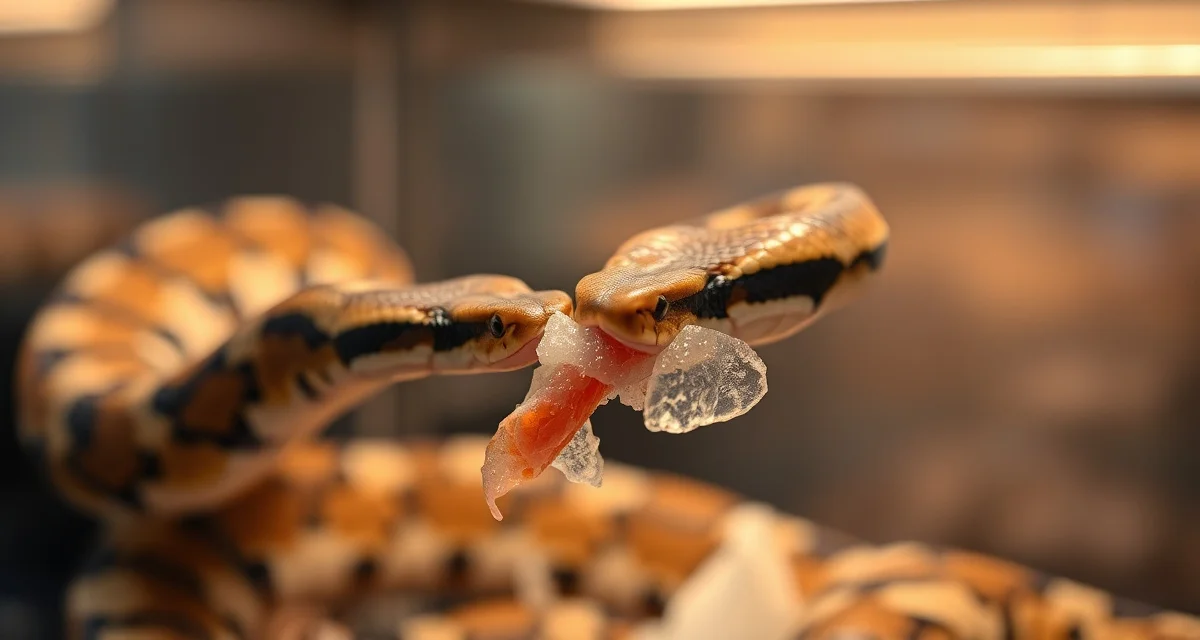
Transitioning Reptiles from Live to Frozen-Thawed Prey
By HatchLedger Editorial Team · Published 2025-06-30 · Updated Mar 13, 2026
Most ball pythons in breeding collections were started on live prey by whoever produced them. When you buy a proven breeder or a holdback from a pet store, there's a real chance it was never offered frozen-thawed. Making the transition saves you money, reduces bite risk to your animals, and makes bulk purchasing practical. Here's how to do it without turning every feeding into a battle.
Why the Transition Matters
Live rodents bite. A mouse or rat that isn't quickly dispatched will bite the snake repeatedly, and bite wounds on breeders are problems: they get infected, they stress the animal, and a badly bitten female going into breeding season is a setback. Frozen-thawed prey eliminates this risk entirely.
Frozen mice and rats are also significantly cheaper when bought in bulk. A case of 50 large rats from an online supplier costs a fraction of buying live at a pet store. For a collection of 20-50 animals on a regular feeding schedule, this difference is substantial. Track your feeding costs per animal to see the actual impact on your annual expenses.
The other benefit is consistency. A freezer full of appropriately sized prey means you can feed on your schedule without making a trip to the pet store. Bulk purchasing also removes the quality variability of live prey, you know what you're getting.
Thawing Properly
Before you can transition an animal, you need to know how to prepare frozen prey correctly. Improperly thawed prey is the most common reason transitions fail.
Never microwave prey: Microwaving creates hot spots and uneven thawing. The outside may feel warm while the core is still frozen. Biting into cold prey triggers rejection in many snakes.
Water thawing: Seal the frozen prey in a zip-lock bag and submerge in warm (not hot) water for 30-60 minutes depending on size. A small mouse: 20-30 minutes. A large adult rat: 45-60 minutes. Check that the body is thawed all the way through, the core should be flexible, not stiff.
Warming after thawing: After the prey is fully thawed, warm it briefly in a sealed bag in hot (not boiling) water or under a heat lamp until the body surface reaches approximately 100-105°F. Use an infrared thermometer to check. This warmth triggers the snake's feeding response more reliably than room-temperature prey.
Methods for Stubborn Feeders
Scent Transfer
The most reliable first step. Take a live mouse, put it in a bag with the frozen-thawed item, and let the live scent transfer for 15-20 minutes. Remove the live mouse and offer the scented frozen prey. Many snakes that won't touch an "obvious" frozen prey will strike at prey that smells right.
Alternatively: rub the frozen prey with a live mouse or rat (firmly, so it transfers scent), then offer immediately.
Brain and Gut Juices
Not pretty, but effective. Slightly puncturing the skull or abdomen of the frozen prey releases scent compounds that some snakes find irresistible. This works especially well for ball pythons that are accustomed to eating prey with specific scent profiles.
Live Prey → Stunned → Frozen
An intermediate step: offer live prey as usual. Once the snake strikes and begins to constrict, swap the live prey for a thawed one of similar size and temperature. This requires quick hands and some nerve, but it teaches the snake to accept prey that's warm and the right scent even when it isn't moving.
Different Prey Species
Ball pythons sometimes refuse mice but eagerly take rats, and vice versa. If you've been offering frozen mice with no success, try a frozen rat pup or small rat. The different scent profile sometimes breaks the refusal pattern.
Some keepers have success switching to gerbils, multimammate mice, or African soft-fur rats for persistent non-feeders, then transitioning back to standard rats or mice once the animal is reliably eating frozen.
Motion
If an animal is visually oriented and needs motion to trigger a strike, use tongs to move the frozen-thawed prey in a slow, mouse-like pattern. Don't wave it frantically, steady, slow movement with occasional pauses is more realistic. Some snakes that sit in front of motionless frozen prey will strike immediately when it moves.
Environmental Conditions for Successful Transitions
Make sure your basic husbandry is correct before attempting a transition. An animal that won't eat frozen prey might simply be refusing to eat at all for husbandry-related reasons: temperatures out of range, too much disturbance, upcoming shed cycle, or breeding season cycling.
Confirm:
- Ambient warm side temperature: 88-92°F for ball pythons
- Cool side and hide availability: animals need a hide on both the warm and cool sides
- Low traffic and disturbance in the feeding room
- Animal is not in shed (opaque eyes, dull skin)
A ball python that refuses frozen prey in a stressful environment might accept it immediately once conditions are correct.
Tracking the Transition
This is where most breeders lose data. A feeding log that only records "ate" or "refused" doesn't capture the nuance of a transition attempt. You want to record:
- Prey type and size offered
- Thawing method and final temperature
- Any scenting used
- Outcome and notes on behavior (struck immediately, stalked, ignored, constricted then dropped)
HatchLedger's reptile feeding records let you log every feeding attempt with these details, making it easy to see patterns: this animal accepts scented prey but refuses unscented, this one needs prey warmer than 100°F, this one transitions reliably in the first week.
Managing Holdbacks That Won't Convert
A small percentage of animals never fully convert to frozen-thawed prey. For breeding stock, if an animal is healthy and producing clutches, continuing to feed live isn't the worst outcome, but document that it's live-only so anyone who eventually acquires the animal knows.
For holdbacks you're planning to sell, a live-only feeder is a tougher sale. Most buyers prefer frozen feeders. If an animal is otherwise exceptional, the price it can command makes working through the transition worthwhile.
Most snakes convert within 3-6 weeks of consistent frozen-thawed offerings. Persistence, correct prey temperature, and scenting solve the majority of cases.
FAQ
What is Transitioning Reptiles from Live to Frozen-Thawed Prey?
Transitioning reptiles from live to frozen-thawed prey is the process of training a snake or other reptile that currently only accepts living rodents to instead eat pre-killed, frozen, and thawed prey items. Many reptiles, especially ball pythons purchased from breeders or pet stores, were started on live prey and must be gradually conditioned to recognize and strike defrosted food as an acceptable meal.
How much does Transitioning Reptiles from Live to Frozen-Thawed Prey cost?
Frozen-thawed prey itself is significantly cheaper than live prey, especially when purchased in bulk. A case of 50 large rats from an online supplier can cost a fraction of buying live rodents individually from a pet store. The transition process itself costs nothing beyond your time and patience, making it a highly economical shift for any reptile collection of even modest size.
How does Transitioning Reptiles from Live to Frozen-Thawed Prey work?
The transition typically involves warming thawed prey to body temperature, using feeding tongs to simulate movement, and sometimes rubbing the prey with scent from a live animal. Some keepers try the 'brain method,' lightly scenting the prey item to trigger a feeding response. Presenting food in a paper bag or separate feeding container can also help reset a reluctant feeder's associations.
What are the benefits of Transitioning Reptiles from Live to Frozen-Thawed Prey?
Frozen-thawed prey eliminates the risk of live rodents biting your reptile, which can cause serious wounds, infections, and breeding setbacks. It also allows bulk purchasing, dramatically reducing per-feeding costs. Feeding on your own schedule becomes easier since a stocked freezer removes reliance on pet store availability. Prey size and quality are also more consistent with reputable frozen suppliers.
Who needs Transitioning Reptiles from Live to Frozen-Thawed Prey?
Any reptile keeper transitioning a live-fed animal into a breeding collection, buying a proven breeder, or managing a large collection benefits from this process. If you own even a handful of snakes on a regular feeding rotation, the cost savings and reduced bite risk make frozen-thawed feeding a practical necessity rather than just a preference.
How long does Transitioning Reptiles from Live to Frozen-Thawed Prey take?
The timeline varies by individual animal. Some reptiles switch within one or two feeding attempts, while stubborn feeders may require weeks of consistent effort. Ball pythons in particular can go on extended feeding strikes during transitions. Most keepers report success within four to eight feeding sessions when using scenting or movement techniques, though patience is essential with established live-only feeders.
What should I look for when choosing Transitioning Reptiles from Live to Frozen-Thawed Prey?
Look for a supplier offering prey in appropriate sizes for your specific animals, with clean freezing and reliable packaging to prevent freezer burn. Consistent sizing matters for breeder health and condition scoring. Reputable bulk suppliers typically offer rat and mouse sizes from pinkies through jumbo. Avoid prey with strong off-odors after thawing, and always fully thaw and warm prey before offering it.
Is Transitioning Reptiles from Live to Frozen-Thawed Prey worth it?
Yes, for nearly every reptile keeper managing more than one or two animals. The cost savings from bulk frozen prey purchases alone justify the effort, and eliminating live-rodent bite injuries protects your breeders during critical seasons. Once an animal is reliably eating frozen-thawed, feeding becomes faster, safer, and more predictable. The short-term frustration of the transition pays off quickly in time, money, and animal health.