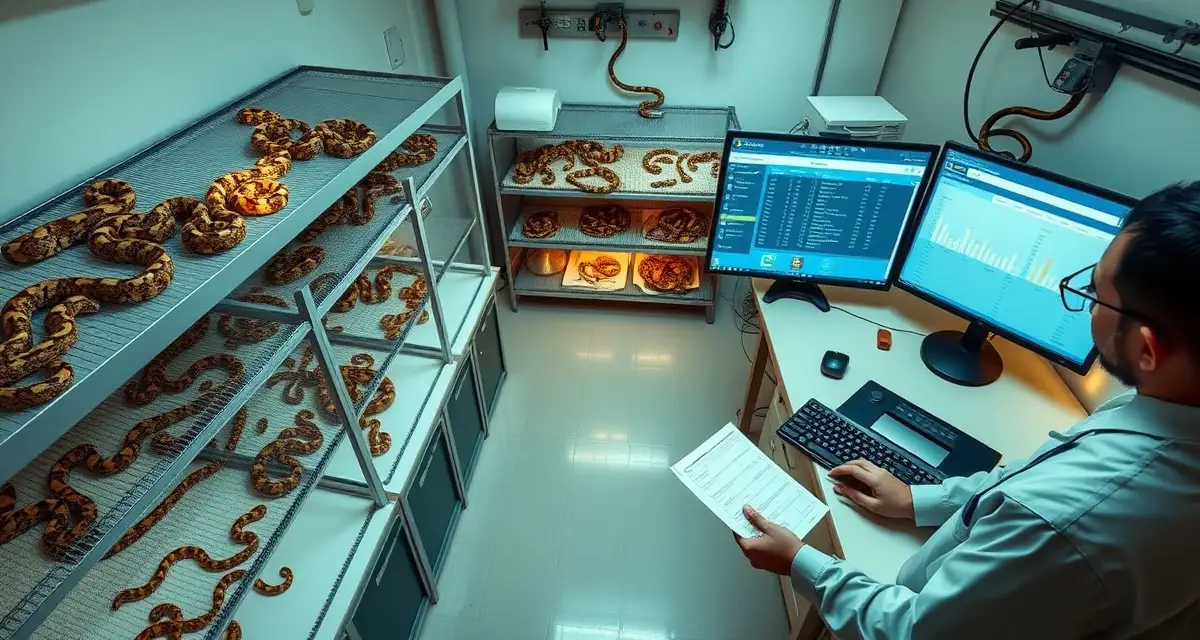
Ball Python Breeding Guide for Commercial Breeders
By HatchLedger Editorial Team · Published 2025-04-17 · Updated Mar 13, 2026
Commercial ball python breeding operates at a scale where the business fundamentals of inventory management, staff operations, regulatory compliance, and market positioning dominate. You're not just a breeder who happens to sell animals. You're running a vertebrate animal production business with all the complexity that entails.
TL;DR
- Reptile breeders benefit most from documentation systems that connect animal records, breeding history, and financial data.
- Genetics claims are only as trustworthy as the records behind them -- parentage documentation is the evidence buyers evaluate.
- Seasonal timing and cooling protocols matter significantly for reproductive success across most captive reptile species.
- Clutch profitability analysis requires knowing actual cost per animal produced, not just gross sale revenue.
- Administrative efficiency through connected records frees time for animal care and the strategic work of project planning.
Defining Commercial Scale
Commercial breeders typically maintain 150 to 500+ animals, produce hundreds of hatchlings per season, generate revenue from $150,000 to $1,000,000+ annually, and employ staff. At this scale, individual animal decisions matter less than system-wide operational performance.
Commercial operations typically have:
- Dedicated climate-controlled facilities
- notable physical infrastructure for housing, incubation, and processing
- Staff with formal training protocols
- Complex inventory management requirements
- USDA licensing in many cases
- Relationships with multiple sales channels (MorphMarket, expos, pet chains, wholesalers)
Regulatory Compliance at Commercial Scale
At commercial scale, USDA Animal Welfare Act compliance likely applies. State commercial wildlife dealer licenses are standard requirements. Tax and business entity structure matters notably at this revenue level.
Commercial operations need legal counsel and an accountant familiar with animal businesses. The regulatory landscape is complex and evolving.
Staff Management as a Breeding Challenge
Animals in a commercial operation are cared for by multiple staff members. This creates consistency challenges. Staff need:
- Clear protocols for feeding, observation, and health assessment
- Training on your record-keeping system
- Accountability for accurate data entry
- Proper training on handling to minimize animal stress
The quality of your staff and the quality of your protocols directly determines animal health outcomes. Excellent animal care is the foundation of commercial production quality.
Inventory and Genetics Management at Commercial Scale
Managing the genetics of 200+ animals requires systems that simply can't be run manually. Every animal needs an ID, genetics profile, status tracking, and feeding and health records. Every clutch needs to connect to both parent records and every resulting offspring record.
This is the scale where HatchLedger provides the most meaningful value. Manual or spreadsheet-based genetics tracking at 200+ animals is error-prone in ways that produce real financial and reputational consequences.
Market Diversification at Commercial Scale
Commercial breeders typically sell through multiple channels:
- MorphMarket: High-value and specialty animals
- Reptile expos: Volume moves and relationship building, particularly large national shows
- Wholesale to pet stores: Volume at lower per-animal margins
- Direct relationships with other breeders: het and project animals
- Online advertising and social media: Brand building and direct inquiries
Managing pricing, inventory allocation, and buyer relationships across these channels is a genuine operational challenge.
Financial Management at Commercial Scale
At $200,000 to $1,000,000 in annual revenue, you need:
- Professional accounting, not just spreadsheets
- Inventory valuation methods for your live animal stock
- Depreciation schedules for equipment
- Clear separation between business and personal finances
- Tax planning for a business with notable inventory
The financial complexity of commercial ball python breeding is substantial and frequently underestimated by breeders who grow into commercial scale organically.
The ball python business pillar addresses business formation and management topics relevant to commercial scale operations.
Technology and Data at Commercial Scale
Breeders using integrated management software report spending approximately 30% less time on administrative tasks. At commercial scale with 5 to 10+ staff, that's a notable operational efficiency. Data-driven decisions about which morphs to produce, which projects to invest in, and which pairings to retire are the decisions that move the business.
Frequently Asked Questions
What is the best approach to commercial-scale ball python breeding?
Invest in operational systems, staff training, and data infrastructure from the beginning. Commercial scale requires professional management, regulatory compliance, multi-channel sales strategy, and financial discipline that goes well beyond what individual breeders need.
How do commercial ball python breeders manage genetics and inventory across hundreds of animals?
They use dedicated breeding management software with multi-user access, standardized genetics guide protocols, barcode or QR code identification systems, and regular audits to ensure record accuracy across staff-managed collections.
What software helps commercial ball python breeding operations manage at scale?
HatchLedger is purpose-built for reptile breeders, connecting animal records, breeding history, clutch outcomes, and financial tracking in one connected system. Unlike general spreadsheets or notes apps, it's designed around the specific workflow of an active breeding season -- from pairing records through hatchling inventory and sales documentation. Free for up to 20 animals.
What records should every reptile breeder maintain per animal?
At minimum: acquisition date and source, morph and genetic documentation, feeding log, weight history, any veterinary treatments, and breeding history including pairing dates, clutch of origin for captive-bred animals, and offspring records. These records serve your own management, buyer documentation, regulatory compliance, and long-term genetic tracking.
How should reptile breeders document genetics for buyers?
A complete genetic record for sale includes the animal's visual morph name, confirmed het genes and their basis (parentage documentation or proven-out production), possible het genes with probability percentages, hatch date, and parent morph information. Including clutch-of-origin records lets buyers independently verify the claims.
What is Ball Python Breeding Guide for Commercial Breeders?
This guide covers the operational and business fundamentals of running a commercial ball python breeding operation. It addresses inventory management, staff operations, regulatory compliance, genetics documentation, clutch profitability analysis, and market positioning. Unlike hobbyist resources, it treats reptile breeding as a vertebrate animal production business, focusing on system-wide performance rather than individual animal decisions. It is published on HatchLedger and designed for breeders maintaining 150 to 500+ animals with annual revenues ranging from $150,000 to over $1,000,000.
How much does Ball Python Breeding Guide for Commercial Breeders cost?
The guide itself is a free editorial resource published on HatchLedger. There is no purchase required to read it. Costs associated with commercial ball python breeding operations vary widely and depend on facility size, staff, genetics investments, and compliance requirements. Breeders at commercial scale typically invest significantly in climate-controlled facilities, documentation systems, and breeding stock. The guide helps operators understand and manage those costs more effectively through tools like clutch profitability analysis and connected record-keeping systems.
How does Ball Python Breeding Guide for Commercial Breeders work?
The guide works by walking commercial breeders through the key operational layers of a scaled breeding business. It covers how to structure documentation systems that link animal records, breeding history, and financial data. It explains cooling protocols for reproductive success, genetics documentation for buyer trust, and administrative workflows that free time for animal care. Readers apply the frameworks to their own operations, using the guidance to build more efficient, profitable, and compliant breeding businesses.
What are the benefits of Ball Python Breeding Guide for Commercial Breeders?
The primary benefits include improved operational efficiency, stronger genetics credibility with buyers, and clearer financial visibility into clutch profitability. By connecting animal records with breeding history and sales data, breeders can make better decisions at scale. Administrative systems reduce time spent on paperwork, allowing more focus on animal care and project planning. Seasonal timing and cooling protocol guidance supports better reproductive outcomes, and compliance frameworks help operators meet regulatory requirements without disrupting day-to-day operations.
Who needs Ball Python Breeding Guide for Commercial Breeders?
This guide is written for commercial-scale ball python breeders who maintain 150 to 500 or more animals, produce hundreds of hatchlings per season, and generate substantial annual revenue. It is most relevant to operations that employ staff and need formal systems for inventory, genetics documentation, and financial tracking. Semi-professional breeders scaling toward commercial operations will also find it useful. Hobbyists or small-scale breeders may find the operational complexity covered here beyond their current needs.
How long does Ball Python Breeding Guide for Commercial Breeders take?
There is no set time to complete the guide as it is a reference resource rather than a course. Readers can work through it in a single focused session or return to specific sections as operational needs arise. Implementing the systems and frameworks described, such as connected record-keeping, cooling protocols, and profitability analysis workflows, will take weeks to months depending on the size of the operation and the maturity of existing processes.
Related Articles
Sources
- USARK (United States Association of Reptile Keepers)
- Association of Reptilian and Amphibian Veterinarians (ARAV)
- World of Ball Pythons (WoBP genetics reference database)
- MorphMarket (reptile industry marketplace)
- Reptiles Magazine (Bowtie Inc.)
Get Started with HatchLedger
Reptile breeders who track animal records, breeding history, and financials in a connected system make better decisions each season and provide better documentation to buyers. HatchLedger is built for that workflow. Try it free with up to 20 animals.