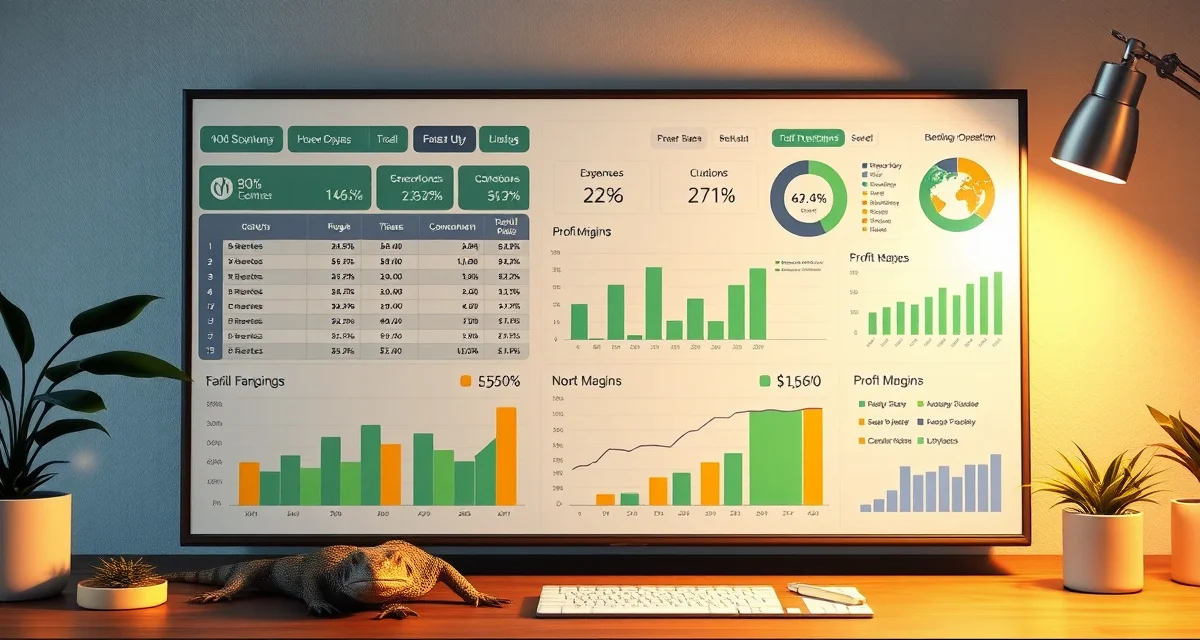
Financial Tracking for Reptile Breeders
By HatchLedger Editorial Team · Published 2025-06-29 · Updated Mar 13, 2026
Most reptile breeders have a vague sense of whether they're making money. Few have precise numbers. The ones who consistently grow their operations and make good decisions about which projects to expand are tracking their finances with the same rigor they apply to genetics. Here's how to build that picture.
Revenue Sources in a Breeding Operation
Hatchling sales: The primary revenue stream for most breeders. Track every sale with the animal's identity, genetics, date, and sale price. Over a full season, you'll see your average revenue per clutch, average price per hatchling by morph, and which pairings generated the most revenue.
Proven breeder sales: When you sell foundational animals, established breeding females, proven het males, these transactions are often larger than individual hatchling sales. Track them separately from hatchling inventory.
Holdback sales in future seasons: An animal you held back this season becomes revenue in 18-24 months when it's sold or produces its first clutch. Track holdbacks and their projected value so you understand your future pipeline.
Live prey and equipment sales: Some breeders sell frozen feeders, supplies, or equipment alongside animals. Track these as separate revenue categories.
The Costs That Eat Into Margins
Feed: The largest recurring cost for most operations. Wholesale frozen feeder pricing for a 50-animal collection running rats: calculate your average per-feeding cost and multiply by your feeding frequency. Most breeders are surprised by how much feed costs annually when they actually calculate it.
Housing and equipment: Rack systems, tubs, heat tape, thermostats, incubators. Capital costs that you pay upfront but use for years. For profitability analysis, it's useful to amortize these costs over their expected useful life (a rack that costs $600 and lasts 10 years costs $60/year to operate).
Animal acquisition: Every animal you buy is a business expense. Track the cost basis per animal, what you paid, when, from whom. This feeds into cost of goods sold when you eventually sell the animal.
Veterinary costs: Health checks, fecal testing, treatment costs. These are infrequent but real. A single course of treatment for a sick animal can run $200-500. Keeping a budget reserve for vet costs is financially prudent.
Expo fees: Table fees at reptile expos range from $100-400+ per event depending on size and location. Travel costs, hotel, and supplies add more. Track these against revenue from each expo to determine which shows are worth attending.
Shipping costs: Heat packs, insulated boxes, overnight shipping rates. These can run $60-80 per shipment. Know whether you're charging buyers accurately for shipping or absorbing costs that affect your margins.
Permits and licensing: State permits, USDA fees, and any business entity costs (LLC formation, annual fees) are legitimate business expenses.
Profitability by Project
The most useful financial analysis for a breeder is profitability per project, not just total revenue minus total expenses. A Clown project and a Pied project running simultaneously might have very different margins.
To calculate profitability per project:
- Direct revenue: All sales from animals produced in this project
- Direct costs: The cost of the founding animals allocated to this project, plus a share of feed costs, plus any project-specific expenses (specialized incubation equipment, etc.)
- Indirect costs: Your overhead (housing, electricity, general supplies) allocated proportionally across all projects
Most breeders skip the allocation math and instead track revenue per clutch and compare it to a simple cost estimate. This isn't perfect but is much better than no analysis.
In HatchLedger, reptile clutch profit tracking connects sales data to specific clutches so you can see the revenue generated from each pairing. Paired with your expense records, this gives you a per-clutch profitability picture.
Cash Flow Timing
Reptile breeding has significant cash flow seasonality. Most expenses are year-round (feed, housing, electricity) but most revenue is seasonal (hatches in spring/summer, heavy expo selling in spring and fall).
The off-season cash flow gap, when you're spending on feed and overhead but sales are slow, is what causes financial stress for breeders who haven't planned for it. Know your monthly expenses and plan how to cover them through slow periods without dipping into capital you need for the next season.
Hold back some of your peak-season revenue as a reserve for the off-season. How much reserve depends on your cost structure, but 2-3 months of operating expenses is a reasonable target.
Pricing Decisions Based on Financials
Your pricing strategy should be informed by two inputs: market data (what comparable animals are selling for on MorphMarket and at expos) and your cost structure (what it costs you to produce that animal).
If a morph's market price has dropped below your cost to produce it, you have a problem that won't be solved by selling more animals. You need to either reduce costs (feed smaller prey, reduce collection size, cut overhead) or shift the project toward more valuable genetics.
Track your cost per hatchling produced for each major project. Cost of parents (amortized) + cost of feed during breeding season + incubation + share of overhead = cost per hatchling produced. Compare this to your average sale price per hatchling from that project. The margin tells you whether the project is sustainable.
Accounting Software Integration
HatchLedger handles the animal-level data: which animals were sold, to whom, for what price. For tax preparation and formal financial tracking, that data needs to feed into an accounting system.
Options:
QuickBooks Simple Start or Self-Employed: Industry standard small business accounting. Import your sales data, categorize expenses, and generate profit/loss reports. Cost: $15-30/month.
Wave: Free small business accounting software. Similar features to QuickBooks at no cost. Good option for breeders just getting started with formal accounting.
Spreadsheet: Works at small scale. A revenue tab, expense tab, and summary tab with formulas covers the basics. Falls apart when you need more analysis or when the volume of transactions makes manual entry impractical.
Whatever you use, the habit of logging income and expenses consistently matters more than the tool you use. A simple spreadsheet updated weekly is more valuable than accounting software you only open at tax time.
When to Involve a Tax Professional
If your breeding operation generates more than a few thousand dollars per year in sales, getting a CPA to review your situation is worth the cost. Specifically, you need guidance on:
- Whether you qualify as a business or hobby under IRS rules
- How to treat breeding stock for depreciation
- Self-employment tax planning
- State sales tax obligations
- Whether to form a business entity (LLC, S-Corp) for tax efficiency
A good CPA who understands small agricultural or hobby business income will pay for their fee many times over in tax savings and compliance assurance.
FAQ
What is Financial Tracking for Reptile Breeders?
Financial tracking for reptile breeders is the practice of systematically recording all income and expenses tied to a breeding operation—hatchling sales, feeder costs, enclosure investments, vet bills, and more. Rather than guessing whether a season was profitable, breeders use structured records to calculate exact margins per clutch, per pairing, and per morph. Tools like HatchLedger are built specifically for this, replacing spreadsheets with purpose-built workflows that match how reptile operations actually run.
How much does Financial Tracking for Reptile Breeders cost?
Basic financial tracking can be done for free using spreadsheets, but purpose-built software like HatchLedger offers paid plans designed for reptile breeders. Costs vary by feature tier, but dedicated tools typically pay for themselves quickly by revealing which projects are underperforming and where costs are being wasted. The more valuable question isn't what tracking costs—it's what poor decisions are costing you by operating without accurate numbers.
How does Financial Tracking for Reptile Breeders work?
Financial tracking works by recording every revenue event and expense with enough detail to generate meaningful reports. You log each hatchling sale with genetics, date, and price. You track feed costs, utility bills, equipment purchases, and show fees as they occur. Over time, these records let you calculate cost per clutch, profit per pairing, and return on each breeding project—giving you the data to make better decisions about what to scale and what to cut.
What are the benefits of Financial Tracking for Reptile Breeders?
Accurate financial tracking helps breeders identify which morphs and pairings are actually profitable, not just popular. It reveals hidden costs that erode margins, surfaces which animals to prioritize for future seasons, and builds the documentation needed for tax purposes. Breeders who track consistently make better decisions about expanding projects, pricing hatchlings competitively, and timing holdback sales—compounding small advantages into significantly better outcomes over multiple seasons.
Who needs Financial Tracking for Reptile Breeders?
Any breeder producing more than one or two clutches per season benefits from structured financial tracking. Hobbyists scaling into part-time income need it to understand whether they're breaking even. Full-time breeders need it to manage cash flow, justify investments, and file accurate taxes. If you're making purchasing decisions based on gut feel rather than data, or if you've ever wondered whether a specific pairing was worth repeating, financial tracking is for you.
How long does Financial Tracking for Reptile Breeders take?
Setting up a basic tracking system takes a few hours—creating categories, entering existing inventory, and logging recent expenses. Once established, ongoing maintenance is minimal: logging a sale takes under a minute, and weekly expense entry adds up to perhaps 15–30 minutes per week depending on operation size. The time investment is front-loaded. After the first full season of consistent tracking, you'll have a clear financial picture that improves every subsequent year.
What should I look for when choosing Financial Tracking for Reptile Breeders?
Look for a system that matches how reptile breeding actually works—one that handles clutch-level tracking, pairing records, holdback management, and morph-linked pricing. Generic accounting software forces you to adapt reptile workflows into business categories that don't fit. Purpose-built tools like HatchLedger let you track by animal, pairing, and season. Also prioritize ease of data entry: a system you'll actually use consistently is worth more than a complex one you abandon after two weeks.
Is Financial Tracking for Reptile Breeders worth it?
Yes—for any breeder serious about growing or sustaining a profitable operation, financial tracking is worth it. Breeders who track consistently know exactly which projects generate returns and which drain resources. They price hatchlings accurately, avoid over-investing in low-margin morphs, and build documentation that simplifies tax season. The breeders who scale successfully aren't necessarily working harder than those who plateau—they're working with better information. Financial tracking is how you build that information advantage.