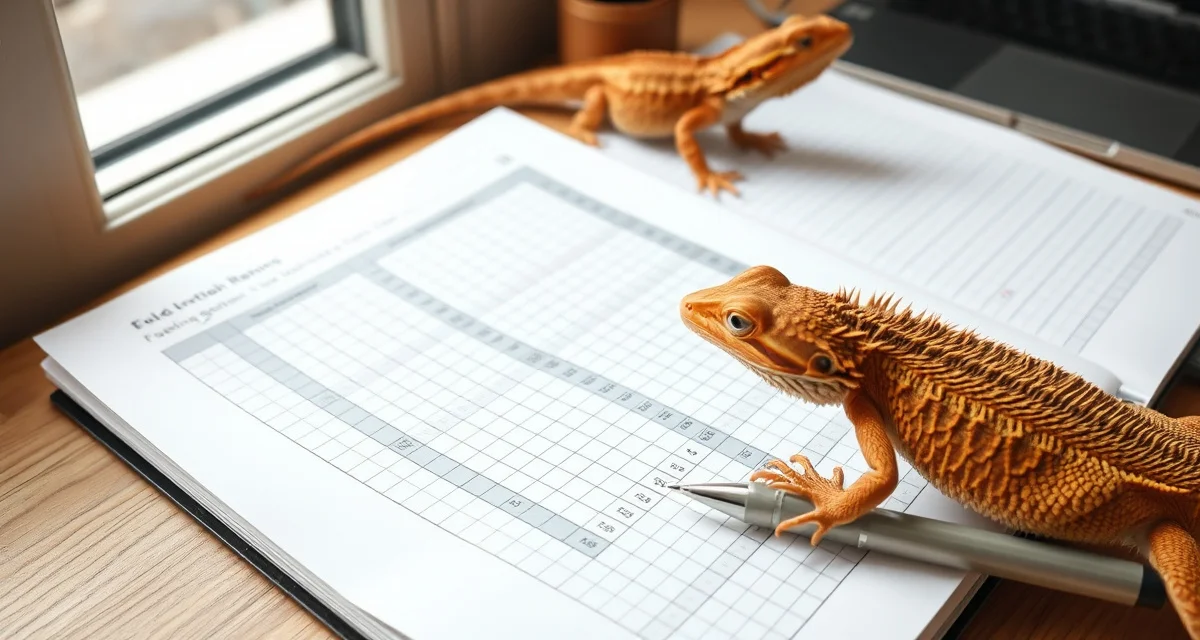
Reptile Feeding Logs: Building a System That Works
By HatchLedger Editorial Team · Published 2025-02-10 · Updated Mar 13, 2026
A feeding log is only as valuable as its completeness. A log with gaps, missing refusals, or approximate dates is not much better than no log at all, because it creates false confidence. A complete, accurate feeding log is a diagnostic tool and a sales asset.
The Minimum Viable Feeding Log Entry
Every feeding attempt, hit or miss, gets an entry. Minimum data:
- Date (exact)
- Animal ID
- Prey type and approximate size
- Result: ate, refused, or partial
This minimum takes 15 seconds to log. If your system requires more than that for each entry, you'll find reasons to skip it.
What to Add When You Have It
Beyond the minimum, additional data increases the log's value:
- Prey format (frozen/thawed, freshly killed, live)
- Prey weight (useful for young growing animals)
- Feeding method (tongs, left in enclosure, feeding box)
- Notes: "in shed," "breeding season," "offered smaller prey this week," "second attempt this cycle"
Notes explain anomalies. A refusal with the note "in shed" is expected. A refusal with no note in an otherwise healthy-eating animal is a flag.
Consistency Across the Collection
In a large collection, feeding consistency matters more than individual entry perfection. A log that has 90% of entries complete across 80 animals is more useful than a perfect log for 20 animals and nothing for the other 60.
Set a simple standard and enforce it uniformly. If you feed on a rotating weekly schedule, every feeding round ends with every animal logged, not some of them.
Feeding Logs for Different Life Stages
Hatchlings: Every attempt logged with technique details. The streak to established feeder status is visible in the log. This is the most important period for feeding documentation.
Growing juveniles: Every feeding logged. Weight should be correlated with feeding success to confirm appropriate growth.
Adult breeders: Every feeding logged, with seasonal notes about expected patterns (breeding season fasting, gravid refusals, post-clutch resumption).
Retired or non-breeding animals: Every feeding logged. Non-breeders are lower priority in terms of intensive monitoring but still need basic records for health tracking.
Feeding Logs and Buyer Communication
Many buyers ask about feeding history during the sales process. A feeding log allows you to answer with specificity: "This animal has eaten 7 consecutive frozen/thawed rat pups, most recently last Tuesday, and has been eating without any refusals since first shed in September."
This level of detail is not possible from memory. It requires a log.
HatchLedger maintains feeding logs per animal with date-stamped entries and calculates consecutive feeding streaks automatically. When you pull up any animal's record, current streak and last feeding date are immediately visible.
Related content: Feeding Log Management | Reptile Feeding Records | Animal Husbandry Records
Related Articles
FAQ
What is Reptile Feeding Logs: Building a System That Works?
A reptile feeding log is a structured record of every feeding attempt across your collection. The article 'Reptile Feeding Logs: Building a System That Works' on HatchLedger explains how to build a logging habit that's sustainable, accurate, and useful. It covers minimum required data, optional enrichment fields, and how to maintain consistency across large collections. A complete log functions as both a diagnostic tool for health monitoring and a credibility asset when selling animals.
How much does Reptile Feeding Logs: Building a System That Works cost?
Reptile feeding logs cost nothing to implement beyond the time investment. Whether you use a notebook, spreadsheet, or dedicated software like HatchLedger, the core system is free to build. The real cost is about 15 seconds per feeding entry. For breeders managing large collections, investing in purpose-built record-keeping software may streamline the process, but the methodology itself requires no paid tools to execute effectively.
How does Reptile Feeding Logs: Building a System That Works work?
The system works by recording every feeding attempt — hits, refusals, and partials — with a consistent set of data fields. At minimum, you log the date, animal ID, prey type and size, and the result. Optionally, you add prey format, weight, feeding method, and contextual notes. Over time, this creates a timeline per animal that reveals patterns, flags health concerns early, and documents feeding history for buyers or veterinarians.
What are the benefits of Reptile Feeding Logs: Building a System That Works?
A complete feeding log gives you early warning on health issues, since refusals or partial eats often precede illness. It removes guesswork from feeding schedules and prey sizing. It increases buyer confidence by demonstrating documented care history. For breeders, it supports better breeding decisions by linking feeding behavior to reproductive cycles. Contextual notes — like 'in shed' or 'breeding season' — turn raw data into meaningful diagnostic context rather than noise.
Who needs Reptile Feeding Logs: Building a System That Works?
Any reptile keeper who wants to move beyond guesswork benefits from a feeding log. It's especially valuable for breeders managing multiple animals, where individual feeding patterns are easy to lose track of. Keepers selling animals benefit from documented history. Anyone working with animals prone to feeding refusals — such as ball pythons during breeding season — will find that notes and consistent logging separate expected behavior from genuine health flags.
How long does Reptile Feeding Logs: Building a System That Works take?
Each individual log entry takes about 15 seconds for the minimum viable data. Building the habit typically takes a few weeks before it becomes automatic. For large collections, a single feeding session might generate 10–20 entries, taking a few minutes total. The time investment is intentionally low by design — if logging takes too long per entry, you'll skip it, which undermines the entire system's value. Consistency over time is what generates diagnostic and sales value.
What should I look for when choosing Reptile Feeding Logs: Building a System That Works?
Look for a system that minimizes friction per entry. It should support logging refusals and partial feeds, not just successful feeds — gaps create false confidence. It should link entries to individual animal IDs, not just species. The ability to add contextual notes is important for explaining anomalies. Whether paper, spreadsheet, or software, prioritize a format you'll actually maintain consistently across your entire collection rather than one you'll use perfectly for a subset of animals.
Is Reptile Feeding Logs: Building a System That Works worth it?
Yes, for any serious reptile keeper or breeder, a feeding log is worth building. A log with gaps is barely better than no log — it creates false confidence. A complete, consistent log is a genuine diagnostic tool that can catch health issues early and a sales asset that documents care quality to buyers. The per-entry time cost is minimal, and the cumulative value — especially across a large collection over months or years — far outweighs the effort.
Sources
- Ball Python Breeders Association feeding standards
- Association of Reptilian and Amphibian Veterinarians (ARAV)
- MorphMarket seller documentation practices