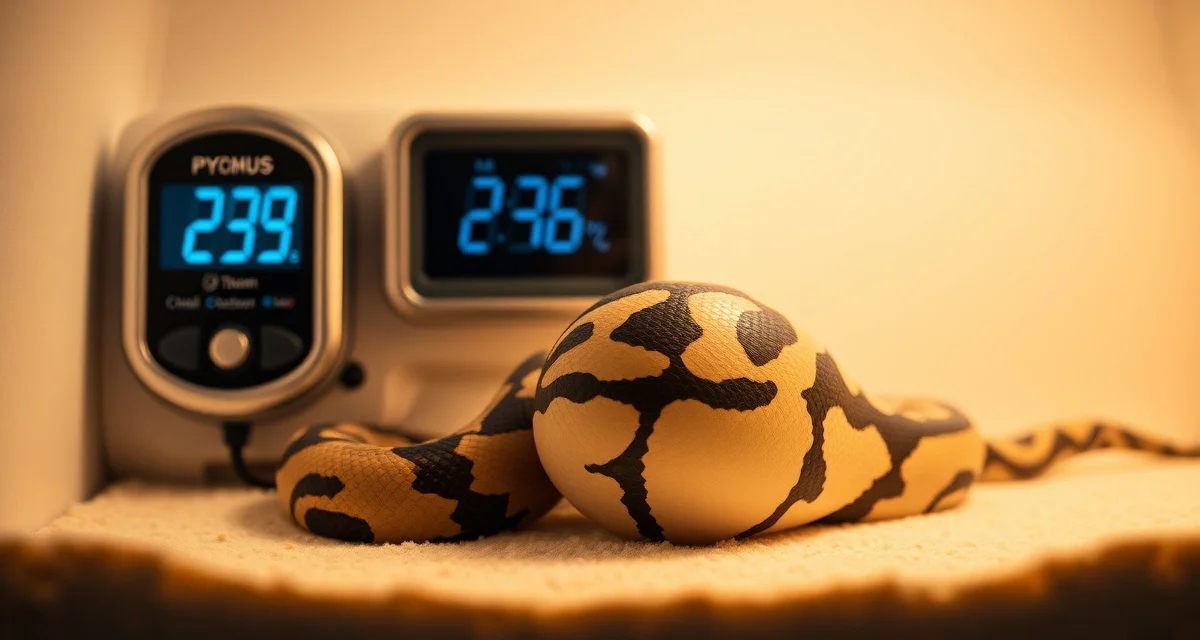
Reticulated Python Egg Incubation Setup: Complete Breeder Guide
By HatchLedger Editorial Team · Published 2025-01-19 · Updated Mar 13, 2026
Setting up incubation for a reticulated python clutch requires preparation at a scale that surprises breeders coming from smaller python species. A single retic female can produce 50-80 eggs, and those eggs need proper infrastructure -- the right incubator, the right containers, the right substrate, and a monitoring setup that catches problems before they destroy an entire clutch. Breeders using integrated software report 30% less time on administrative tasks, time available for the regular egg checks that a large retic clutch requires over 60-80 days of incubation.
TL;DR
- Reticulated pythons (Malayopython reticulatus) are the world's longest snake species, with breeding females commonly exceeding 10-14 feet.
- Clutch sizes average 30-60 eggs, making retics one of the most productive large constrictors in captive breeding.
- Temperature drops of 5-8 degrees Fahrenheit over 6-8 weeks typically trigger breeding behavior without the longer cooling required by temperate species.
- Incubation runs 80-90 days at 88-90 degrees Fahrenheit, longer than most python species due to egg size.
- Super dwarf and dwarf locality animals are bred specifically for smaller adult size and command significant premiums over standard retics.
Planning Your Incubation Capacity in Advance
Don't finalize your incubation setup after the female lays. By the time you have 70 eggs in front of you, you need containers ready to fill, substrate already prepared, and an incubator that can handle the load.
Estimate your clutch size before lay. For a 14-foot female in good condition, plan for 50-70 eggs minimum. Better to have excess container space than to scramble at 2am finding another container for the last 20 eggs.
For 50+ egg clutches, a dedicated large incubator is essential. Cabinet incubators capable of maintaining 88-90F across a large internal space are available through herpetological supply companies. Consumer egg incubators designed for poultry are often inadequate in capacity, temperature uniformity, or both for large retic clutches.
Incubation Containers
Divide large clutches across multiple incubation containers rather than putting all eggs in one tub. Two or three containers instead of one means a localized problem -- a mold outbreak, a moisture imbalance -- affects one portion of the clutch rather than all of it.
Container material: large plastic food storage containers work well. 32-64 quart size handles 15-25 retic eggs comfortably with room for substrate. Drill or melt small ventilation holes (3-5mm diameter, 4-6 holes per container) in the container sides near the top. Developing embryos produce CO2 and need gas exchange; sealed airtight containers impair development.
Nest eggs as they were laid when possible. Retic eggs that have adhered together can be separated if done very shortly after lay, but once adhered firmly, attempting separation risks damaging the egg membranes. When setting eggs in containers, maintain their orientation -- don't flip eggs that have been sitting for hours, as the embryo begins to adhere to the inside of the shell early in development.
Substrate Setup
Perlite at a 1:1 ratio by weight (equal weight of perlite and water) is the standard substrate for python egg incubation, including retics. This ratio provides appropriate moisture retention for the 60-80 day incubation period.
Prepare substrate before lay: weigh your dry perlite, add an equal weight of water, mix, and let it absorb for several hours before using. Properly mixed perlite feels slightly damp when squeezed but doesn't drip. If water drips from a squeezed handful, it's too wet.
Place eggs on top of or slightly nestled into the perlite surface. Eggs should not be buried in substrate -- the developing embryo needs gas exchange through the egg surface.
Temperature Monitoring and Verification
Set your incubator to 88-90F (31-32C). Verify actual egg-level temperature with a calibrated probe thermometer placed at the level of the eggs in one of your containers, not just the incubator's built-in thermostat reading. Incubator displays can be off by 2-3F in either direction, and that discrepancy meaningfully affects incubation duration and hatch rates.
At 88-90F, retic eggs hatch in approximately 60-80 days. Temperature toward the lower end of the range produces longer incubation; temperatures toward the upper end produce faster development. Avoid temperatures above 93-95F, which can damage developing embryos.
Install a temperature alarm in your incubation area. Incubator malfunctions can cause temperatures to spike or crash. For a clutch of 60 morph retic eggs representing significant financial value, a $30-50 temperature alarm is an obvious investment.
HatchLedger tracks incubation setup details, temperature logs, and hatch events for each clutch linked to the parent breeding record.
Ongoing Monitoring
Check eggs every 3-5 days. You're looking for:
Egg condition: healthy eggs maintain their shape and show no dimpling or shrinkage (signs of dehydration) and no discoloration or surface mold (signs of excess moisture or fungal contamination). Dimpling eggs can sometimes be recovered by slightly increasing substrate moisture; moldy eggs should be removed to prevent spread.
Incubator temperature: verify the calibrated probe reading each check. Log it.
Substrate moisture: perlite that's dried out needs a small amount of water added to the substrate, not poured onto the eggs. Work water into the substrate at the container edges.
HatchLedger connects incubation records to clutch P&L for complete financial tracking.
Frequently Asked Questions
What is the best approach to reticulated python egg incubation setup?
Plan infrastructure before the female lays -- don't improvise with 70 eggs in front of you. Use a dedicated large cabinet incubator capable of consistent 88-90F. Divide large clutches across multiple ventilated containers on perlite at 1:1 by weight. Verify egg-level temperature with a calibrated probe. Install a temperature alarm. Check eggs every 3-5 days and log temperature and egg condition observations. Maternal incubation is viable for well-conditioned females with smaller clutches, particularly from dwarf lines.
How do professional breeders handle reticulated python egg incubation setup?
Professional retic breeders plan their incubation infrastructure for the scale of clutch they expect, well before lay. They verify temperatures with calibrated probes and log readings throughout incubation so poor hatch rates can be investigated with data. They split large clutches across multiple containers to contain localized problems. They monitor egg condition at regular intervals and adjust moisture when they see signs of dehydration or excess moisture. They also have a clear contingency for incubator failures -- a backup or alert system that prevents losing an entire clutch to equipment malfunction.
What software helps manage reticulated python egg incubation setup records?
HatchLedger tracks cycling records, pairing introductions, clutch documentation, locality lineage, and sale records for reticulated python breeders. With large animals, large clutches, and locality documentation all requiring careful records, having everything in one system reduces the risk of documentation errors at sale. Free for up to 20 animals.
What is the difference between standard, dwarf, and super dwarf reticulated pythons?
Standard reticulated pythons are the full-size animals from mainland Asian populations. Dwarf retics originate from island populations (Kalatoa, Kayuadi) and typically reach 8-12 feet. Super dwarf retics from Madu and Selayer islands often cap below 8 feet. These size differences are locality-based, and crossing localities produces intermediates. Locality documentation in your records is essential for accurate representation to buyers.
What are the legal considerations for keeping and breeding reticulated pythons?
Regulations vary significantly by state and municipality. Several US states restrict or ban large constrictors, and federal regulations under the Lacey Act apply to some populations. USARK maintains current regulatory information. Before breeding retics at scale, confirm that selling and shipping animals is permitted in your jurisdiction and target markets.
What is Reticulated Python Egg Incubation Setup: Complete Breeder Guide?
This guide covers everything reticulated python breeders need to successfully incubate eggs from a large retic clutch. It addresses incubator selection, container setup, substrate choices, temperature and humidity management, and monitoring systems for clutches averaging 30-60 eggs. Because retic eggs incubate for 80-90 days and clutches are large, proper infrastructure planning is critical. The guide also covers how breeding management software reduces administrative overhead, freeing time for the hands-on egg checks that large clutches demand.
How much does Reticulated Python Egg Incubation Setup: Complete Breeder Guide cost?
The guide itself is free educational content on HatchLedger. Actual incubation costs vary by setup scale. A quality incubator capable of handling large retic clutches typically runs $200-600, while containers, substrate, and monitoring equipment add another $50-200. Super dwarf and dwarf locality retics command significant premiums, so investing in proper incubation infrastructure protects clutches worth thousands of dollars. Breeders report that reducing administrative time through integrated software also lowers the indirect cost of managing large-scale operations.
How does Reticulated Python Egg Incubation Setup: Complete Breeder Guide work?
Successful reticulated python egg incubation works by maintaining eggs at 88-90 degrees Fahrenheit with stable humidity for 80-90 days. Eggs are laid in containers with a moist substrate, then placed in a dedicated incubator. Breeders monitor temperature and humidity regularly, checking for signs of mold, collapse, or infertility. Breeding behavior is triggered beforehand using a temperature drop of 5-8°F over 6-8 weeks. Consistent conditions throughout the incubation period are essential given retic egg size and clutch volume.
What are the benefits of Reticulated Python Egg Incubation Setup: Complete Breeder Guide?
Following this guide helps breeders avoid the most common failures with large retic clutches: temperature fluctuations, humidity imbalances, and overcrowded containers. Proper setup reduces egg loss across clutches of 30-60 eggs, directly improving season profitability. Breeders also benefit from reduced stress monitoring, a systematic workflow that scales across multiple females, and more time for hands-on clutch checks. For dwarf and super dwarf breeders producing premium animals, a reliable incubation system protects significant per-animal value.
Who needs Reticulated Python Egg Incubation Setup: Complete Breeder Guide?
This guide is written for reticulated python breeders at any experience level, but is especially useful for those scaling up from smaller python species. Breeders new to retics are often unprepared for clutch sizes of 30-60 eggs and the 80-90 day incubation window. It also benefits experienced breeders adding dwarf or super dwarf locality animals to their programs, and anyone looking to tighten their incubation workflow, reduce egg loss, or integrate breeding management software into their operation.
How long does Reticulated Python Egg Incubation Setup: Complete Breeder Guide take?
Reticulated python eggs take 80-90 days to hatch at 88-90°F, longer than most python species due to their large egg size. Setting up your incubation infrastructure takes a few days before the clutch arrives, including sourcing containers, preparing substrate, and calibrating your incubator. Breeding conditioning, using a 5-8°F temperature drop over 6-8 weeks, should begin months before expected egg laying. Total time from breeding trigger to hatch typically spans five to six months when all phases are included.
Related Articles
- Boa Constrictor Egg Incubation Setup: Complete Breeder Guide
- Corn Snake Egg Incubation Setup: Complete Breeder Guide
Sources
- USARK (United States Association of Reptile Keepers)
- Association of Reptilian and Amphibian Veterinarians (ARAV)
- Journal of Herpetology (Society for the Study of Amphibians and Reptiles)
- CITES Appendix II (international trade documentation)
- Southeast Asian Biodiversity Society
Get Started with HatchLedger
Reticulated python breeding at any scale involves large animals, large clutches, morph and locality genetics overview, and compliance and shipping records that require an organized system to manage well. HatchLedger tracks every animal, pairing, clutch, and sale record in one place. Try it free with up to 20 animals.