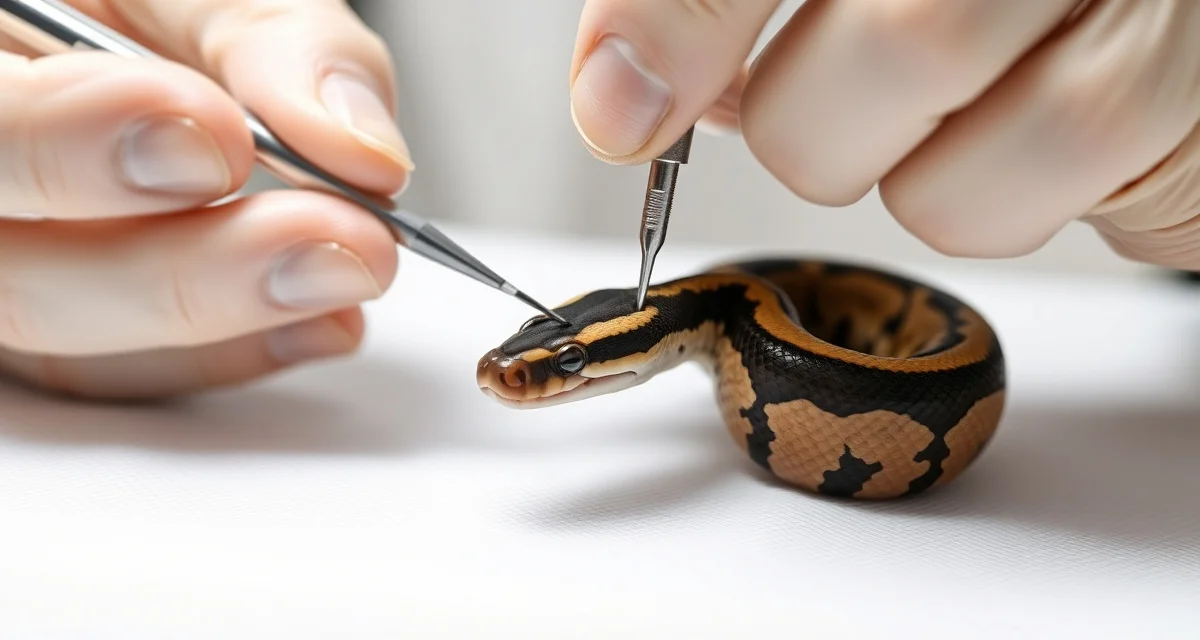
Sexing Ball Python Hatchlings: Probing and Popping
By HatchLedger Editorial Team · Published 2025-02-19 · Updated Mar 13, 2026
Knowing the sex of your hatchlings is commercially essential. Females command a 20-30% premium in virtually every morph and combo, a Pastel Clown female at $1,200 vs. a Pastel Clown male at $800 is a real and consistent difference. Getting sex wrong on a sale creates angry customers and damaged reputation. Do it right from the start.
TL;DR
- Ball python breeding operations require systematic record-keeping from pre-season preparation through end-of-season sales.
- Females at 1,200-1,500g or more are the target weight before introducing them to a breeding male.
- Ovulation detection is the key event that anchors pre-lay shed and lay date calculations.
- Clutch profitability guide depends on understanding actual cost basis per animal, not just gross sale revenue.
- Well-documented animals with complete feeding histories and clear genetic records consistently sell faster and at higher prices.
Why Sex at Hatch?
The earlier you sex your hatchlings, the earlier you can accurately price them, sort your holdbacks from animals going to sale, and start building your buyer waitlist. Waiting until snakes are 6 months old to sex them delays all of those decisions.
Both methods, probing and popping, work well on hatchlings. Many breeders prefer to do both on their first hatchling season until their technique is calibrated.
Method 1: Popping
Popping (eversion) involves gently applying pressure to the tail region to visually evert the hemipenes in males or confirm their absence in females.
How to Pop a Ball Python Hatchling
- Hold the snake belly-up, supporting the body in one hand with the tail section accessible
- Use your thumb to apply gentle, rolling pressure from about 1-2 cm below the cloaca, rolling toward the cloaca
- In males: one or both hemipenes will evert, small, pink, flesh-colored projections emerge from the cloacal opening
- In females: no projection, or in some cases a very small vestigial structure (much smaller than male hemipenes)
Popping Concerns and Cautions
- Use very gentle pressure, excess force can cause injury, particularly to females
- Hatchlings that are too recently out of the egg (within 24-48 hours) can be more fragile
- If you're not getting consistent results, your technique needs refinement before you rely on it
- Some females will evert a small structure, this is NOT a male; male hemipenes are substantially larger
Popping is a faster technique and experienced breeders can sex an entire clutch in minutes. But technique matters. If you're new to it, have an experienced breeder show you in person before going solo.
Method 2: Probing
Probing uses a small, smooth metal probe to measure the depth of the cloacal pockets. Males have deep pockets (hemipenis chambers) and females have shallow pockets.
Equipment
- Ball-tipped stainless steel probes, sized for hatchlings (thinnest probes, typically size 1 or 2)
- Probe lubricant (KY Jelly or similar water-based lubricant)
- Good lighting
Probing Technique
- Lubricate the probe tip
- Hold the snake belly-up in one hand
- Insert the probe gently into the cloacal pocket, it should enter easily. NEVER force it.
- Measure the depth by counting scale rows from the cloacal opening to where the probe naturally stops
- Males: probe enters to 9-15+ subcaudal scales depth (deep)
- Females: probe enters to 2-4 subcaudal scales depth (shallow)
Common Probing Mistakes
- Forcing the probe: If the probe meets resistance, don't push. Reangle, re-lubricate, or try the other pocket.
- Wrong scale count: Be consistent about where you start counting. The first subcaudal scale is immediately behind the cloaca.
- Probing too early: Very fresh hatchlings (within 12 hours of emergence) should wait another day.
Probing vs. Popping: Which to Use?
Both are valid. Professional preferences vary:
| Factor | Probing | Popping |
|--------|---------|---------|
| Speed | Slower | Faster |
| Equipment needed | Probes + lubricant | None |
| Learning curve | Moderate | Moderate |
| Reliability (with skill) | Very high | Very high |
| Best for small clutches | Either | Either |
| Best for large batches | Either | Popping (faster) |
Many breeders use popping for routine sexing and reserve probing for cases where pop results are ambiguous.
Recording Sex in HatchLedger
Sex is one of the first data points entered in HatchLedger's hatchling inventory. Every hatchling record includes:
- Sex (confirmed male, confirmed female)
- Sexing method used
- Who performed the sexing (if not you)
Accurate sex recording in HatchLedger flows directly to buyer documentation. When you generate a buyer pack for a female Pastel Clown, the certificate correctly identifies sex and that record is traceable to the sexing method used.
When Sex Is Uncertain
Occasionally a pop or probe result is ambiguous, probe depth that falls between typical male and female ranges, or a pop result you're not confident in. In these cases:
- Record as "sex uncertain" in HatchLedger
- Re-sex at 3 months of age when structures are more developed
- Don't sell as a confirmed female if you're not confident, sell as "sex unknown" at a discount if necessary
Selling an animal as the wrong sex destroys buyer trust permanently. Uncertainty disclosure is far better than incorrect confirmation.
Related Articles
- Ball Python Sexing Methods: Probing, Popping, and Visual Identification
- Handling Ball Python Hatchlings: Timing, Technique, and Stress Reduction
- Selling Ball Python Hatchlings: Photos, Descriptions, and Buyer Communication
- Ball Python Holdback Strategy: Which Hatchlings to Keep for Future Breeding
FAQ
What is the best approach to sexing ball python hatchlings?
Sex within 48-72 hours of emergence for best results. Use both probing and popping if you're learning until your technique is reliable. Record sex immediately in your hatchling inventory system. If results are ambiguous, re-sex at 3 months. Never sell a confirmed sex without confidence in your assessment.
How do professional breeders handle ball python hatchling sexing?
Experienced breeders sex every animal from a clutch within the first week, typically using probing for confirmation and popping for speed on large clutches. They've developed consistent technique over multiple seasons and cross-check results on ambiguous animals. Sex data goes into their management software immediately and flows to every downstream document including buyer packs and sales listings.
What is Sexing Ball Python Hatchlings: Probing and Popping?
Sexing ball python hatchlings refers to the process of determining the sex of newborn ball pythons using two established techniques: probing and popping. Probing involves inserting a lubricated sexing probe into the cloaca to measure depth — males probe deeper due to inverted hemipenes. Popping uses gentle manual pressure to evert the hemipenes in males. Both methods are reliable on hatchlings and are standard practice in professional ball python breeding operations.
How much does Sexing Ball Python Hatchlings: Probing and Popping cost?
Sexing hatchlings has no direct cost beyond basic tools. A sexing probe set costs $10–$30 and is reusable indefinitely. The real financial value is in accuracy — correctly identifying females early lets you price them at the 20–30% premium they command. A misidentified female sold as male, or vice versa, can cost you that premium, damage buyer trust, and hurt your reputation in the hobby.
How does Sexing Ball Python Hatchlings: Probing and Popping work?
Probing involves gently inserting a lubricated, ball-tipped metal probe into the cloaca toward the tail. In males, it slides deeper into the inverted hemipenal pockets — typically 9–15 subcaudal scales. In females, it stops shallow at 2–4 scales. Popping applies gentle pressure behind the cloaca to evert the hemipenes in males. Using both methods together is recommended for beginners until their technique is consistent and calibrated.
What are the benefits of Sexing Ball Python Hatchlings: Probing and Popping?
Sexing at hatch gives you the earliest possible opportunity to price animals accurately, sort holdbacks from sale animals, and start building buyer waitlists. Females command a consistent 20–30% price premium across virtually every morph. Knowing sex immediately lets you market animals correctly, avoid refund disputes, and plan your breeding program more strategically. Waiting months to sex delays all downstream sales and breeding decisions unnecessarily.
Who needs Sexing Ball Python Hatchlings: Probing and Popping?
Anyone producing ball python clutches benefits from sexing hatchlings — from hobbyists with a single breeding pair to full-scale operations running dozens of clutches per season. It is especially critical for breeders selling high-value morphs where the male-to-female price gap is significant. First-year breeders should learn both probing and popping early, ideally with guidance, to build accurate technique before misidentification becomes a costly habit.
How long does Sexing Ball Python Hatchlings: Probing and Popping take?
Sexing an individual hatchling takes 30–60 seconds once you are practiced. Processing a full clutch of 4–8 eggs typically takes 5–15 minutes. Learning the technique correctly takes longer — most breeders use their first season to cross-check both probing and popping on every animal until results are consistent. Having an experienced mentor verify your reads early on is the fastest way to build reliable technique.
Sources
- USARK (United States Association of Reptile Keepers)
- Association of Reptilian and Amphibian Veterinarians (ARAV)
- World of Ball Pythons (WoBP genetics reference database)
- MorphMarket (reptile industry marketplace)
- Reptiles Magazine (Bowtie Inc.)
Get Started with HatchLedger
Every part of a ball python breeding operation -- from pairing records to clutch documentation to financial tracking -- works better when the data is connected rather than scattered across notebooks and spreadsheets. HatchLedger is built for exactly that. Try it free with up to 20 animals.