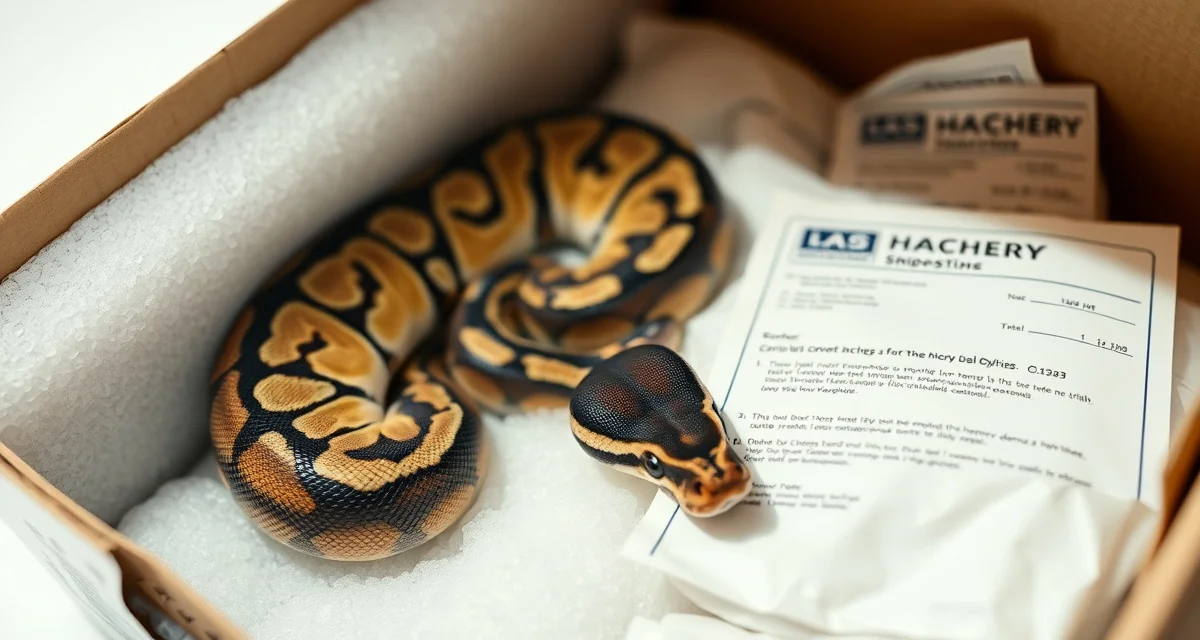
Ball Python Shipping Compliance Checker
By HatchLedger Editorial Team · Published 2025-05-02 · Updated Mar 13, 2026
Shipping a live ball python isn't like shipping a book. Get it wrong and you could face fines, have an animal confiscated, or permanently damage your reputation in the hobby. Getting it right every time requires knowing the rules, having the right materials, and keeping records that prove you followed the process.
TL;DR
- Ball python breeding operations require systematic record-keeping from pre-season preparation through end-of-season sales.
- Females at 1,200-1,500g or more are the target weight before introducing them to a breeding male.
- Ovulation detection is the key event that anchors pre-lay shed and lay date calculations.
- Clutch profitability guide depends on understanding actual cost basis per animal, not just gross sale revenue.
- Well-documented animals with complete feeding histories and clear genetic records consistently sell faster and at higher prices.
A shipping compliance checker takes the guesswork out of every shipment.
Why Compliance Matters More Than Ever
Reptile shipping regulations have tightened in recent years. State-by-state rules vary wildly. Some states ban certain morphs or species outright. Carriers have their own policies that layer on top of state law. And buyers sometimes don't know what's legal to receive in their area.
This is a combination that creates real liability for breeders.
Breeders using integrated management software report 30% less time on administrative tasks, and shipping compliance is a big part of that. When your records and compliance checks are part of the same system, you're not manually cross-referencing legal requirements every time you box up an animal.
What a Shipping Compliance Checker Should Do
Destination State Verification
The tool should flag states that restrict ball python ownership or have extra permit requirements. Some states treat ball pythons as controlled exotics. Others have no restrictions at all. You need to know before you print a label.
Carrier Rule Alignment
FedEx and UPS both have live animal shipping policies that change periodically. A compliance checker should reflect current carrier requirements, including approved packaging standards, temperature restrictions, and declaration requirements.
Weather Window Checking
Shipping a reptile in extreme cold or heat without heat packs or ice packs, or with the wrong kind, is a welfare and liability issue. Good compliance tools factor in origin and destination temperatures and alert you when conditions aren't safe for shipment.
Documentation Logging
When things go wrong, documentation is your protection. Every shipment should have a logged record: buyer name, destination, animal ID, morph, ship date, tracking number, and a note that compliance was checked. This connects directly to your ball python breeding hub records so you have a full chain of custody.
Interstate Shipping: The Complicated Part
Shipping across state lines adds another layer. Interstate ball python shipping rules involve both federal and state regulations. The Lacey Act governs transport of certain species, and even legal species need to be shipped in ways that don't violate animal welfare standards.
Some key things to verify for every interstate shipment:
- Destination state legal status for ball pythons
- Any required health certificates
- Morph-specific restrictions (some localities restrict certain color morphs they've categorized as separate from standard ball pythons)
- Permit requirements if either party holds a commercial license
Packaging Requirements That Affect Compliance
The carrier requirements are specific. Animals need to be in a secure primary container inside a secondary container with appropriate substrate. Box labeling must indicate live animals. Holes for air circulation must meet minimum standards.
If you're not packaging exactly to spec, the carrier can refuse the shipment or, worse, mishandle it because staff don't know what's inside.
A compliance checker should include a packaging checklist that you can work through before sealing the box. Not just for the carrier's sake, but for the animal's welfare.
Heat Pack and Cold Pack Rules
This is where a lot of breeders make expensive mistakes. Too much heat can kill an animal as fast as too much cold. The standard 72-hour heat pack is not always the right answer.
Factors that should inform your heat pack decision:
- Origin temperature at time of boxing
- Destination temperature at estimated delivery
- Time in transit (overnight versus two-day)
- Time of year and regional climate patterns
A good compliance checker flags when conditions are outside safe shipping ranges and suggests whether a heat pack, cold pack, or delay in shipping is appropriate.
Record Keeping for Shipping Compliance
Every shipped animal should have a complete record including a pre-shipment compliance check. If a buyer disputes a delivery, or if you're ever audited, that documentation is critical.
In HatchLedger, your shipping records link directly to your animal records. So when you sell animal HL-0047 and ship it to Texas, that transaction sits in the animal's history alongside its genetics guide, hatch date, feeding records, and weight logs.
Frequently Asked Questions
What is the best approach to ball python shipping compliance?
The best approach is a documented pre-shipment checklist that covers destination state regulations, carrier requirements, packaging standards, and weather conditions. Running through the same checklist every time ensures you don't miss a step under time pressure.
How do professional breeders handle shipping compliance for ball pythons?
Professional breeders build compliance into their standard operating procedure, not as an afterthought. They verify destination legality before taking a deposit, confirm packaging meets carrier standards, and log every shipment with tracking and compliance notes.
What software helps manage ball python shipping compliance?
HatchLedger is purpose-built for reptile breeders, connecting animal records, breeding history, clutch outcomes, and financial tracking in one system. Unlike generic spreadsheets, it's designed around the specific workflow of an active breeding season. Free for up to 20 animals.
What records should every reptile breeder maintain per animal?
At minimum: acquisition date and source, morph and genetic documentation, feeding log, weight history, any veterinary treatments, and breeding history including pairing dates, clutch of origin for captive-bred animals, and offspring records. These records serve your own management, buyer documentation, regulatory compliance, and long-term genetic tracking.
How should reptile breeders document genetics for buyers?
A complete genetic record for sale includes the animal's visual morph name, confirmed het genes and their basis (parentage documentation or proven-out production), possible het genes with probability percentages, hatch date, and parent morph information. Including clutch-of-origin records lets buyers independently verify the claims.
What is Ball Python Shipping Compliance Checker?
A Ball Python Shipping Compliance Checker is a tool that helps reptile breeders verify whether a shipment meets all applicable regulations before sending a live ball python. It cross-references carrier policies, destination state laws, and species-specific rules to flag potential issues. Instead of manually researching each shipment, breeders get a structured checklist that confirms the animal can be legally shipped to the buyer's location without risk of fines or confiscation.
How much does Ball Python Shipping Compliance Checker cost?
HatchLedger's Ball Python Shipping Compliance Checker is included as part of the platform's breeding management tools. Pricing depends on your HatchLedger subscription tier. Basic access may cover core compliance features, while higher tiers unlock advanced record-keeping, clutch tracking, and sales documentation. Visit HatchLedger directly for current pricing details, as plans are updated periodically to reflect the platform's expanding feature set.
How does Ball Python Shipping Compliance Checker work?
The checker works by collecting key shipment details—destination state, carrier selection, morph or species information, and package specifications—then validating them against known regulations and carrier policies. It flags conflicts, such as morph bans or carrier restrictions, before you ship. The tool also prompts you to confirm documentation like health certificates or permits, creating a verifiable record that you followed the correct process for each shipment.
What are the benefits of Ball Python Shipping Compliance Checker?
The primary benefits are reduced legal risk, faster shipping decisions, and a defensible paper trail. Breeders avoid costly mistakes like shipping to states with species bans or using non-compliant carriers. Documented compliance also protects your reputation—buyers and the broader hobby community trust sellers who can demonstrate they ship responsibly. For high-volume breeders, the consistency the tool enforces across dozens of seasonal shipments is especially valuable.
Who needs Ball Python Shipping Compliance Checker?
Any ball python breeder who ships live animals needs a compliance checker. This includes hobbyists selling their first clutch, mid-scale breeders working multiple pairings per season, and large operations shipping hundreds of animals annually. It is especially critical for breeders selling rare morphs, shipping to multiple states, or working with buyers who are unfamiliar with what is legal to receive in their area.
How long does Ball Python Shipping Compliance Checker take?
Running a single shipment through the checker takes under five minutes once you have the basic details ready—destination, carrier, animal information, and packaging specs. The upfront time investment is minimal compared to the hours spent researching regulations manually or resolving a compliance problem after the fact. For repeat routes or regular buyers, the process becomes faster as you recognize compliant patterns and build reliable shipping workflows.
Related Articles
Sources
- USARK (United States Association of Reptile Keepers)
- Association of Reptilian and Amphibian Veterinarians (ARAV)
- World of Ball Pythons (WoBP genetics reference database)
- MorphMarket (reptile industry marketplace)
- Reptiles Magazine (Bowtie Inc.)
Get Started with HatchLedger
Every part of a ball python breeding operation -- from pairing records to clutch documentation to financial tracking -- works better when the data is connected rather than scattered across notebooks and spreadsheets. HatchLedger is built for exactly that. Try it free with up to 20 animals.