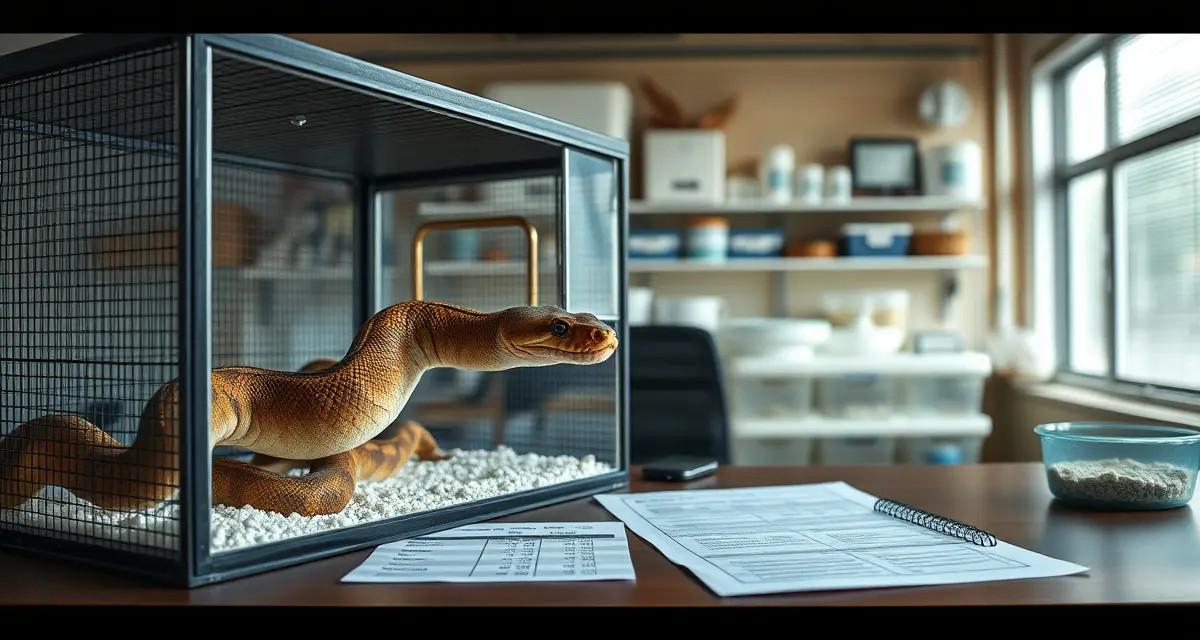
Burmese Python Selling and Pricing: Complete Breeder Guide
By HatchLedger Editorial Team · Published 2025-07-08 · Updated Mar 13, 2026
Selling Burmese pythons requires navigating a more restricted market than most reptiles. Regulatory hurdles in certain states, the practical challenges buyers face housing large constrictors, and the smaller total pool of serious buyers all shape how you price and sell Burmese pythons. Breeders using integrated software report 30% less time on administrative tasks, which matters when you're managing detailed genetic records and compliance requirements requirements for every sale.
TL;DR
- Burmese pythons (Python bivittatus) are among the largest constrictors in captivity, with breeding females commonly exceeding 100-200 lbs.
- Clutch sizes average 25-50 eggs, making Burmese pythons among the most productive large constrictors in captive breeding.
- Cycling typically involves a 4-8 week period of reduced temperatures (dropping 8-12 degrees Fahrenheit) and reduced feeding frequency.
- Incubation parameters runs 60-65 days at 88-90 degrees Fahrenheit, with females capable of thermoregulating eggs by muscular shivering.
- Compliance requirements for Burmese python ownership and interstate transport vary by state, with federal protections under the Lacey Act applying in some jurisdictions.
Despite the challenges, the Burmese market has a dedicated buyer base. Morph animals from proven genetic lines command strong prices, and locality-specific or high-quality normal animals retain a following among large constrictor enthusiasts.
Understanding Your Market
Normal Burmese pythons (no genetic mutations) have a relatively modest retail market. Hatchlings commonly sell in the $50-150 range, with prices affected by size, feeding status, and the seller's reputation. The ceiling for normals is limited by the large buyer pool for inexpensive hatchlings and the competitive supply.
Morph animals are a different market entirely. Albino Burmese pythons are the most widely recognized and consistently sought morph, with hatchlings selling in the $200-500 range from reputable breeders. Labyrinth, green, and combination morphs carry premiums that scale with rarity and visual impact. Triple-combination morph animals (Albino Green Labyrinth, for example) can command $1,000-3,000+ when from proven lines.
Het animals add another pricing tier. A 100% het albino hatchling typically sells for 25-50% of the visual albino price. Possible hets should be priced and clearly labeled as such -- not equivalent to known hets.
Regulatory Considerations for Sales
Burmese python sales are subject to regulations that don't apply to most other captive python species. Before selling any animal, verify the regulations in the buyer's state. Several states restrict or prohibit Burmese python ownership, and shipping an animal to a state where the buyer cannot legally possess it creates legal and ethical problems for both parties.
Federal regulations have historically targeted Burmese pythons as injurious wildlife, with interstate transport restrictions applicable in certain contexts. The regulatory landscape has evolved over time, and staying current through USARK and legal counsel is important for commercial Burmese breeders.
Keep records of every sale that document the buyer's state, the animal's ID, and any documentation of buyer eligibility. These records protect you in a regulatory inquiry and demonstrate responsible commerce.
Where to Sell Burmese Pythons
MorphMarket is the primary online platform for reptile sales including Burmese pythons. The morph-filtering capability is valuable for buyers searching for specific genetics. Reptile expos (NARBC, Tinley Park shows, regional expos) remain important sales venues for large constrictors because in-person transactions allow buyers to assess the animal directly, which matters more for large animals than for a ball python hatchling.
Word-of-mouth and direct relationships are also significant in the Burmese market. The buyer pool is smaller and more connected than the ball python market. Building a reputation among serious large constrictor keepers creates repeat business and referrals that are often worth more than marketplace listings.
Pricing Based on Your Costs
Your minimum price should be above your cost to produce, not below it. The cost of producing a Burmese hatchling includes a proportional share of the female's annual maintenance (feeding costs for a large female are substantial), the male's cycling-season costs, incubation costs, and hatchling care through to first feeding and sale.
For a female eating one rabbit per week at market rates, annual feed costs alone can be $1,500-2,500+. Divided across a 60-hatchling clutch, that's $25-40 per hatchling in feed costs just for the female. Add the male's costs, incubation, housing, and electricity, and you're often looking at $100+ in production cost per hatchling before pricing in any margin.
HatchLedger connects husbandry costs to clutch records so you always know your actual cost per animal.
HatchLedger connects per-animal cost data to sales records so your actual margins are tracked automatically rather than estimated.
Frequently Asked Questions
What is the best approach to Burmese python selling and pricing?
Research current market prices for comparable animals before setting prices. Calculate your actual production cost per animal (female feed, housing, incubation, hatchling care) and price above that floor. Verify destination state regulations before every sale. Provide documentation with every animal: parentage, genetics, feeding history, and any health records. List animals on MorphMarket and at appropriate expos. Price hets and possible hets accurately and transparently -- misrepresenting genetics destroys reputation in a small market.
How do professional breeders handle Burmese python sales and pricing?
Professional Burmese breeders price based on documented production costs and current market data rather than on gut feel. They maintain compliance with state and federal regulations and keep records of every sale that demonstrate they've met their obligations. They provide comprehensive documentation with each animal, which supports premium pricing especially for morph animals. They also develop direct buyer relationships through expos and social media that reduce their dependence on marketplace platforms and their associated fees.
What software helps manage Burmese python sales records?
HatchLedger tracks every animal, clutch, and sale record for Burmese python breeders, with documentation that supports regulatory compliance and buyer confidence. When managing large clutches and compliance requirements simultaneously, a connected system prevents the record-keeping gaps that create problems at sale. Free for up to 20 animals.
Are Burmese pythons legal to own and breed in all US states?
No. Burmese pythons are listed as an injurious species under the Lacey Act, which restricts interstate transport. Several states have additional bans on ownership entirely. Check current state and federal regulations before acquiring or transporting animals. USARK maintains updated resources on applicable regulations.
How large should a Burmese python enclosure be for a breeding pair?
Breeding females typically require enclosures of at least 8x4 feet and often larger for full-grown adults. Dedicated breeding rooms or custom builds are standard at scale. Thermal gradient with hot spots at 88-92 degrees Fahrenheit and ambient temperatures in the mid-70s allows proper thermoregulation.
What is Burmese Python Selling and Pricing: Complete Breeder Guide?
This guide covers everything Burmese python breeders need to know about selling their animals and setting competitive prices. It addresses the unique challenges of the Burmese python market, including the smaller buyer pool, state-by-state regulatory requirements under the Lacey Act, and the practical realities buyers face housing large constrictors. Topics include genetic record-keeping, compliance documentation, and how integrated breeder software can reduce administrative overhead by around 30%.
How much does Burmese Python Selling and Pricing: Complete Breeder Guide cost?
Burmese pythons range widely in price depending on morph, lineage, and size. Standard hatchlings typically sell for $100–$300, while high-demand morphs such as albino, green, or labyrinth combinations can command $500–$2,500 or more. Adult proven breeders with documented genetics fetch premium prices. Pricing must also account for the smaller, more specialized buyer pool and added compliance costs that come with selling a federally listed constrictor.
How does Burmese Python Selling and Pricing: Complete Breeder Guide work?
Selling Burmese pythons involves producing clutches of 25–50 eggs, incubating at 88–90°F for 60–65 days, and then marketing hatchlings to vetted buyers. Breeders must maintain detailed genetic and compliance records for each animal. Sales often occur through reptile expos, private networks, and online platforms, with interstate transfers requiring adherence to Lacey Act provisions and state-specific ownership laws that vary significantly across the country.
What are the benefits of Burmese Python Selling and Pricing: Complete Breeder Guide?
This guide helps breeders price competitively, avoid legal pitfalls, and target the right buyers for a specialized market. With females exceeding 100–200 lbs and clutches among the largest of any captive constrictor, managing logistics and documentation is complex. Following a structured selling framework reduces errors, speeds up sales cycles, and builds buyer trust through transparent genetic records and compliance paperwork—ultimately improving profitability and long-term reputation within the Burmese python breeding community.
Who needs Burmese Python Selling and Pricing: Complete Breeder Guide?
This guide is written for serious reptile breeders already working with or planning to breed Burmese pythons (Python bivittatus). It is most useful for breeders managing multiple animals and morphs, those navigating interstate sales under the Lacey Act, and anyone looking to professionalize their operation with better pricing strategy and record-keeping. Hobbyists considering scaling up to a commercial operation will also find the compliance and market-sizing sections particularly valuable.
How long does Burmese Python Selling and Pricing: Complete Breeder Guide take?
The timeline spans the full breeding cycle. Cooling and cycling takes 4–8 weeks, followed by breeding, a roughly 60–65 day incubation period, and post-hatch grow-out before selling. From first temperature drop to completed sales, plan for 6–9 months per clutch cycle. Administrative time is significant given compliance requirements, but breeders using integrated software report cutting that overhead by approximately 30%, freeing more time for animal husbandry and marketing.
Related Articles
- Green Tree Python Selling and Pricing: Complete Breeder Guide
- Reticulated Python Selling and Pricing: Complete Breeder Guide
- Burmese Python Breeding Season Timing: Complete Breeder Guide
Sources
- USARK (United States Association of Reptile Keepers)
- Association of Reptilian and Amphibian Veterinarians (ARAV)
- US Fish and Wildlife Service (Injurious Wildlife regulations)
- Journal of Herpetology (Society for the Study of Amphibians and Reptiles)
- Florida Fish and Wildlife Conservation Commission
Get Started with HatchLedger
Burmese python breeding involves large animals, large clutches, and compliance documentation that is difficult to manage without a dedicated system. HatchLedger tracks every animal, clutch, and sale record in one place, giving you the documentation you need for regulatory compliance and buyer confidence. Try it free with up to 20 animals.