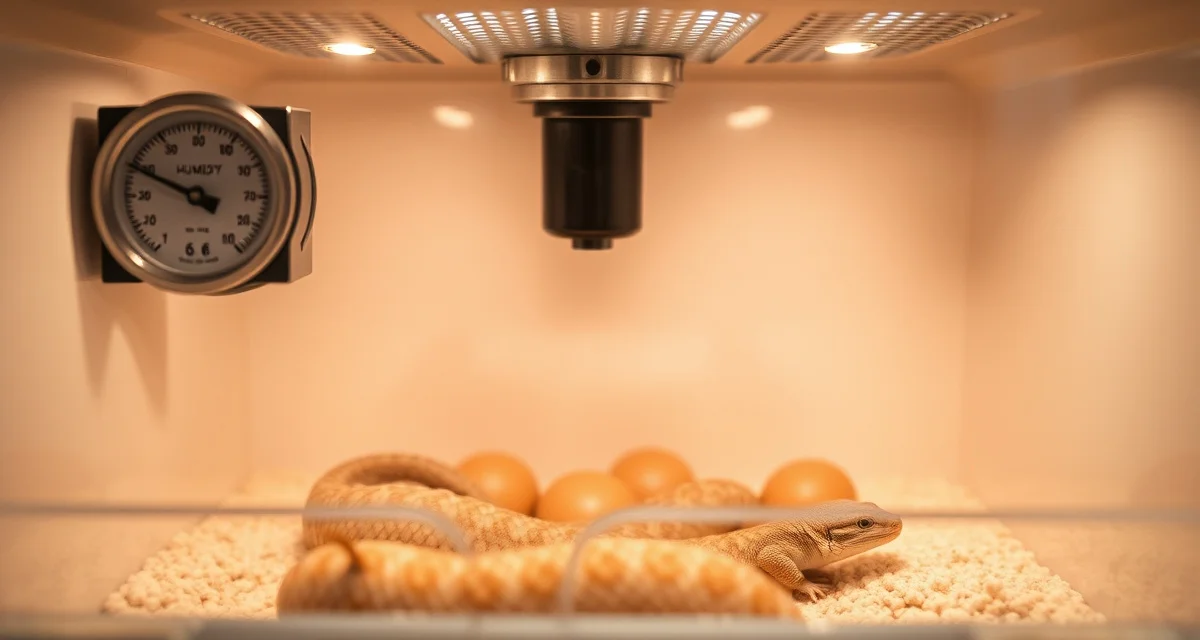
Incubation Humidity Tracking for Reptile Breeders
By HatchLedger Editorial Team · Published 2025-01-21 · Updated Mar 13, 2026
Humidity in the incubator is one of those variables that gets underestimated until you have a season where eggs dent, shrink, or go bad in ways that point directly to moisture mismanagement. Getting it right consistently requires understanding what you're actually measuring and why it matters.
What Humidity Controls During Incubation
Reptile eggs are semi-permeable. They exchange gases (oxygen in, CO2 out) and moisture with their environment throughout incubation. Too much moisture exchange causes desiccation, eggs shrink, dent, and may fail to develop. Too little exchange, combined with excess condensation, promotes mold and bacterial growth on the shell surface.
The goal is an environment where eggs maintain their shape, stay slightly plump, and don't weep moisture from the shell surface.
Ball python eggs: Typically incubated at 88-90°F with substrate moisture set to hold high ambient humidity in sealed containers. Eggs should not shrink. A small amount of "sweating" (condensation on shell surface) late in incubation is normal. Major shrinkage before 30 days indicates a moisture problem.
Boa constrictors: Similar parameters to ball pythons. Humidity management in the 80-90% relative humidity range inside containers.
Corn snakes and rat snakes: Slightly more tolerant, but same principles apply. Keep eggs from desiccating.
Geckos (Crested, Leopard): More species-variable. Leopard gecko eggs are typically incubated drier than ball python eggs. Crested geckos rarely have clutches large enough to require elaborate setups.
How Substrate Humidity Works
Most breeders don't measure relative humidity inside egg containers directly, they control humidity indirectly through substrate moisture ratios. This is covered in detail in the incubation substrate guide, but the short version:
Vermiculite mixed at 1:1 by weight (1 part water to 1 part dry vermiculite) creates a substrate that holds a specific moisture level. The substrate buffers the container's internal humidity. As eggs respire and the substrate dries slightly over weeks, breeders can add water to the substrate without disturbing eggs.
The moisture ratio you use matters. A drier mix (1:0.75 or 1:0.5 by weight) produces lower humidity in the container. A wetter mix increases it. Different species and different breeders have preferences, and your goal is to find the ratio that produces consistent outcomes in your specific setup.
Measuring Humidity
Inside Containers
Small digital hygrometers (the coin-sized ones) can be placed inside containers to get a direct reading. The accuracy of cheap hygrometers varies significantly, calibrate them against each other before trusting individual readings.
SensorPush and similar wifi-enabled sensors are accurate but are overkill inside individual containers. More practical for monitoring the incubator ambient.
Incubator Ambient Humidity
In open-container incubation setups, ambient incubator humidity matters directly. For sealed-container setups, ambient humidity is less critical since each container creates its own microenvironment.
A basic digital probe sensor in the incubator body gives you ambient readings. More useful is a logging sensor that records data over time, so you can see how humidity changes when you open the incubator to check eggs.
The Visual Check
Experienced breeders develop an eye for egg condition that supplements numerical readings. Eggs that are turgid and maintain a slight sheen are healthy. Eggs that look flat, wrinkled, or dented are desiccating. Eggs that are weeping obvious moisture or have visible mold growth have too much surface moisture.
Visual inspection every 2-3 weeks (no need to handle eggs, just open and look) combined with logging any changes gives you the full picture.
What to Log Per Clutch
This is where breeders underinvest. Keeping notes on humidity is useful. Keeping notes in a system that ties those observations to specific clutch outcomes is far more useful.
For each clutch in HatchLedger, you can record:
- Initial substrate type and moisture ratio
- Incubator temperature setpoint
- Any mid-incubation humidity adjustments (when you added water, how much)
- Visual condition notes at each check (egg appearance, any mold, any shrinkage)
- Hatch date and percentage
At the end of the season you'll have a dataset showing which setups produced the best hatch rates. That compounding data is more valuable than any general advice about humidity percentages.
Common Humidity Problems
Eggs shrinking in first 30 days: Substrate is too dry or eggs were laid in a dehydrated female. Check substrate moisture with the squeeze test, a handful of substrate should hold its shape when squeezed but not drip water. Add a small amount of water to the outer substrate without directly wetting eggs.
Mold on egg shells: Surface mold is common and usually not fatal if caught early. Light mold on the shell surface can be gently swabbed with a paper towel. Extensive mold indicates excess moisture and poor airflow. Mold that penetrates the shell is fatal. Adding ventilation to containers or slightly reducing substrate moisture helps.
Condensation pooling in container bottom: Sealed containers in a hot incubator will condense moisture on the lid and walls. If condensation is pooling under eggs, the substrate is too wet. Lift eggs slightly or reduce substrate moisture.
Eggs weeping late in incubation: Normal and expected. In the final 10-20% of incubation, eggs often "sweat" as hatchlings prepare to pip. This is not a problem.
Species-Specific Notes
Ball pythons at 88°F / high humidity: Incubation takes approximately 55-65 days. Humidity management is forgiving compared to some species, the substrate buffering approach works well and doesn't require constant monitoring.
Reticulated pythons: Larger eggs, longer incubation (~85-90 days at 88°F). Same principles apply but a larger container and more substrate is needed to maintain stability over the longer period.
Corn snakes: 60-65 days at 78-82°F. Slightly cooler and more tolerant. Humidity on the lower end of the ball python range is appropriate.
Humidity tracking doesn't require sophisticated equipment, it requires consistent logging and the discipline to connect your observations to outcomes. The reptile egg incubation tracking tools in HatchLedger make this practical without adding administrative overhead to your season.
FAQ
What is Incubation Humidity Tracking for Reptile Breeders?
Incubation humidity tracking is the practice of monitoring and recording moisture levels inside reptile egg incubators throughout the incubation period. Because reptile eggs are semi-permeable and exchange moisture with their environment, maintaining consistent humidity prevents desiccation, shell shrinkage, and mold growth. Breeders log substrate moisture, ambient relative humidity, and egg condition over time to catch problems early and build a reliable data set that improves hatch rates across future seasons.
How much does Incubation Humidity Tracking for Reptile Breeders cost?
Incubation humidity tracking itself costs nothing beyond a reliable hygrometer and a method for recording readings — a notebook, spreadsheet, or dedicated breeder app like HatchLedger. Entry-level digital hygrometers run $10–$30. Purpose-built incubation logging software is often free or low-cost. The real cost of not tracking is failed clutches, lost genetics, and wasted incubation substrate — expenses that far exceed the minimal investment in a proper monitoring system.
How does Incubation Humidity Tracking for Reptile Breeders work?
Breeders measure relative humidity inside incubation containers using a hygrometer and log readings at set intervals — typically daily or every few days. They also record egg weight, visual condition, and substrate moisture. Over time, this data reveals patterns: which substrate ratios hold humidity best, when eggs typically begin to sweat, and whether temperature fluctuations affect moisture levels. Comparing records across clutches helps dial in conditions for specific species and individual egg containers.
What are the benefits of Incubation Humidity Tracking for Reptile Breeders?
Consistent humidity tracking leads to higher hatch rates, earlier detection of moisture problems, and better-informed decisions when adjusting substrate ratios or container setups. It removes guesswork from the process and creates a reference library of what works for your specific setup, species, and climate. Breeders who track systematically can pinpoint the cause of failed eggs rather than attributing losses to bad luck, and they replicate successful conditions season after season.
Who needs Incubation Humidity Tracking for Reptile Breeders?
Any reptile breeder incubating eggs benefits from humidity tracking, but it is especially valuable for those working with ball pythons, boa constrictors, corn snakes, or other species with specific moisture requirements. Hobbyists scaling up clutch counts, breeders experiencing unexplained egg failures, and anyone incubating rare or high-value genetics should treat humidity logging as non-negotiable. Even experienced breeders benefit because memory is unreliable across long incubation periods and multiple simultaneous clutches.
How long does Incubation Humidity Tracking for Reptile Breeders take?
Humidity tracking spans the full incubation period, which varies by species — typically 55–70 days for ball pythons, 60–80 days for boas, and 55–65 days for corn snakes. Individual log entries take under a minute. The value compounds over time: a single season of consistent records gives you a baseline, and two or three seasons give you enough data to confidently troubleshoot problems and optimize conditions for your specific breeding program.
What should I look for when choosing Incubation Humidity Tracking for Reptile Breeders?
Look for a tracking method that is easy to use consistently, captures humidity alongside temperature and egg weight, and stores records in a format you can review across multiple clutches and seasons. A good hygrometer with proven accuracy matters more than a fancy logging interface. If using software, prioritize clutch-level organization, exportable data, and the ability to add notes on egg condition. Avoid systems so complex that you skip logging entries during busy parts of the season.
Is Incubation Humidity Tracking for Reptile Breeders worth it?
Yes. Egg losses are expensive in time, money, and genetics. A single failed clutch from preventable humidity mismanagement costs far more than the effort of logging daily readings. Tracking also builds breeder confidence — when you know your humidity data is solid, you can intervene early rather than discovering problems at lock-down. Over multiple seasons, the records become a competitive advantage, letting you consistently replicate the conditions that produce healthy, full-term hatches.