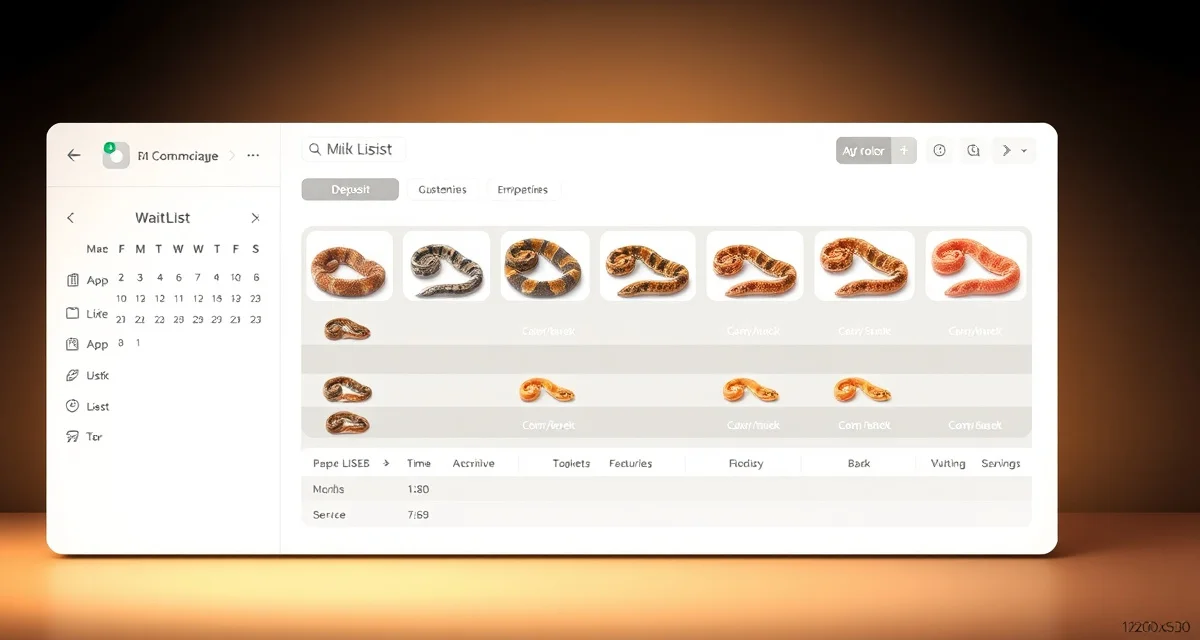
Milk Snake Buyer Waitlist Management: Complete Breeder Guide
By HatchLedger Editorial Team · Published 2025-02-08 · Updated Mar 13, 2026
Milk snake buyer waitlist management is most valuable for breeders producing high-demand morphs or documented subspecies animals in limited quantities. When buyers are willing to commit deposits for animals not yet hatched, you've built something worth managing carefully. Disorganized waitlists create disputes, disappointed buyers, and reputation damage in what is a relatively small and communicative community. Breeders using integrated software report 30% less time on administrative tasks, and organized waitlist systems make that efficiency available for buyer relationship management rather than administrative cleanup.
TL;DR
- Milk snakes span dozens of recognized subspecies of Lampropeltis triangulum and related species, each with distinct care and breeding requirements.
- Most milk snake subspecies require 60-90 days of seasonal cycling at 50-55 degrees Fahrenheit for reliable breeding.
- Clutch sizes range from 4-18 eggs depending on subspecies, with Honduran milk snakes averaging toward the larger end.
- Incubation runs 55-70 days at 78-82 degrees Fahrenheit with moderate humidity.
- Honduran milk snakes have an active morph program with albino, hypo, and tri-color tangerine lines among the established variants.
When to Use a Waitlist
Waitlists make sense when demand for your specific animals regularly exceeds available inventory. Indicators:
- Your animals sell within hours or days of listing
- Buyers contact you asking for animals before they're available
- You have specific morphs or documented locale animals that buyers specifically seek out
If you're regularly discounting animals to move inventory or sitting on unsold animals for weeks, a formal waitlist isn't the right tool yet. Focus first on building demand through reputation, then manage that demand with organized systems.
Core Waitlist Components
Buyer Information
For each waitlisted buyer, record:
- Full name and contact information
- Subspecies preference (Honduran, Sinaloan, Eastern, etc.)
- Morph preference and specifics (albino, het albino, anery, etc.)
- Sex preference
- Feeding status requirement (established feeder only vs. open to hatchling)
- Budget range if indicated
- Date added to waitlist
- Deposit status
Store this in HatchLedger's reptile breeder hub linked to your hatchling inventory so matching animals to buyers happens in the same system as your animal records.
Deposit Documentation
Before accepting any deposit:
- Communicate your deposit policy in writing
- Confirm what the deposit reserves and your refund terms
- Send written confirmation immediately when deposit is received
Log every deposit with buyer name, amount, date received, and which animal or category it applies to.
The Matching and Communication Process
When animals become available from a clutch:
- Filter your waitlist for buyers whose criteria match available animals
- Prioritize by deposit status and waitlist date
- Send direct offers with photos and documentation, including a response deadline
- Move to the next waitlisted buyer if no response within the deadline
- List publicly after the waitlist is exhausted
Log every offer sent, response received, and resulting action. Reptile breeder software comparison resources consistently find that breeders managing 20+ waitlisted buyers need digital tools to maintain this process accurately and efficiently.
Communication Cadence
Waitlisted buyers need updates to stay engaged. A simple schedule:
- Deposit confirmation immediately when received
- Season start notification when breeding begins
- Clutch laid notification when relevant
- Direct offer when a matching animal is available
Frequently Asked Questions
What is the best approach to milk snake buyer waitlist management?
Collect specific buyer criteria at sign-up, communicate at defined milestones, have a written deposit policy, and match animals to buyers systematically before listing publicly. Set response deadlines on offers so animals aren't held indefinitely. Document every deposit with formal records. Review your waitlist regularly against your expected production to identify gaps between demand and available inventory.
How do professional breeders handle milk snake buyer waitlist management?
Professional milk snake breeders treat their waitlists as buyer relationship management systems with documented preferences, deposit records, and proactive communication. They match animals systematically, prioritize by priority criteria, and maintain their reputation through consistent follow-through. In the milk snake community, where buyers often know each other and share experiences, the way you manage waitlists directly affects your program's reputation.
What software helps manage milk snake buyer waitlist management?
HatchLedger is purpose-built for reptile breeders, connecting animal records, breeding history, clutch outcomes, and financial tracking in one system. Unlike generic spreadsheets, it's designed around the specific workflow of an active breeding season. Free for up to 20 animals.
What is the most commonly bred milk snake subspecies?
Honduran milk snakes (L. t. hondurensis) are the most widely bred milk snake subspecies due to their larger size, active morph development, and established keeper base. Nelson's milk snakes and Sinaloan milk snakes are also commonly bred. Scarlet kingsnakes have a smaller but dedicated keeper community.
How do you tell apart milk snake subspecies?
Subspecies identification relies on coloration pattern (band count and width), scale counts, and geographic origin. For captive-bred animals, documentation from the original breeder is the most reliable source. Hybridization between subspecies does occur and reduces the value and documentation reliability of offspring.
What is Milk Snake Buyer Waitlist Management: Complete Breeder Guide?
Milk Snake Buyer Waitlist Management: Complete Breeder Guide is a comprehensive resource for reptile breeders managing advance buyer commitments for milk snakes. It covers organizing deposit-based reservations, communicating with buyers before animals hatch, and maintaining a professional reputation in the milk snake community. The guide is especially relevant for breeders producing high-demand morphs or documented subspecies of Lampropeltis triangulum in limited quantities, where buyer interest consistently outpaces available inventory.
How much does Milk Snake Buyer Waitlist Management: Complete Breeder Guide cost?
The guide itself is free educational content published on HatchLedger. The platform offers integrated breeder software that automates waitlist management, reducing administrative time by approximately 30%. Pricing for HatchLedger's software tools varies by plan, but the core concepts and frameworks in this guide—deposit tracking, buyer communication, clutch assignment—can be applied using any organizational system, from spreadsheets to dedicated reptile breeder platforms.
How does Milk Snake Buyer Waitlist Management: Complete Breeder Guide work?
The system works by capturing buyer interest before eggs hatch, collecting deposits to confirm commitment, and systematically assigning animals as clutches are produced. Breeders record subspecies or morph preferences, track deposit amounts, and communicate incubation timelines—typically 55-70 days at 78-82°F. When hatchlings are ready, waitlisted buyers are contacted in order. Software tools automate notifications and reduce the back-and-forth that makes informal waitlists error-prone.
What are the benefits of Milk Snake Buyer Waitlist Management: Complete Breeder Guide?
A structured waitlist eliminates disputes over who reserved an animal first, reduces no-shows through deposit collection, and frees breeder time from administrative cleanup. For milk snake breeders working with limited clutch sizes—typically 4-18 eggs per female—organized systems ensure every hatchling is placed efficiently. Buyers receive clear timelines tied to real breeding biology, including 60-90 day cycling periods and incubation windows, which builds trust and repeat business.
Who needs Milk Snake Buyer Waitlist Management: Complete Breeder Guide?
This guide is for milk snake breeders producing more demand than they can immediately fill—particularly those working with Honduran milk snakes and established morph lines like albino, hypo, or tri-color tangerine. It's also relevant for subspecies-focused breeders documenting locality animals. Hobbyist breeders with occasional surplus may not need a formal waitlist, but anyone fielding repeated inquiries for animals not yet hatched will benefit from the systems described here.
How long does Milk Snake Buyer Waitlist Management: Complete Breeder Guide take?
Setting up a basic waitlist takes a few hours to structure properly—defining deposit terms, building a tracking system, and drafting communication templates. Ongoing management scales with your breeding operation. Milk snake breeding timelines run roughly six months from cycling through hatchling availability, so waitlists are typically open and active for that window. With integrated software, breeders report reclaiming significant weekly time previously spent on manual buyer communication and record-keeping.
Related Articles
- Burmese Python Buyer Waitlist Management: Complete Breeder Guide
- Carpet Python Buyer Waitlist Management: Complete Breeder Guide
Sources
- USARK (United States Association of Reptile Keepers)
- Association of Reptilian and Amphibian Veterinarians (ARAV)
- Herpetologica (Herpetologists League)
- Society for the Study of Amphibians and Reptiles (SSAR)
- Reptiles Magazine (Bowtie Inc.)
Get Started with HatchLedger
Milk snake breeders working across subspecies and morph lines benefit from records that track lineage clearly and connect cooling protocols to seasonal clutch outcomes. HatchLedger keeps this information organized and searchable across your entire collection. Free for up to 20 animals.