Killer Bee Ball Python: Genetics, Breeding Outcomes and Pricing
By HatchLedger Editorial Team · Published 2025-07-08 · Updated Mar 13, 2026
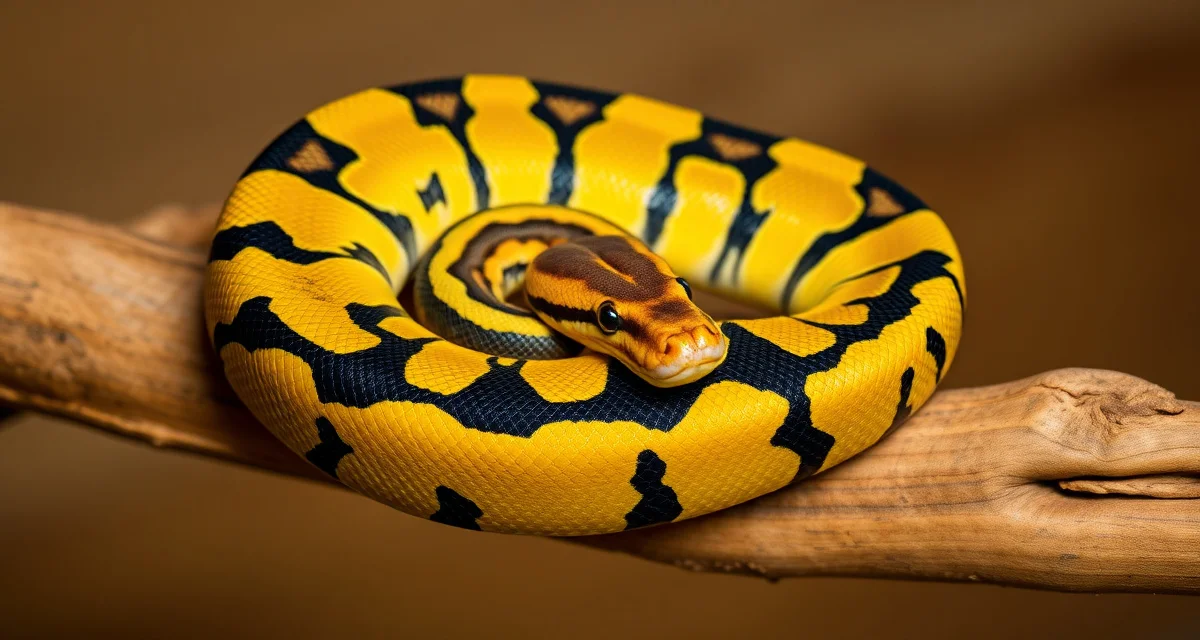
Killer Bee is Super Pastel + Spider, three co-dominant gene doses (two Pastel + one Spider) in a single animal. The result is one of the most striking-looking ball pythons you can produce: near-patternless in the most extreme examples, vivid yellow, with wild pattern reduction from the Spider gene. Killer Bees are a product of Super Pastel x Spider pairings or Super Pastel Spider-carrying animals bred appropriately.
TL;DR
- The Killer Bee morph is a documented genetic variant in ball pythons with established inheritance pattern and pricing history.
- Co-dominant morphs express visually in single copy and produce a distinct super form in double copy (with exceptions like Spider where the super is non-viable).
- Recessive morphs require two copies to be visually expressed; single-copy carriers (hets) look identical to normal ball pythons.
- Documented het claims backed by parentage records are worth significantly more at resale than unverified possible-het claims.
- Market prices for any given morph are heavily influenced by production volume, demand trends, and whether the morph stacks well with high-value genes.
Killer Bee Genetics
Killer Bee = Super Pastel + Spider = Pastel + Pastel + Spider. Producing Killer Bees requires a Super Pastel (two copies of Pastel) and a Spider in the same animal.
Production routes:
- Bumble Bee x Pastel: produces some Killer Bees (Super Pastel Spider), along with Super Pastels, Bumble Bees, and Pastels
- Spider x Super Pastel: 50% Killer Bee, 50% Bumble Bee, the most efficient route
- Killer Bee x Normal: 25% Killer Bee, 25% Bumble Bee, 25% Super Pastel, 25% Pastel
Killer Bee Appearance
The Super Pastel dosage dramatically amplifies the yellow brightening beyond what single-gene Pastel does, and the Spider pattern disruption removes most of the normal banding. The best Killer Bees are near-patternless yellow animals, almost uniform vivid yellow with some lateral pattern remnants. Retail: $400-$700.
Spider Wobble
Killer Bees carry the Spider wobble neurological condition. Disclose to every buyer without exception.
Killer Bee Combos
- Killer Bee Clown: one of the most commercially desirable three-gene combos; retail $1,200-$2,000
- Killer Bee Pied: white-based with vivid yellow/near-patternless saddles; retail $1,000-$1,800
- Killer Bee Enchi: intense orange-yellow with extreme pattern reduction; retail $600-$1,000
- Killer Bee Ghost: lighter Killer Bee with reduced pigmentation; retail $700-$1,200
Breeding Killer Bee Ball Pythons
The Most Efficient Route
Spider x Super Pastel is the cleanest production pairing. From this cross, every offspring is either a Killer Bee or a Bumble Bee, both of which have strong commercial value. No normals in this pairing. No plain Pastels. Every hatchling is a Spider combo.
Log this pairing carefully. With all offspring carrying Spider, all offspring require wobble disclosure at sale.
Managing Killer Bee as a Breeding Animal
If you hold back a female Killer Bee as a breeder, her offspring will depend on what she's paired to. Killer Bee x Normal gives you 25% each of Killer Bee, Bumble Bee, Super Pastel, and Pastel. Killer Bee x Pastel adds Super Pastel Pastel (which isn't meaningfully different from Super Pastel) to the mix.
Consider what additional genes you want to introduce through her mate, het Clown, het Pied, to build recessive value into an already vivid output.
Incubation
88-90°F, 88-100% humidity, 55-65 days. Nothing unusual.
Pricing Killer Bee Ball Pythons
| Animal | Retail Range |
|--------|-------------|
| Killer Bee (female) | $500-$800 |
| Killer Bee (male) | $350-$600 |
| Killer Bee Clown | $1,200-$2,000 |
| Killer Bee Pied | $1,000-$1,800 |
| Killer Bee Enchi | $600-$1,000 |
| Killer Bee Ghost | $700-$1,200 |
Related Articles
- Bamboo Ball Python: Genetics, Breeding Outcomes and Pricing
- Banana Ball Python: Genetics, Breeding Outcomes and Pricing
- Black Magic Ball Python: Genetics, Breeding Outcomes and Pricing
- Black Pastel Ball Python: Genetics, Breeding Outcomes and Pricing
FAQ
What genes make a Killer Bee ball python?
Killer Bee = Super Pastel + Spider. That means two copies of the Pastel gene and one copy of the Spider gene in a single animal. The Super Pastel provides extreme yellow brightening and the Spider contributes near-patternless disruption. All Killer Bees carry the Spider neurological wobble condition.
How do professional breeders produce Killer Bee ball pythons efficiently?
The most efficient production route is Spider x Super Pastel. This pairing produces 50% Killer Bees and 50% Bumble Bees, a fully commercial output with no normals or single-gene Pastels. Many breeders add het Clown or het Pied to both parents to build recessive value into the Killer Bees and Bumble Bees they produce.
What is Killer Bee Ball Python: Genetics, Breeding Outcomes and Pricing?
The Killer Bee ball python is a striking morph combining Super Pastel and Spider genes — written genetically as Pastel + Pastel + Spider. The result is a near-patternless, intensely yellow snake with dramatic pattern reduction. It is produced by pairing a Bumble Bee (Pastel Spider) with a Pastel, or a Super Pastel with a Spider. It is one of the most visually extreme combinations achievable with co-dominant and dominant genes in the ball python hobby.
How much does Killer Bee Ball Python: Genetics, Breeding Outcomes and Pricing cost?
Killer Bee ball pythons typically range from $150 to $600 depending on quality, breeder reputation, and additional genes present. Basic examples from high-volume breeders sit toward the lower end, while animals stacked with high-value recessives like Clown or Pied command premiums. Prices have softened over time as production has increased, but clean, well-fed hatchlings from documented pairings with verified genetics still hold strong resale value compared to unverified or poorly documented animals.
How does Killer Bee Ball Python: Genetics, Breeding Outcomes and Pricing work?
Killer Bee is produced by combining Super Pastel (two copies of the co-dominant Pastel gene) with the dominant Spider gene. Pastel intensifies yellow and reduces pattern incrementally, while Spider creates a distinct head stamp and further breaks up the dorsal pattern. Together, the three gene doses — two Pastel and one Spider — produce a synergistic effect: extreme color saturation, heavy pattern fragmentation, and in the best examples, near-complete pattern reduction across the body.
What are the benefits of Killer Bee Ball Python: Genetics, Breeding Outcomes and Pricing?
The main appeal of the Killer Bee is visual impact. It produces one of the most striking base morphs available, making it an excellent foundation for complex designer combos. Breeders value it because it stacks well with recessives like Albino, Clown, and Piebald, amplifying yellow tones and pattern reduction. For collectors, a well-produced Killer Bee delivers high display value at a relatively accessible price compared to rarer gene combinations requiring multiple generations to produce.
Who needs Killer Bee Ball Python: Genetics, Breeding Outcomes and Pricing?
Killer Bee ball pythons suit intermediate to experienced keepers and breeders. Beginners who want a visually dramatic animal can keep one as a pet, but those breeding Killer Bees should understand Spider gene wobble — a neurological condition affecting balance and coordination present in all Spider-gene animals. Breeders working with Spider morphs should be prepared to manage wobble, disclose it to buyers, and make informed decisions about pairing Spider animals in their programs.
How long does Killer Bee Ball Python: Genetics, Breeding Outcomes and Pricing take?
Producing a Killer Bee from scratch requires at least one generation of selective breeding. A straightforward route — Bumble Bee paired to Pastel — yields Killer Bees in roughly 25% of the clutch. Eggs incubate for approximately 55 to 60 days at 88–90°F. From egg to sale-ready hatchling, breeders typically allow 6 to 8 weeks post-hatch for the animal to establish feeding. Total timeline from pairing to selling offspring is generally 9 to 12 months.
Sources
- USARK (United States Association of Reptile Keepers)
- World of Ball Pythons (WoBP genetics reference database)
- Association of Reptilian and Amphibian Veterinarians (ARAV)
- MorphMarket (reptile industry marketplace data)
- Ball Python community genetics documentation
Get Started with HatchLedger
Tracking Killer Bee genetics through multiple generations requires connected records that link parent morphs, clutch outcomes, and het status for every animal in your collection. HatchLedger's genetics engine handles this automatically, making buyer documentation accurate and complete. Try it free with up to 20 animals.