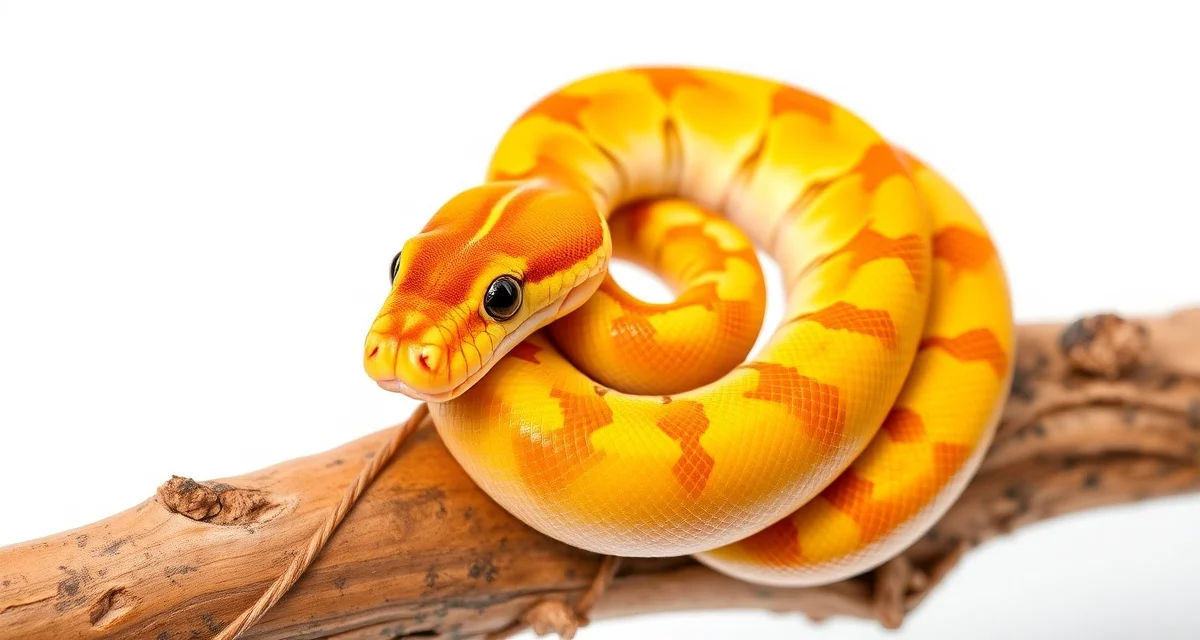
Orange Dream Ball Python: Genetics, Breeding Outcomes and Pricing
By HatchLedger Editorial Team · Published 2025-02-12 · Updated Mar 13, 2026
Orange Dream is one of those morphs that looks simple on the surface but has a lot going on underneath. It's a co-dominant morph with a visible super form, and it stacks exceptionally well with other genes to produce some of the most vivid yellows and oranges you'll find in ball pythons. If you're running a co-dom-focused program, Orange Dream deserves serious consideration.
TL;DR
- The Orange Dream morph is a documented genetic variant in ball pythons with established inheritance pattern and pricing history.
- Co-dominant morphs express visually in single copy and produce a distinct super form in double copy (with exceptions like Spider where the super is non-viable).
- Recessive morphs require two copies to be visually expressed; single-copy carriers (hets) look identical to normal ball pythons.
- Documented het claims backed by parentage records are worth significantly more at resale than unverified possible-het claims.
- Market prices for any given morph are heavily influenced by production volume, demand trends, and whether the morph stacks well with high-value genes.
I've produced Orange Dream combos for several years and it consistently surprises buyers, especially when you stack it with Pastel or Fire.
What Makes Orange Dream Genetics Work
Orange Dream (often abbreviated OD) is co-dominant. One copy gives you the single-gene Orange Dream. Two copies give you the Super Orange Dream, which is noticeably brighter and more saturated than the single-gene animal.
Single-Gene Orange Dream
Single-gene ODs show enhanced yellow and orange tones, often with a clean, busy alien-head pattern. The banding tends to break up nicely and the overall effect is warmer than a normal ball python. Prices for clean single-gene ODs typically run $75-$150 retail.
Super Orange Dream
The super form is a genuinely striking animal, deep orange base with heavy alien-head patterning. Super ODs are produced when you pair OD x OD. Statistically, that pairing gives you 25% normal, 50% OD, 25% Super OD. Supers retail around $200-$400 depending on gender and quality.
Orange Dream Combos
This is where the real money is. OD stacks well with:
- OD Pastel (often called Dreamsicle when albino is added): bright yellow animals with clean pattern, retail $150-$300
- OD Fire: extreme yellowing effect, one of the brightest non-leucistic combos
- OD Clown: recessive combo that takes 2-3 seasons to prove out, finished animals sell $500+
- OD Pied: stunning white-based animals with vivid orange saddles, retail $600-$1,200
Breeding Orange Dream Ball Pythons
Pairing Strategies
The standard OD pairing is OD x OD to produce supers. If you want to build het clown or het pied lines into your OD animals, pair OD het recessive x OD het recessive, that gives you 25% OD het recessive, 25% super OD, 12.5% visual recessive ODs, and normals in the clutch.
Keep detailed pairing records. When you're tracking multiple OD projects simultaneously, OD clown, OD pied, OD pastel, it's easy to mix up which animals came from which clutch. HatchLedger's lineage engine lets you tag each animal's genetic markers at hatch so nothing gets confused six months later.
Lock Dates and Ovulation
Ball python breeding season typically runs October through January. Introduce your male every 10-14 days and log every lock. Ovulation usually happens 2-4 weeks after a confirmed fertile lock, you'll see a significant mid-body swelling that moves toward the tail over 12-24 hours.
After ovulation, expect a pre-lay shed approximately 28-35 days later, then egg deposition 10-20 days after that shed. The full sequence from first lock to lay typically takes 90-120 days.
Incubation Parameters
Ball python eggs incubate at 88-90°F with 88-100% relative humidity. I run mine on moist vermiculite or Hatchrite at a 1:1 water-to-vermiculite ratio by weight. Incubation runs 55-65 days at proper temps. Don't let eggs drop below 84°F for extended periods, you'll see developmental issues.
Clutch sizes for ball pythons average 4-8 eggs, with healthy females in their prime laying 6-8. Track your egg weights weekly, eggs should hold steady or gain slightly. Significant weight loss (more than 5-10%) indicates humidity problems.
Pricing Orange Dream Ball Pythons
| Animal | Typical Retail Price |
|--------|---------------------|
| Normal from OD pairing | $50-$80 |
| Single-gene Orange Dream | $75-$150 |
| Super Orange Dream | $200-$400 |
| OD Pastel | $150-$300 |
| OD Fire | $200-$400 |
| OD Clown | $500-$900 |
| OD Pied | $600-$1,200 |
Female premiums typically add 20-30% to any of these prices due to breeding potential.
Tracking Orange Dream Projects in HatchLedger
When you're running multiple OD pairings, tracking is everything. HatchLedger's hatchling inventory tracker lets you record morph, genetics (visual OD vs. possible het), weight, and feeding status for every animal that comes out of your incubator.
The buyer pack generator is particularly useful for OD animals, buyers want to see the parent pairings and understand what they're getting (visual OD, possible het, proven het). HatchLedger generates certificates of authenticity that include lineage data automatically.
The budget calculator helps you figure out your cost per egg and cost per hatchling, essential when you're deciding whether to hold back supers or sell them to fund the next season.
Related Articles
- Banana Ball Python: Genetics, Breeding Outcomes and Pricing
- Black Magic Ball Python: Genetics, Breeding Outcomes and Pricing
- Black Pastel Ball Python: Genetics, Breeding Outcomes and Pricing
- Bumble Bee Ball Python: Genetics, Breeding Outcomes and Pricing
FAQ
What is the Orange Dream ball python super form called?
The super form of Orange Dream is simply called Super Orange Dream. Two copies of the Orange Dream gene produce it. Super ODs are noticeably more vivid and saturated than single-gene animals, with intense orange and yellow coloration.
How do professional breeders use Orange Dream in their programs?
Most experienced breeders use OD as a stacking gene to amplify color in other combos. OD + Pastel + Fire produces some of the brightest yellow ball pythons available. Breeders targeting recessive projects will build OD into het clown or het pied lines to produce high-value visual combinations.
What is Orange Dream Ball Python: Genetics, Breeding Outcomes and Pricing?
Orange Dream is a co-dominant ball python morph known for intensifying yellows and oranges in the animal's pattern. It expresses visually in single copy and produces a distinct super form when two copies are present. First documented in captive breeding programs, it has become a popular foundation gene for combo projects due to how cleanly it stacks with other morphs like Pastel, Fire, and Enchi to create vivid, high-contrast animals.
How much does Orange Dream Ball Python: Genetics, Breeding Outcomes and Pricing cost?
Pricing varies by gene combination and producer. A single-gene Orange Dream ball python typically ranges from $100–$300, while combos with high-demand genes like Pastel or Fire can push $300–$800 or more. Super Orange Dreams command a premium over single-copy animals. As with most co-dominant morphs, prices have softened as production has scaled, but well-documented lineage and clean combo pairings still hold stronger resale value.
How does Orange Dream Ball Python: Genetics, Breeding Outcomes and Pricing work?
Orange Dream works through co-dominant inheritance. Breed an Orange Dream to a normal and roughly 50% of offspring will visually express the gene. Pair two Orange Dreams together and you'll produce approximately 25% Super Orange Dreams, 50% single-copy Orange Dreams, and 25% normals. The super form is viable and distinct. The gene amplifies yellow and orange pigmentation, and its effects compound when stacked with other color-enhancing morphs.
What are the benefits of Orange Dream Ball Python: Genetics, Breeding Outcomes and Pricing?
The primary benefit is its ability to dramatically intensify orange and yellow tones in combo animals. Orange Dream stacks cleanly with a wide range of co-dominant and recessive genes, making it highly versatile in a breeding program. Its visible super form adds another tier of value to clutches. Buyers consistently respond well to OD combos, and the morph's documented genetics make offspring easier to market with confidence at resale.
Who needs Orange Dream Ball Python: Genetics, Breeding Outcomes and Pricing?
Orange Dream suits breeders building co-dominant-focused programs who want a reliable gene for producing visually striking, marketable animals. It's well-suited for intermediate breeders comfortable working with co-dom inheritance. Collectors seeking vivid orange and yellow morphs are the primary buyer base. It also appeals to breeders pairing into recessive projects, since OD combos with albino or other recessives can produce exceptionally saturated animals with broad hobbyist appeal.
How long does Orange Dream Ball Python: Genetics, Breeding Outcomes and Pricing take?
There is no single timeline — Orange Dream is a permanent genetic trait in any animal carrying it. From a breeding program standpoint, expect a 12–18 month cycle from pairing to producing and growing out offspring to sale size. Building a collection of proven Orange Dream breeders, establishing lineage documentation, and developing reliable combo pairings typically takes two to three breeding seasons before a program generates consistent, predictable results.
Sources
- USARK (United States Association of Reptile Keepers)
- World of Ball Pythons (WoBP genetics reference database)
- Association of Reptilian and Amphibian Veterinarians (ARAV)
- MorphMarket (reptile industry marketplace data)
- Ball Python community genetics documentation
Get Started with HatchLedger
Tracking Orange Dream genetics through multiple generations requires connected records that link parent morphs, clutch outcomes, and het status for every animal in your collection. HatchLedger's genetics engine handles this automatically, making buyer documentation accurate and complete. Try it free with up to 20 animals.