Mojave Ball Python Breeding Pairs: All Possible Outcomes
By HatchLedger Editorial Team · Published 2025-03-15 · Updated Mar 13, 2026
Mojave is one of the most widely used genes in ball python breeding, primarily because of its critical role in producing Blue-Eyed Leucistic animals when combined with other BEL complex genes. It's accessible, versatile, and produces beautiful combination animals.
TL;DR
- All pairing outcomes for Mojave can be calculated before putting animals together by understanding the morph's inheritance pattern.
- Recessive genes require het x het pairings to produce visuals, with expected 25% visual odds per clutch.
- Co-dominant pairings with normal animals produce 50% co-dominant offspring; co-dominant x co-dominant produces 25% super form.
- Documenting each animal's confirmed genetic status is what makes het claims valuable to buyers in subsequent generations.
- Using a morph calculator before the season helps set realistic expectations for the number of target animals likely from each clutch.
Mojave Genetics Overview
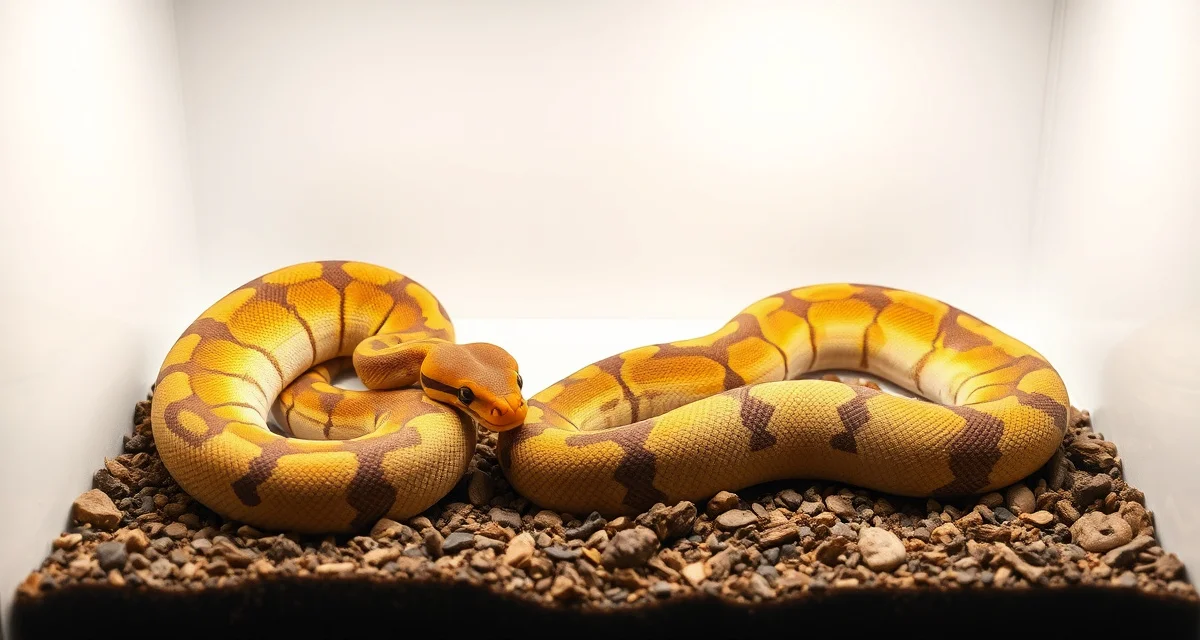
Mojave is a co-dominant mutation in the Blue Eye complex. Single-copy Mojaves show a distinctive reduced and faded dorsal pattern with a lightened brown and gold base color. The super form, Super Mojave, is a white animal with blue eyes, one of the original BEL complex super forms.
Mojave is in the same complex as Lesser, Butter, Phantom, Russo, and other BEL genes. It's not allelic to all of them but will produce leucistic super forms when crossed with any BEL complex gene.
Mojave x Normal Pairings
- 50% Mojave
- 50% Normal
Half the clutch shows the Mojave pattern. Normals carry no Mojave gene.
Mojave x Mojave Pairings (Super Mojave BEL)
- 25% Super Mojave (Blue-Eyed Leucistic)
- 50% Mojave
- 25% Normal
Super Mojaves are white animals with blue eyes. Visually similar to other BEL super forms. These are consistent sellers in the current market.
Mojave x BEL Complex Crosses
Mojave x Lesser
- 25% BEL (Mojave/Lesser)
- 25% Mojave
- 25% Lesser
- 25% Normal
Mojave x Butter
- 25% BEL
- 25% Mojave
- 25% Butter
- 25% Normal
Mojave x Phantom
- 25% BEL
- 25% Mojave
- 25% Phantom
- 25% Normal
All BEL complex crosses with Mojave work the same way, producing 25% BEL super forms.
High-Value Mojave Combinations
GHI x Mojave = GHI Mojave
- 25% GHI Mojave (one of the hobby's most impressive two-gene animals)
- 25% GHI
- 25% Mojave
- 25% Normal
The GHI Mojave is a dark, dramatic animal with excellent depth of color. Female GHI Mojaves sell for $600 to $1,500 regularly.
Pastel x Mojave
- 25% Pastel Mojave
- 25% Mojave
- 25% Pastel
- 25% Normal
Brightens the Mojave's base and reduces pattern further.
Super Pastel x Mojave
- 50% Pastel Mojave
- 50% Mojave
Guaranteed Mojave in every animal with half showing the Pastel improvement.
BEL Market Positioning
The BEL market has evolved. Standard BELs from single-gene pairings are accessible in the $300 to $800 range. High-gene BELs with four or five BEL complex genes stacked command more. If you're building a BEL program around Mojave, think about which additional BEL complex genes complement your existing collection.
Track all Mojave and BEL complex genetics in HatchLedger. The ball python morph calculator handles all BEL complex gene interactions including Mojave x Lesser, Mojave x Butter, and other cross combinations.
Frequently Asked Questions
What are the possible outcomes from Mojave ball python breeding pairs?
Mojave x Normal produces 50% Mojave and 50% Normal. Mojave x Mojave produces 25% Super Mojave (BEL), 50% Mojave, and 25% Normal. Mojave crossed with any other BEL complex gene produces 25% BEL, 25% Mojave, 25% the cross gene, and 25% Normal.
How do professional breeders use Mojave in BEL complex projects?
They pair Mojave with complementary BEL complex genes to produce leucistics, track which specific genes produced each BEL animal, and pursue high-gene BEL projects by stacking multiple BEL complex genes over multiple seasons.
What software helps manage Mojave ball python BEL project genetics?
HatchLedger is purpose-built for reptile breeders, connecting animal records, breeding history, clutch outcomes, and financial tracking in one system. Unlike generic spreadsheets, it's designed around the specific workflow of an active breeding season. Free for up to 20 animals.
What is the fastest pairing route to produce visual Mojave ball pythons?
The fastest route depends on what stock you already have. If you have a visual Mojave, pairing it with a het (or a normal for co-dominant genes) produces visuals immediately. If you are starting from hets, a het x het pairing gives 25% visual odds per clutch. Building het stock first from a visual x normal pairing before running het x het is slower but produces cleaner, more documentable genetics.
How should possible het Mojave animals be priced?
Possible het animals are priced as a percentage of confirmed het pricing, proportional to their probability. A 66% possible het from a het x het pairing typically prices at 40-60% of confirmed het value. Animals that have been proven by producing visual offspring upgrade to confirmed het status and can command full het pricing in subsequent sales.
What is Mojave Ball Python Breeding Pairs: All Possible Outcomes?
Mojave Ball Python Breeding Pairs: All Possible Outcomes is a comprehensive breeding reference guide covering every genetic pairing combination involving the Mojave morph. It details expected clutch outcomes using inheritance patterns for this co-dominant BEL complex gene, helping breeders understand what hatchlings to expect before pairing animals. The guide covers single-gene pairings, BEL complex combinations, and how to produce target morphs like Blue-Eyed Leucistics.
How much does Mojave Ball Python Breeding Pairs: All Possible Outcomes cost?
The guide is free to read on HatchLedger. There is no purchase required to access the pairing outcome tables, genetics explanations, or morph calculator references. Breeders can use the information to plan their season, set clutch expectations, and document genetic outcomes without any subscription or fee.
How does Mojave Ball Python Breeding Pairs: All Possible Outcomes work?
The guide works by applying Mendelian inheritance rules to Mojave's co-dominant inheritance pattern. Single-copy Mojave paired to normal yields 50% Mojave offspring. Mojave paired to Mojave yields 25% Super Mojave, 50% Mojave, and 25% normal. BEL complex combinations are mapped to show when Blue-Eyed Leucistic animals are possible, giving breeders clear probability breakdowns for each pairing scenario.
What are the benefits of Mojave Ball Python Breeding Pairs: All Possible Outcomes?
The guide helps breeders set realistic expectations before the breeding season, avoiding wasted pairings or disappointment at the incubator. It clarifies which BEL gene combinations produce Blue-Eyed Leucistics, how to document het status to support future sales, and how to use a morph calculator effectively. Better planning leads to higher-value clutches and stronger genetic records across generations.
Who needs Mojave Ball Python Breeding Pairs: All Possible Outcomes?
This guide is useful for ball python breeders at any level who work with or plan to introduce Mojave into their collection. It is especially valuable for those targeting BEL complex animals like Blue-Eyed Leucistics, breeders selling het animals who want to back genetic claims, and hobbyists learning how co-dominant inheritance differs from recessive gene pairings.
How long does Mojave Ball Python Breeding Pairs: All Possible Outcomes take?
Reading the guide takes roughly five to ten minutes. Applying the information to your own pairings depends on your season timeline — most breeders plan pairings weeks or months before breeding begins. Clutch outcomes are realized at hatching, typically 60 days after eggs are laid. The genetics knowledge itself is immediately usable once you understand the co-dominant inheritance model explained in the article.
Related Articles
- Bamboo Ball Python Breeding Pairs: All Possible Outcomes
- Banana Ball Python Breeding Pairs: All Possible Outcomes
Sources
- World of Ball Pythons (WoBP genetics reference database)
- USARK (United States Association of Reptile Keepers)
- Association of Reptilian and Amphibian Veterinarians (ARAV)
- MorphMarket (reptile industry marketplace and pricing data)
- Ball Python community breeding records
Get Started with HatchLedger
Tracking Mojave pairing outcomes, het status, and proving records across multiple seasons is where most breeders run into documentation gaps. HatchLedger connects each animal's genetic record to its clutch of origin and parent history, so your het claims are always backed by traceable data. Try it free with up to 20 animals.