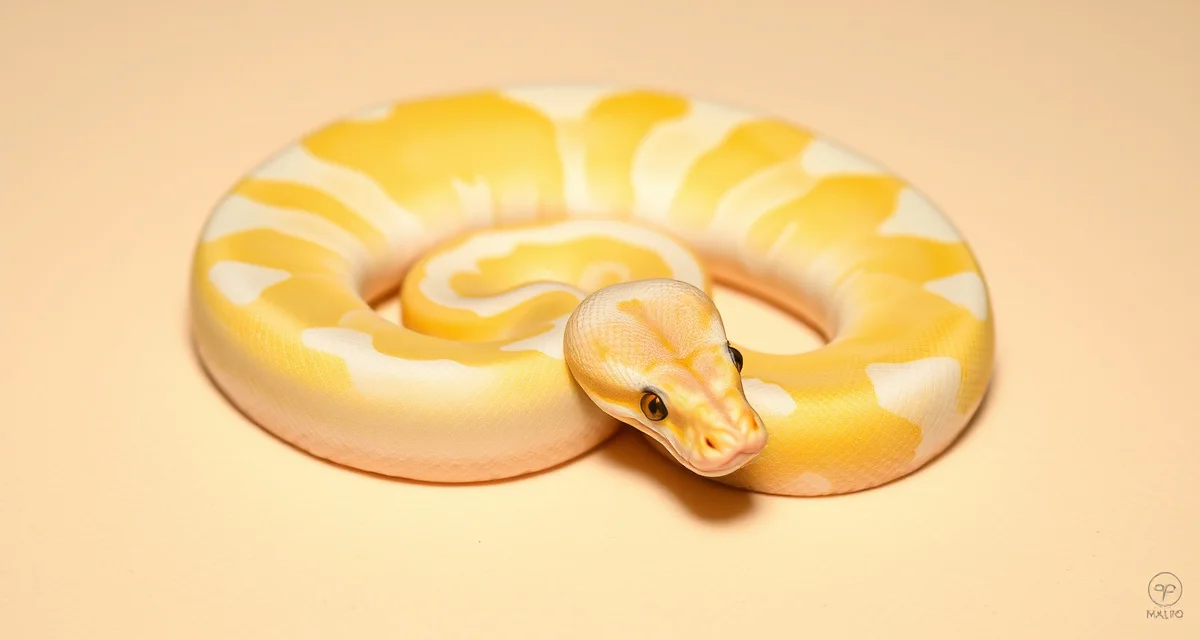
Albino Pastel Ball Python: Breeding Odds, Pairings and Market Value
By HatchLedger Editorial Team · Published 2025-05-22 · Updated Mar 13, 2026
The albino pastel ball python is a classic combination that's been a staple of quality breeding programs for decades. Albino removes all dark pigmentation, leaving vivid yellows and whites. Pastel enhances and brightens those yellows further, producing an animal with intense, saturated color and clean white patterns. The combination is visually striking, well-understood genetically, and consistently appealing to buyers across all experience levels.
TL;DR
- The Albino Pastel combination requires careful planning across multiple genetic lines before visual animals can be produced.
- Recessive genes in any combination require both parents to carry the gene, making genetics guide the foundation of a successful project.
- Multi-recessive projects typically take 2-4 seasons from acquiring het stock before producing the target combination visual.
- Co-dominant genes in combinations show in single copy, allowing you to confirm the gene visually before selling or retaining animals.
- Documenting parentage for every animal in a multi-gene project is the only reliable way to maintain accurate het claims across generations.
Albino pastel projects are a great benchmark for understanding how a two-recessive-gene project actually works. Breeders using integrated software report 30% less time on administrative tasks, and in a project like this, that efficiency translates directly to better financial outcomes.
Why Albino Pastel Remains Relevant
Some breeders dismiss albino pastel as too "basic" given how long it's been around. That's a mistake. Albino pastel animals sell consistently because of their visual impact and the wide buyer audience they appeal to, from first-time buyers who want something beautiful at an accessible price, to experienced breeders who want het albino or het pastel carriers for their own projects.
Pastel albino females, in particular, remain valuable animals in breeding programs. They're albino visual with pastel brightening, producing het albino offspring in every clutch regardless of what they're paired to.
How to Breed Albino Pastel Ball Pythons
Step 1: Understand the Two-Gene Dynamics
Albino is recessive. Pastel is codominant. This is a different dynamic than two-recessive projects, you can see pastel in every generation, which makes project planning more predictable.
- Visual Albino Pastel x Normal: produces all het albino offspring, 50% of which will also be pastel
- Albino Pastel x het Albino: produces albinos, albino pastels, het albinos, and het albino pastels
- Albino Pastel x Albino Pastel: produces all albino offspring, some with pastel (super pastel albino is the top-tier animal)
Use the ball python morph calculator to model your exact clutch.
Step 2: Choose Your Pairing for Best Return
Pairing albino pastel to albino pastel gives the richest clutch composition: all visual albinos, with super pastels, pastels, and supers appearing. Pairing albino pastel to albino is also productive and generates het animals alongside visual albino pastels.
Know your target animals and choose accordingly.
Step 3: Condition Breeders
Females to 1,500g+. Heavy feeding through summer and fall. Temperature drop in October or November. Albino animals are reliable breeders. Albino females in particular can be excellent producers once conditioned properly.
Log every weight and feeding. Albino animals can be more prone to dehydration, keep humidity appropriate during conditioning.
Step 4: Introduce and Track Pairings
Evening introductions. Log every introduction and lock. Reintroduce weekly through November and December.
In albino projects, albino animals' red eyes can make it harder to assess behavioral responses. Spend extra observation time to confirm locks.
Step 5: Track Ovulation
Log ovulation immediately. Pre-lay shed at 30 days. Egg laying at 16-18 days post-shed.
Step 6: Incubate
Eggs at 88-90°F, high humidity. Average clutch: 4-8 eggs. Mark containers with full pairing data. Hatch window: 54-60 days.
Step 7: Identify and Process Hatchlings
Albino pastel hatchlings are bright, vivid, and unmistakable. The yellow and white are intense, and the pastel enhancement is clear against standard albino comparison animals. Super pastel albino animals are the brightest animals in the clutch, vivid yellow with almost white backgrounds.
Sex every animal. Albino pastel females command meaningful premiums.
What Albino Pastel Ball Pythons Sell For
| Animal | Typical Range |
|--------|--------------|
| het Albino Pastel | $100 - $200 |
| Visual Albino | $200 - $500 |
| Albino Pastel | $350 - $700 |
| Super Pastel Albino | $600 - $1,200+ |
| Albino Pastel female | $500 - $1,000+ |
Albino pastel is priced accessibly enough to attract buyers across the board. Super pastel albino females command premium pricing in both retail and breeding markets.
Common Mistakes in Albino Pastel Projects
Not identifying super pastel albino correctly. The super form is notably brighter. Know what you're looking at before assigning morph IDs.
Undervaluing het albino animals. Het albino animals from proven albino pairings sell to breeders running their own albino projects. Price based on documentation.
Not tracking albino conditioning carefully. Albino animals can dehydrate more readily. Monitor humidity and feeding during conditioning.
Skipping clutch financial tracking. The ball python breeding hub covers how per-clutch cost visibility changes project decisions, even for established combos like albino pastel.
What is the best approach to albino pastel ball python?
Pair albino pastel to albino pastel for the richest clutch composition and access to super pastel albino production. Know your clutch composition going in so you can price every hatchling category correctly when they arrive. Het albino animals from quality pairings are worth pricing appropriately, don't treat them as leftovers.
How do professional breeders handle albino pastel ball python?
Professional breeders working albino pastel projects identify super pastel albino animals accurately, price based on sex and phenotype, and document het albino animals with pairing records. They know their clutch-level production costs and price accordingly, even for accessible combos, margin management matters.
What software helps manage albino pastel ball python?
HatchLedger connects breeding records to clutch P&L so you can track albino pastel project performance on real numbers. For established combos with moderate per-animal margins, knowing your exact production costs is the difference between consistent profitability and guessing.
Related Articles
- Cinnamon Pastel Ball Python: Breeding Odds, Pairings and Market Value
- Desert Ghost Pastel Ball Python: Breeding Odds, Pairings and Market Value
FAQ
What is Albino Pastel Ball Python: Breeding Odds, Pairings and Market Value?
The Albino Pastel Ball Python is a double-gene morph combining two well-established traits: Albino (recessive), which eliminates all dark pigmentation, and Pastel (co-dominant), which intensifies yellow tones. Together they produce a visually striking snake with vivid, saturated yellows and crisp white patterns. This combination has been a staple in quality ball python breeding programs for decades and remains one of the most recognized and sought-after morphs in the hobby.
How much does Albino Pastel Ball Python: Breeding Odds, Pairings and Market Value cost?
Albino Pastel Ball Pythons typically sell for $150–$400 depending on quality, lineage, and seller reputation. Hatchlings from proven pairings at the lower end of that range are common, while animals with exceptional pattern clarity or from high-demand bloodlines command more. Het animals used in breeding projects are priced lower. Prices have stabilized over the years as the morph became widely produced, making it accessible without sacrificing visual appeal or genetic value.
How does Albino Pastel Ball Python: Breeding Odds, Pairings and Market Value work?
Producing Albino Pastels requires both parents to carry the recessive Albino gene. A common pairing is Albino x Het Albino Pastel, yielding a statistical 1-in-4 chance of visual Albino offspring and a 50% chance those visuals also carry Pastel. Because Pastel is co-dominant, it shows in single copy and can be confirmed visually. Breeders typically plan 2–4 seasons across multiple pairings before reliably hitting the target combination at scale.
What are the benefits of Albino Pastel Ball Python: Breeding Odds, Pairings and Market Value?
The Albino Pastel combination offers strong visual impact, predictable genetics, and broad market appeal. Pastel is easy to identify visually in offspring, simplifying clutch documentation. Albino's recessive nature means het animals retain value for breeding projects. The morph is well-understood, making it a reliable choice for breeders building inventory. Its consistent buyer demand across experience levels — from first-time owners to collectors — also means faster sales and lower unsold inventory risk.
Who needs Albino Pastel Ball Python: Breeding Odds, Pairings and Market Value?
This morph suits beginner-to-intermediate breeders wanting to understand recessive and co-dominant gene interactions through a practical, proven project. Hobbyists seeking visually impressive pets without premium pricing also benefit. Established breeders use Albino Pastel as a foundation to build more complex combos — adding genes like Pied, Clown, or Banana. Anyone looking to enter the ball python market with a low-risk, high-recognition morph will find Albino Pastel a reliable starting point.
How long does Albino Pastel Ball Python: Breeding Odds, Pairings and Market Value take?
From acquiring het stock to producing visual Albino Pastel offspring, expect 2–4 breeding seasons. The first season pairs hets to confirm genetics; subsequent seasons refine ratios and scale output. Ball pythons take roughly 60 days from laying to hatching, and females typically cycle once annually. Planning pairings, incubating eggs, and growing out hatchlings to sellable size adds additional time. Breeders who document lineage carefully from the start avoid costly identification errors later in the project.
What should I look for when choosing Albino Pastel Ball Python: Breeding Odds, Pairings and Market Value?
Look for clean, high-contrast pattern with bright, saturated yellows and white rather than cream or dingy tones. Confirm both Albino and Pastel genes are properly documented with parentage records. Buy from breeders who track clutch data and can provide lineage — accurate het claims depend entirely on this. Animals from proven, well-fed breeding females tend to hatch healthier. Avoid animals with unverified het status or vague parentage, as incorrect genetics can derail a multi-season project.
Is Albino Pastel Ball Python: Breeding Odds, Pairings and Market Value worth it?
Yes — Albino Pastel is worth producing or purchasing for most breeders. It offers reliable visual appeal, well-documented genetics, and steady resale demand without the volatility of rarer morphs. As a foundation gene combo, it also unlocks higher-value multi-gene projects down the line. While prices have softened over the years, the combination still moves consistently and produces animals buyers recognize immediately. For breeders learning recessive gene mechanics, it's one of the most practical and rewarding projects available.
Sources
- USARK (United States Association of Reptile Keepers)
- Association of Reptilian and Amphibian Veterinarians (ARAV)
- MorphMarket (reptile industry market reference)
- World of Ball Pythons (WoBP genetics reference database)
- Reptiles Magazine (Bowtie Inc.)
Track Your Albino Pastel Project with HatchLedger
Get Started with HatchLedger
Building a Albino Pastel project across multiple seasons means tracking genetics, parentage, and clutch outcomes that compound in complexity year over year. HatchLedger connects all of that data in one system so your project documentation stays accurate from first pairing through final sale. Try it free with up to 20 animals.