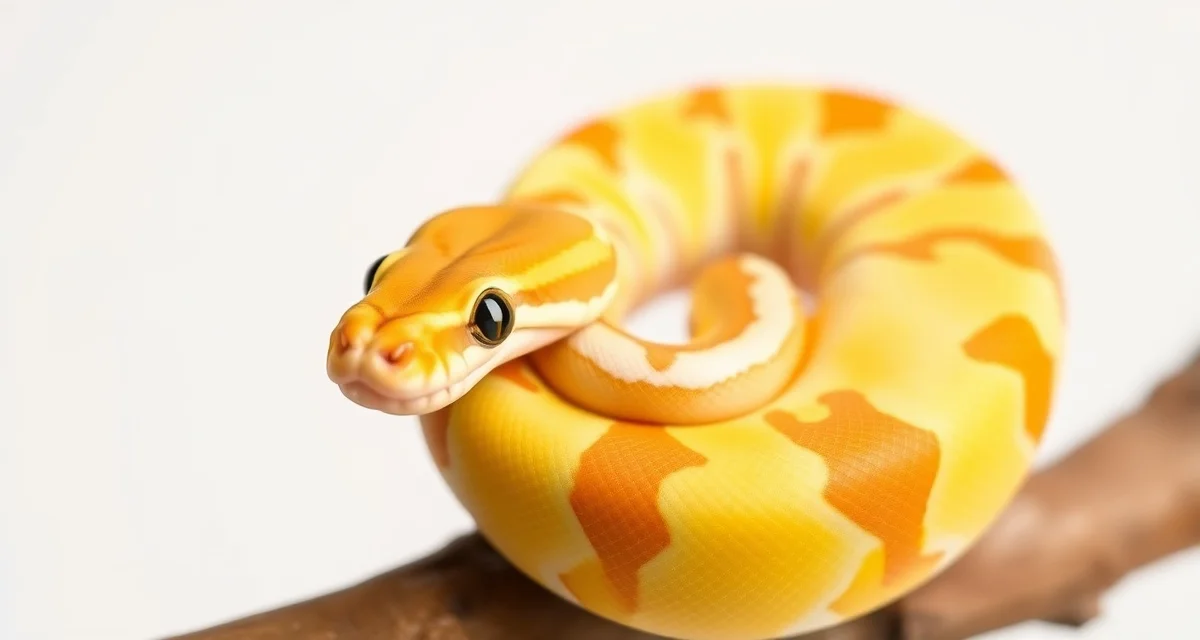
Enchi Pastel Ball Python: Breeding Odds, Pairings and Market Value
By HatchLedger Editorial Team · Published 2025-02-01 · Updated Mar 13, 2026
Enchi pastel is a combination that's underrated in a lot of breeding programs. On its own, enchi pastel produces a bright, clean, high-contrast animal that looks more expensive than it typically sells for. But where it really earns its place is as a foundation gene in multi-morph projects. Stacking enchi pastel into almost any other combination pushes the expression of every other gene involved.
TL;DR
- The Enchi Pastel combination requires careful planning across multiple genetic lines before visual animals can be produced.
- Recessive genes in any combination require both parents to carry the gene, making genetics guide the foundation of a successful project.
- Multi-recessive projects typically take 2-4 seasons from acquiring het stock before producing the target combination visual.
- Co-dominant genes in combinations show in single copy, allowing you to confirm the gene visually before selling or retaining animals.
- Documenting parentage for every animal in a multi-gene project is the only reliable way to maintain accurate het claims across generations.
Breeders using integrated software report 30% less time on administrative tasks, which adds up when you're running enchi pastel as a building block across multiple projects.
Why Enchi Pastel Gets Overlooked
Enchi is one of those genes that doesn't always get the credit it deserves because it's so often evaluated as a standalone. Breeders look at an enchi pastel and see a nice-looking but not jaw-dropping animal. They don't always see that the same gene turns a spider morph into a spinner, a pied into a tri-color display animal, or a clown into a dramatically different-looking project piece.
If you're building enchi pastel projects to sell enchi pastels, you'll do okay. If you're building enchi pastel as a pathway into enchi spinners, enchi pieds, or enchi clowns, that's where the real value emerges.
How to Breed Enchi Pastel Ball Pythons
Step 1: Define Your Project Goals
Are you producing enchi pastels to sell, or are you using enchi pastel as a stepping stone to a higher-value combo? The answer changes everything about your pairing choices.
For standalone enchi pastel production, simple codominant pairings work well. For building into recessive combos, you need to think about your het load and map your multi-year path.
Use the ball python morph calculator to model your target pairings.
Step 2: Understand the Genetics
Enchi is codominant. Pastel is codominant. Both have viable super forms. Super enchi is a distinct and marketable animal, and super pastel is a staple of ball python breeding. Pairing enchi pastel to enchi pastel can produce super enchis, super pastels, and super enchi super pastels.
No lethal combinations here. Both super forms are healthy and saleable. This makes enchi pastel projects relatively low-risk from a welfare standpoint.
Step 3: Condition Your Breeders
Females to 1,500g or above. Feed heavily through summer and fall. Initiate cooling in October or November by dropping night temperatures 5-8°F. Enchi and pastel animals are reliable feeders and breeders.
Log every weight and feeding throughout conditioning. This documentation supports confident sales conversations.
Step 4: Set Up Pairings
Evening introductions. Log every introduction and every lock. If you're running multiple males or multiple females, clear pairing records prevent mix-ups that lead to misidentified offspring.
Standard approach: reintroduce males weekly through November and December.
Step 5: Track Ovulation
Log ovulation the moment you see it. The mid-body swelling is distinct and doesn't last long. Pre-lay shed follows at 30 days, egg laying at 16-18 days after shed. A logged ovulation date is the foundation of your clutch timeline.
Step 6: Incubate
Eggs at 88-90°F, high humidity. Clutches average 4-8 eggs. Mark containers with full pairing information. Hatch window runs 54-60 days.
Step 7: Identify and Process Hatchlings
Enchi pastel hatchlings are bright and high-contrast with clear alien heads and visible enchi pattern signature. Super pastel and super enchi animals look notably different. You'll need to assess each animal against known references.
Sex everything. Price females at a premium. Document morph IDs, hatch weights, and feeding responses.
What Enchi Pastel Ball Pythons Sell For
| Animal | Typical Range |
|--------|--------------|
| Pastel | $60 - $120 |
| Enchi | $80 - $150 |
| Enchi Pastel | $150 - $300 |
| Super Enchi Pastel | $300 - $600 |
| Enchi Super Pastel | $250 - $500 |
| Super Enchi Super Pastel | $500 - $1,000+ |
| Females | Premium +30-50% |
Enchi pastel is accessible for buyers and produces decent margins for breeders when managed efficiently. The super forms add real value to clutches.
Common Mistakes in Enchi Pastel Projects
Not identifying enchi in hatchlings reliably. The enchi pattern signature is distinct but takes practice to read. If you're new to enchi, compare hatchlings against well-documented reference animals before assigning morph IDs.
Underproducing females. Enchi pastel females with additional recessive hets are valuable to breeders building larger projects. Don't price them like non-het normals.
Treating enchi pastel as an endpoint. The gene does its best work in combination with something else. Plan for where these animals go in future pairings.
Not tracking which clutches carry het load. If your enchi pastels also carry het clown or het pied, that changes their value. The ball python breeding hub covers het management in detail.
What is the best approach to enchi pastel ball python?
The best approach is to use enchi pastel intentionally, either as a high-volume, accessible combo for steady sales volume, or as a building block for higher-value multi-gene projects. Know which role it's playing in your program before you pair. If you're producing enchi pastels to sell, make sure your per-animal margins justify the space and time investment.
How do professional breeders handle enchi pastel ball python?
Professional breeders track enchi pastel animals as components in larger programs. They document which animals carry additional het genes, price based on full genetic value rather than just visual phenotype, and use enchi as a way to push expression in other genes rather than as an isolated project. The approach is deliberate, not opportunistic.
What software helps manage enchi pastel ball python?
HatchLedger helps breeders connect husbandry records to clutch financials, so you know exactly what each enchi pastel project costs to run and what it returns. When you're using enchi pastel as a building block across multiple projects simultaneously, having that data in one place is what keeps things organized and profitable.
Related Articles
- Black Pastel Pied Ball Python: Breeding Odds, Pairings and Market Value
- Cinnamon Pastel Ball Python: Breeding Odds, Pairings and Market Value
FAQ
What is Enchi Pastel Ball Python: Breeding Odds, Pairings and Market Value?
The Enchi Pastel Ball Python is a co-dominant combination morph produced by pairing an Enchi with a Pastel. The result is a visually striking animal with enhanced brightness, high contrast, and clean patterning. Beyond its standalone appeal, Enchi Pastel serves as a powerful foundation gene in multi-morph breeding projects, amplifying the expression of nearly every other gene it's stacked with. It's widely regarded as undervalued relative to how much visual impact it adds to a collection or breeding program.
How much does Enchi Pastel Ball Python: Breeding Odds, Pairings and Market Value cost?
Enchi Pastel Ball Pythons are generally affordable compared to their visual impact. Single-gene animals often sell in the $75–$200 range depending on sex and lineage. When stacked into multi-morph combinations, prices vary widely based on the rarity of additional genes. Females typically command a premium. Because both Enchi and Pastel are co-dominant, you don't need to buy expensive visuals to work the combo into a project — purchasing proven het or single-gene animals keeps startup costs manageable.
How does Enchi Pastel Ball Python: Breeding Odds, Pairings and Market Value work?
Enchi and Pastel are both co-dominant genes, meaning each shows visually in a single copy. When you pair an Enchi to a Pastel, 25% of offspring statistically express both genes as Enchi Pastels. The combination works by layering two brightening and contrast-enhancing mutations, producing animals with intensified coloration. When additional recessives like albino or axanthic are introduced, Enchi Pastel pushes the expression of those genes further, making the final visual combos appear more saturated and defined.
What are the benefits of Enchi Pastel Ball Python: Breeding Odds, Pairings and Market Value?
Enchi Pastel adds brightness, contrast, and pattern clarity without dramatically increasing production costs. As a foundation gene, it improves nearly every combo it enters — making multi-morph projects more visually compelling and commercially appealing. Both genes are co-dominant, so you can visually confirm them in offspring without waiting on het-to-het pairings. This speeds up project timelines and reduces uncertainty. Breeders report it makes high-end combos look more premium without requiring rare or expensive base animals to get started.
Who needs Enchi Pastel Ball Python: Breeding Odds, Pairings and Market Value?
Enchi Pastel is well-suited for beginner to intermediate breeders building a morph program on a budget, and for experienced breeders running multi-gene recessive projects who want to maximize visual impact. It's especially useful for breeders focused on albino, axanthic, or clown combinations where the enhancing effect of Enchi Pastel makes a noticeable difference in the finished animals. Anyone who wants to produce competitive-looking offspring without paying premium prices for base stock will benefit from working this combo.
How long does Enchi Pastel Ball Python: Breeding Odds, Pairings and Market Value take?
Because Enchi and Pastel are both co-dominant, single-copy animals appear in the first generation — no multi-season het-to-het waiting required. However, if you're building a multi-recessive project around Enchi Pastel as a foundation, expect 2–4 breeding seasons from acquiring het stock before producing the target visual combination. Proper documentation of every pairing shortens the perceived timeline by keeping het claims accurate, so you're not repeating work or second-guessing lineage when it matters most.
What should I look for when choosing Enchi Pastel Ball Python: Breeding Odds, Pairings and Market Value?
When evaluating Enchi Pastel animals, look for clean, high-contrast patterning with strong yellow or gold tones and minimal muddiness. Confirm parentage documentation is intact — especially if recessives are claimed. Check that the seller can clearly identify which animals carry Enchi versus Pastel versus both. For breeding projects, prioritize females with verified genetics over visual appeal alone. Healthy weight, feeding records, and documented lineage matter more long-term than aesthetics, particularly when building a multi-generation project around this combo.
Is Enchi Pastel Ball Python: Breeding Odds, Pairings and Market Value worth it?
Yes. Enchi Pastel delivers strong visual results at a low entry price, making it one of the better value propositions in ball python breeding. It performs well as a standalone morph and as a stacking gene in larger projects. Because both genes are co-dominant, you get faster visual confirmation of your work compared to recessive-heavy projects. Breeders who document their pairings carefully and use Enchi Pastel as a consistent foundation tend to produce more competitive animals without inflating their base costs.
Sources
- USARK (United States Association of Reptile Keepers)
- Association of Reptilian and Amphibian Veterinarians (ARAV)
- MorphMarket (reptile industry market reference)
- World of Ball Pythons (WoBP genetics reference database)
- Reptiles Magazine (Bowtie Inc.)
Track Your Enchi Pastel Projects in HatchLedger
Get Started with HatchLedger
Building a Enchi Pastel project across multiple seasons means tracking genetics, parentage, and clutch outcomes that compound in complexity year over year. HatchLedger connects all of that data in one system so your project documentation stays accurate from first pairing through final sale. Try it free with up to 20 animals.